
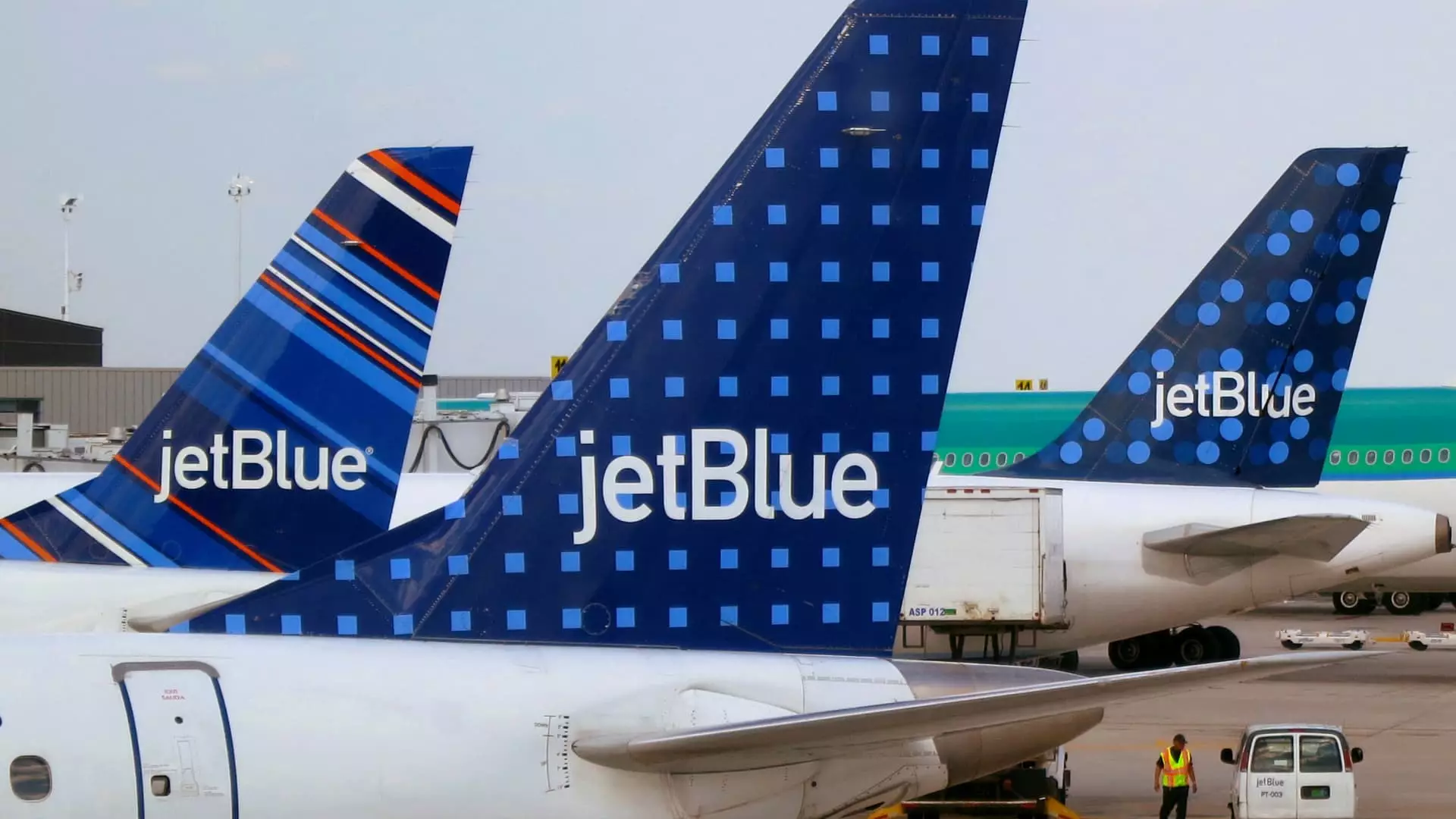
In an unprecedented move, the U.S. Department of Transportation (DOT) has imposed a $2 million fine on JetBlue Airways, marking a pivotal moment in airline accountability. This substantial penalty highlights serious concerns over the airline’s operational efficiency and reliability, specifically regarding its chronically delayed flights. The DOT’s investigation revealed that JetBlue’s service between key cities was plagued by delays that exceeded acceptable standards, prompting the agency to take action against the low-cost carrier.
The scrutiny focused on four particular routes—linking John F. Kennedy International Airport with both Raleigh-Durham and Orlando, as well as Fort Lauderdale with Windsor Locks. The DOT reported that these flights faced more than 145 delays from June 2022 to November 2023, affirming the notion of an operational shortfall. Transportation Secretary Pete Buttigieg emphasized that this penalty serves as a clarion call for the airline industry. The expectation is clear: flight schedules should be an accurate reflection of operational capabilities.
The specifics of what the DOT categorizes as “chronically delayed” shed light on the magnitude of JetBlue’s challenges. To qualify for the label, a flight must be frequently late—arriving 30 minutes behind schedule over 50% of the time while operating at least ten instances a month. The consequences are significant, drawing attention to the systemic issues plaguing not only JetBlue but potentially other airlines as well.
The crux of the problem lies with JetBlue, which was found to be the cause of over 70% of disruptions on the identified routes. The airline’s operational strategy failed to align realistic scheduling with the inherent unpredictability of air travel. Questions arise about JetBlue’s decision-making processes: Were they too ambitious in their scheduling? Did they neglect the operational realities dictated by air traffic control and national airspace congestion?
In a curious twist, JetBlue has voiced its concerns regarding the broader ecosystem of air travel management. In their official statement, the airline placed part of the blame on the government for fostering an inadequate air traffic control (ATC) system. They argued that insufficient staffing levels and outdated technologies contribute to nationwide delays that impede all airlines. This perspective has been echoed by executives from major competitors like Delta and United, who collectively advocate for ATC modernization to enhance air travel reliability.
This ongoing dialogue illustrates how airlines grapple with the tension between operational autonomy and the dependencies imposed by external regulatory bodies. While JetBlue is attempting to redirect blame, the burden of accountability for poor scheduling ultimately rests with the airline itself. The DOT’s fine underscores the fact that regardless of external factors, airlines must ensure they are not compounding systemic inefficiencies with poor planning.
Looking at the bigger picture, JetBlue’s overall performance reflects a slight positive shift, with on-time arrivals improving from 64.9% to 71.3% year-on-year. However, despite this improvement, ranking ninth out of ten U.S. airlines is hardly a badge of honor. For an airline that prides itself on customer service and competitive pricing, the persistent issues with delays could significantly tarnish its reputation.
Furthermore, while the DOT is currently investigating other airlines for similar unrealistic scheduling practices, the focus on JetBlue adds an element of urgency to the situation. Industry standards may soon evolve, demanding airlines to take proactive steps toward enhancing reliability in response to the increasing scrutiny.
The penalty against JetBlue serves not only as a standalone consequence but rather as a broader indictment on the airline industry’s operational practices. As travel resumes its pre-pandemic momentum, expectations for timely, reliable services have risen correspondingly. Airlines must advance not just on the front of customer experience but also navigate the complexities of regulatory oversight and operational accountability.
The future of air travel may hinge on these collective advancements—among them, realistic scheduling, improved infrastructure, and ultimately, a commitment to ensuring passengers’ time is valued. As regulators and airlines confront these issues head-on, it is evident that accountability is no longer a choice; it is an imperative for sustained success in the aviation sector.