
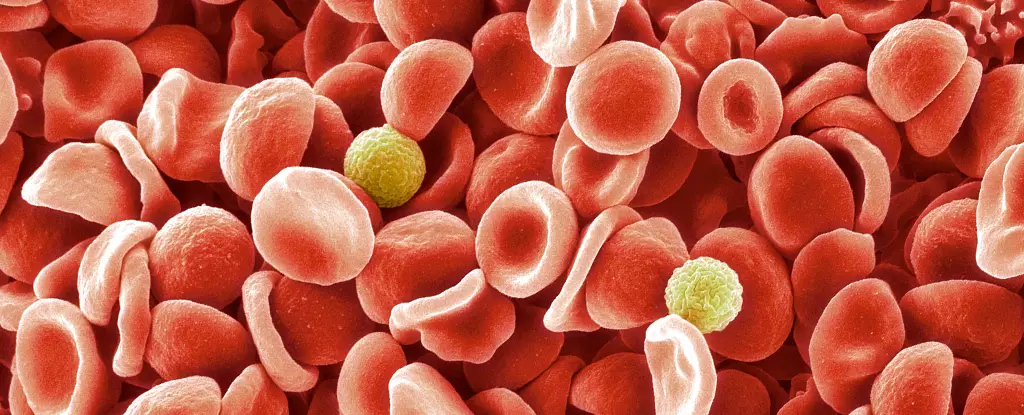
The intricate world of human blood is far more complex than most people realize. While most are familiar with well-established blood type systems like ABO and Rh, recent groundbreaking research out of the UK and Israel has unveiled an entirely new blood group system—a development that promises to enhance patient care for a particularly rare demographic. This revelation stems from a decades-long investigation, ignited by an extraordinary anomaly identified in a pregnant woman’s blood sample back in 1972.
The journey began with a baffling observation: a pregnant woman’s blood lacked a surface molecule known as the AnWj antigen, present in over 99.9 percent of the population. This enigma remained a mystery for nearly five decades, with the scientific community unaware of the significance of this absence. According to Louise Tilley, a hematologist with the UK National Health Service, this discovery is not just about filling a scientific gap; it represents a monumental achievement in understanding human hematology. Tilley’s dedication to unraveling this mystery spans nearly 20 years, reflecting her commitment to improving care for patients impacted by these unusual blood types.
Human blood comprises various antigens made up of proteins and sugars that adorn red blood cells. These antigens act as crucial identification markers for the immune system, distinguishing between the body’s own cells and foreign entities. A mismatch in blood transfusions can trigger severe immune responses, sometimes resulting in fatal outcomes. Most established blood group systems—specifically the ABO and Rh systems—were discovered in the early 20th century. However, new groups like the Er blood system have emerged more recently, underscoring the ongoing need for research in this field.
This latest blood group, dubbed the MAL blood group, showcases the human body’s complexity and the significance of these rare antigen variations. It is crucial to understand such idiosyncrasies not only for scientific curiosity but also for practical applications in medicine and transfusion practices.
Researchers were able to establish the MAL blood group system based on genetic research, highlighting one of the more intriguing features of this phenomenon: it is not merely a hereditary trait but can also be influenced by environmental factors. In their study, Tilley and her team examined several patients and identified both genetic mutations and other potential factors that could suppress the presence of the AnWj antigen. Their findings indicate that blood disorders may arise not only from inherited traits but sometimes from acquired conditions, urging caution and prompting further investigation.
The team’s rigorous methods involved inserting a functional MAL gene into AnWj-negative cells to restore the missing antigen. This insight opened a new avenue to explore not only the implications of the MAL blood group but also the vital role of the MAL protein, a small but essential component in maintaining cell membrane integrity.
Understanding the nuances of this new blood group system has immediate real-world implications. By establishing genetic markers associated with the MAL blood type, healthcare providers can now discern whether a patient’s negative MAL status is due to genetic mutation or suppression—a critical distinction that may signal underlying medical conditions. This fine-tuned understanding has the potential to optimize patient care, mitigate risks associated with transfusions, and inform necessary treatments for those affected.
Furthermore, as medical technology and genetic testing continue to advance, discovering and cataloging such rare blood types will become increasingly important in clinical settings. This knowledge not only enriches the field of hematology but also serves as a stepping stone for further discoveries that could lead to better management of blood disorders.
The identification of the MAL blood group represents a significant milestone in our understanding of human blood physiology. As researchers continue their work, we may well witness a transformation in how rare blood types are approached, offering hope for patients with unusual blood characteristics and advancing the overall field of transfusion medicine. By deepening our understanding of these complexities, we stand to improve care for both the unique and the common, ultimately enhancing the quality of life for patients worldwide.