
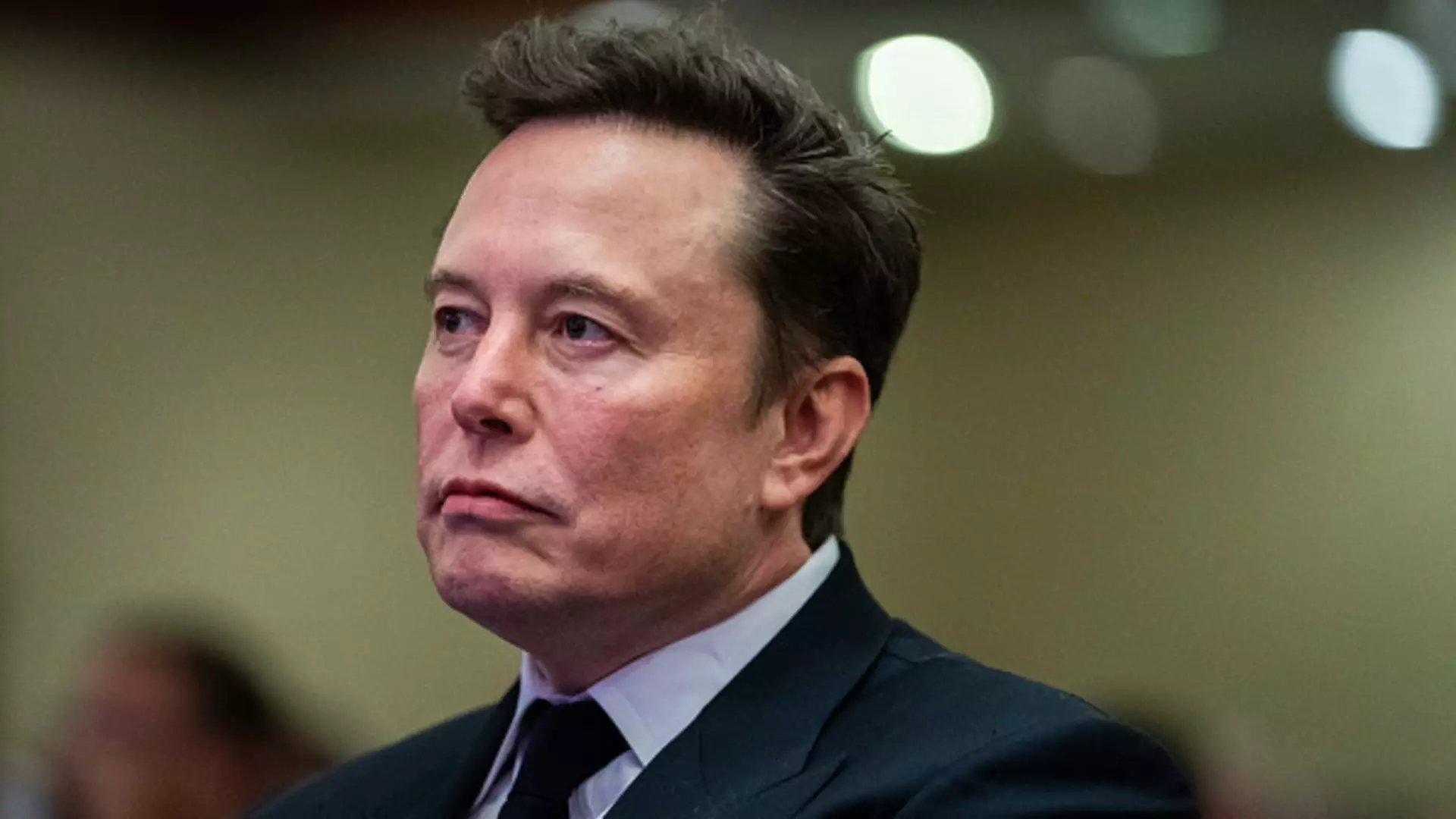
Elon Musk, a figure synonymous with innovation and disruption, has found himself ensnared in accusations of censorship that threaten to unravel his proclaimed ethos of free speech. Following his acquisition of X, formerly known as Twitter, Musk positioned himself as a champion of conservative voices that he asserted had been unfairly silenced on social media platforms. However, recent events suggest a troubling paradox as several prominent conservative accounts reported a sudden revocation of access to premium features, raising questions about Musk’s commitment to the very principles he espoused.
In a span of merely 48 hours, at least 14 conservative accounts found themselves stripped of their blue verification badges—an action that had significant implications for their ability to engage and monetize on the platform. Notifications from X indicated that such changes stemmed from the algorithmic adjustments made to manage user engagement, but those affected regarded this as a direct retaliation against them, allegedly for their dissenting views on issues like immigration. This incident highlights the precarious balance social media platforms must navigate when addressing the complex landscape of political discourse.
Many conservative figures who initially celebrated Musk’s takeover of X as a potential reprieve from censorship now label his actions as a betrayal. This sentiment runs deep, fueled by an underlying fear that their voices may be increasingly marginalized in the platform’s ecosystem. Preston Parra, head of ConservativeOG, articulated this feeling of betrayal, framing the changes as a political maneuver aimed at quelling dissent within the very audience Musk purports to empower.
Interestingly, this clash comes against the backdrop of an intensifying debate about immigration, with Musk’s views being scrutinized by a faction within the right that perceives his pro-immigration stance as contrary to traditional conservative values. While Musk has often positioned himself as a proponent of open dialogue, the timing of these allegations raises eyebrows, suggesting a deeper disconnection between his principles and actions.
Musk’s Algorithmic Justification
In a bid to clarify the situation, Musk took to X to proclaim that the platform’s algorithm would naturally reduce the visibility of accounts that face high rates of blocking or muting by verified users. This explanation, however, seemed to invite further scrutiny rather than alleviate the concerns of aggrieved users. For many, this was interpreted as an indirect acknowledgment of shadowbanning—an act that undermines the foundational tenets of transparency and fair play that Musk claims to uphold.
His comments did little to pacify the tempest swirling around X, as the users interpreted this algorithmic policy as a convenient tool for curbing conservative engagement, while allowing more favorable narratives to flourish. This friction delineates the blurred lines between free expression and public accountability, a balancing act that Musk himself must navigate as he seeks to define the future of X.
The recent debacle transcends mere social media squabbles, echoing the larger national conversation around free speech and censorship. The Trump administration’s return to the spotlight has embroiled Musk in a political whirlpool, especially following his recent alliances with pro-immigration figures like Vivek Ramaswamy. As scrutiny intensifies on tech figures with complex immigration backgrounds, Musk’s status as an immigrant from South Africa complicates the narrative further, posing a question of what genuine conservatism means in today’s divisive climate.
While Musk has positioned himself as a bridge between traditional conservatism and modern tech-savvy governance, the actions of X signal potential pitfalls in his approach. Critics argue that Musk’s responses to dissenting voices are symptomatic of a broader tendency among tech billionaires to wield disproportionate influence over public discourse, often enforcing their own ideological frameworks in the process.
As Elon Musk navigates the tumultuous waters of free speech and social media governance, the accusations levied against him raise pressing questions about the responsibilities of tech leaders in shaping the public arena. The situation serves as a reminder of the delicate interplay between advocacy, authenticity, and accountability. For Musk and his platform, the choices made in the coming months may determine not only his legacy but also the trajectory of free expression in the age of social media. The very essence of a free society demands a commitment to dialogue that transcends personal biases—a challenge that necessitates immediate and earnest consideration from all stakeholders involved.