
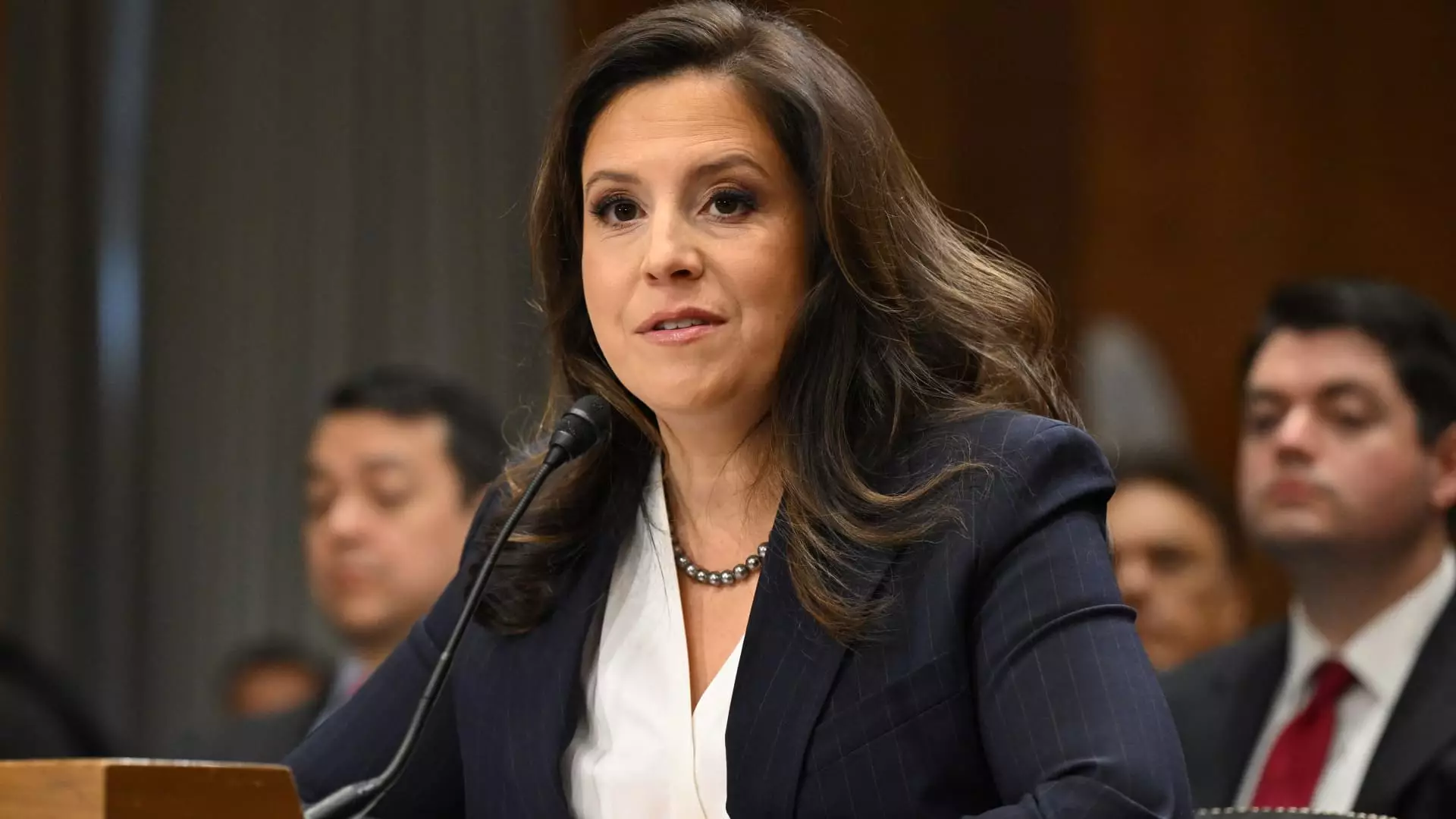
In an unexpected move, President Donald Trump recently withdrew Rep. Elise Stefanik’s nomination for the U.N. ambassador position. This decision was cloaked in rhetoric about maintaining Republican unity and a strong presence in Congress, but underneath it lies a deeper, unsettling reality about the current political landscape. With a mere handful of seats separating Republicans from losing control of the House, Trump’s priorities seem more about preserving power than fostering diplomatic relationships. The glaring question remains: at what cost does political survival come for the GOP?
Elise Stefanik: A Pawn in a Bigger Game
Stefanik has been one of Trump’s key allies, and yet, in this political chess game, she was swiftly relegated to the role of a pawn. Her loyalty to Trump’s beleaguered America First agenda was unquestionable, evident in her strong advocacy for his policies. However, Trump’s choice to prioritize her congressional seat over her potentially impactful role at the U.N. sends a message that individual ambition may be sacrificed on the altar of party allegiance. It subtly underscores Trump’s fear of losing not just seats but also the party’s foothold in the American political arena, which seems increasingly precarious.
The True Cost of Political Calculus
In Trump’s statement, he emphasized a “unified mission” and touted the necessity of keeping “EVERY Republican Seat in Congress.” This mantra, while seemingly noble, reeks of desperate preservation rather than genuine vision for leadership. By prioritizing his agenda over international diplomacy, Trump chooses to keep a loyalist in place rather than allowing a potential diplomatic leader to emerge. This decision raises the specter of a political party more inclined to nurture its own strength rather than tackle pressing global issues—an approach that ultimately renders the U.S. isolated on the world stage.
Fleeting Power Versus Lasting Influence
Trump’s argument rests on the notion that there are “others that can do a good job at the United Nations.” This vague assurance implies that any substitute nominee would suffice, which belies a shocking ignorance of the complexities involved in international relations. The role of U.N. ambassador demands not only a deep understanding of global issues but also the diplomatic finesse to navigate them—a skill set far rarer than Trump’s casual assertion implies. The oversight here is profound: while Stefanik could contribute to the GOP’s congressional strength, she may also have been a crucial voice translating America’s interests to an international audience.
A Precarious Path Forward
As the Republican Party grapples with identity and direction, Trump’s recent decision reveals the tug-of-war between immediate political necessity and the long-term implications of endorsing mediocrity over true leadership. While it may provide short-term stability—a safety net, if you will—for congressional power dynamics, in the grand scheme, it also signals a retreat from meaningful global engagement. The consequences of such choices are subtle yet significant, potentially crippling America’s ability to influence international affairs effectively. As the political landscape shifts and the alliances within the party are tested, one can only hope that insight and vision will prevail over the trailing instinct of self-preservation.