
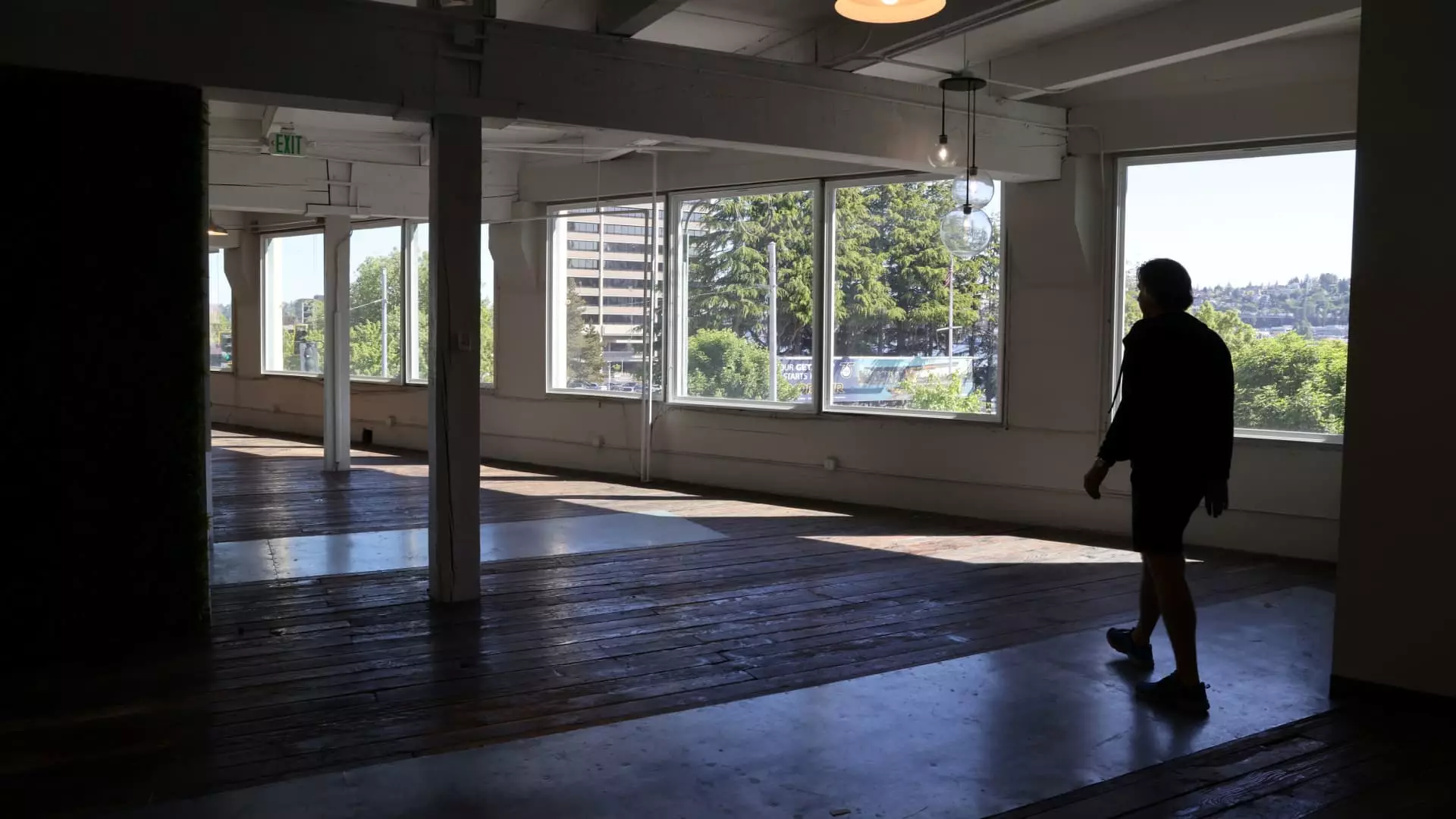
The U.S. office market is at a significant crossroads, experiencing a transformative shift that signifies both an end and a beginning. In a historical twist, the number of office conversions and demolitions is set to surpass new constructions for the first time in at least a quarter-century. This paradigm shift reflects broader changes in work culture, specifically the rise of remote work that has reshaped, and in many instances, diminished the traditional office space. Such a reconfiguration of urban landscapes may seem ominous, yet it presents a unique opportunity for revitalization and innovation in our urban centers.
Statistics reveal that throughout 58 major U.S. markets, a staggering 23.3 million square feet of office space is slated for either demolition or conversion to alternative uses by the end of this year—a feat that starkly contrasts with mere 12.7 million square feet forecasted for new construction. This is not merely a numerical anomaly; it’s a reflection of evolving societal norms and workforce expectations that real estate developers must now navigate.
Vacancy Rates and the Pendulum of Supply and Demand
The office vacancy rate, currently hovering around a chilling 19%, is one of many indicators of an unsettled market. Yet, amidst what feels like chaos, one might argue there’s a flicker of optimism. The market seems to be recovering, albeit cautiously. The push for employees to return to the office is gaining traction, as organizational leaders juggle the demands of productivity and corporate culture against the backdrop of a tightening labor market. Employees, in turn, are increasingly willing to trade flexibility for stability, which includes possibly enduring more in-person work, even when remote options were once abundant.
With net absorption—an important metric reflecting the balance between newly occupied and vacated spaces—turning positive after a prolonged downturn suggests that demand is beginning to reassert itself. Furthermore, a noteworthy 18% increase in office-leasing activity in the first quarter of this year, compared to the previous year, indicates a flicker of life in this once-battered sector.
The Silver Lining: Conversions and New Possibilities
While the overall reduction in office space may appear daunting, it also harbors promising prospects for commercial real estate. The landscape is shifting towards the so-called “Class A” office spaces that are desirable to businesses seeking quality environments for their teams. Real Estate Investment Trusts (REITs) like Vornado and SL Green are finding routes to recovery, indicating that quality matters more than ever. This push towards eliminating obsolete office spaces opens doors for imaginative conversions that could breathe new life into urban neighborhoods.
Jessica Morin from CBRE noted that, “the office market will benefit as obsolete space is removed from the market in favor of the highest and best use.” This sentiment is not just a hopeful platitude but a clarion call for innovative solutions within the real estate sector. In practice, this means that developers have the potential to take previously underwhelming office spaces and transform them into dynamic mixed-use environments, which could include retail, residential units, and community-centered spaces.
There is an impressive pipeline of 85 million square feet of office space set for conversion in the coming years. Historically, each conversion yields an average of 170 residential units, which underscores the potential to alleviate housing shortages while simultaneously reimagining urban office districts.
Challenges and the Road Ahead
However, this journey is not without obstacles. The pool of suitable buildings for conversion can diminish over time, coupled with the increasing costs associated with construction labor and materials. Such challenges necessitate a balanced approach that embraces adaptability while ensuring accountability for sustainable urban growth.
As the marketplace adapts, maintaining a center-wing liberal perspective brings a fundamental imperative—an emphasis on inclusive growth. This isn’t simply about removing defunct office spaces; it’s about ensuring the revitalized neighborhoods reflect the community’s needs, fostering vibrant environments where families can thrive, and fostering socio-economic equity. As the office landscape shifts, we must ask ourselves whether we’re merely reconstructing our economic frameworks or if we are genuinely enhancing the fabric of our society.
In navigating these complex changes, the focus should remain on both innovation and inclusivity; only then can we realize the potential that this transformation holds for generations to come.