
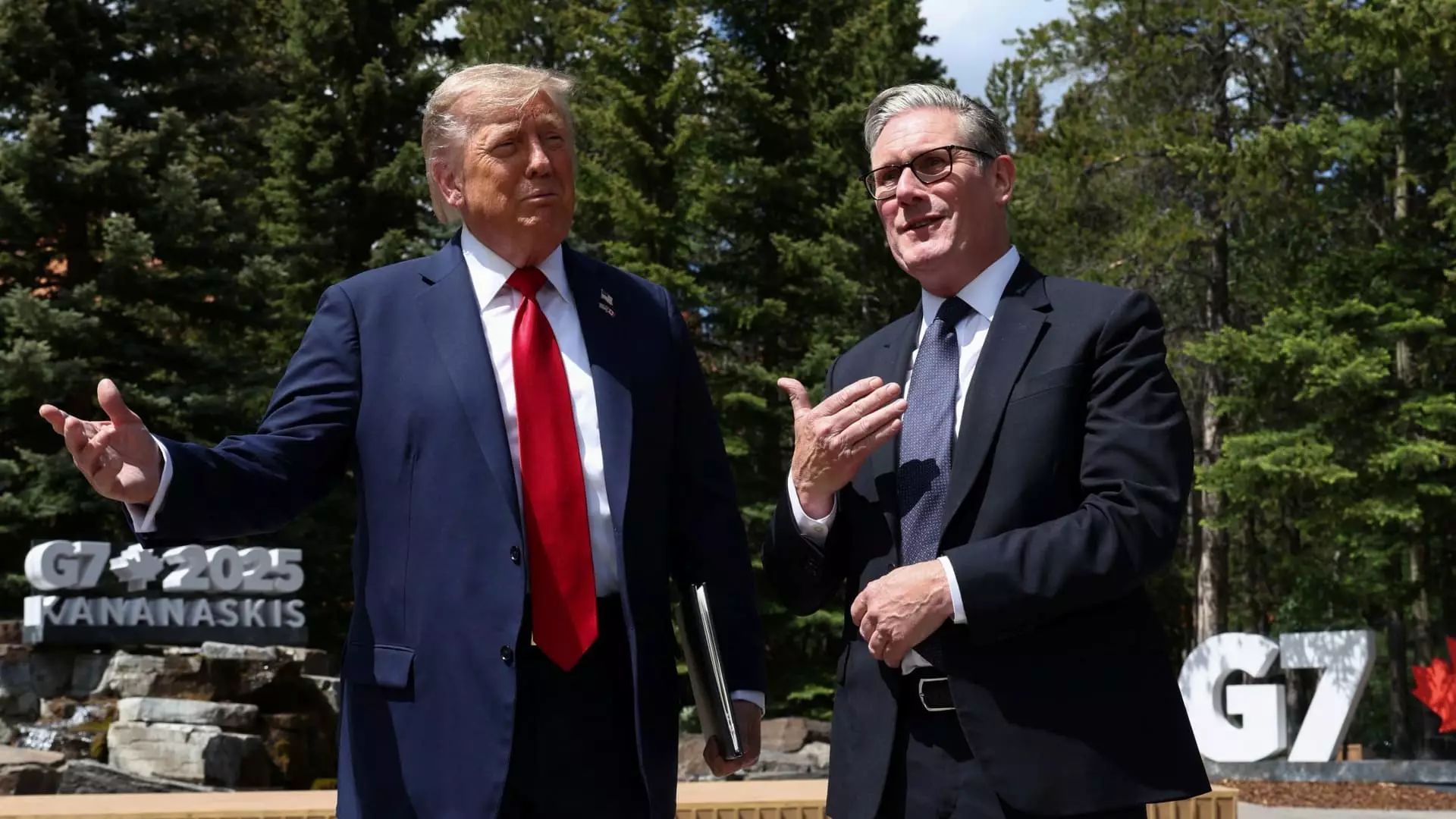
The recent trade agreement signed by U.S. President Donald Trump and British Prime Minister Keir Starmer has garnered attention, but amidst the celebratory rhetoric lies a landscape rife with complexities. While both leaders have positioned the deal as a pivotal step toward stronger economic ties, one can’t help but question the substance behind the fanfare. At the core of their announcement is the reduction of tariffs on British imports, which ostensibly presents a victory for both countries. However, as is often the case in international negotiations, the nitty-gritty details threaten to overshadow the superficial success.
The agreement proposes a much-celebrated reduction in tariffs on British automobiles and a complete elimination of tariffs for the aerospace sector. Yet, critical segments such as pharmaceuticals remain in limbo, raising eyebrows about why these categories were left untouched. In the competitive world of trade, overlooking a sector as vital as pharmaceuticals could be not just a misstep but a glaring oversight that may have long-term repercussions for the UK’s economy and public health.
A Quagmire of Conditions and Quotas
One of the most concerning aspects of the deal is the conditionality surrounding the tariff exemptions on steel and aluminum, which seem to reflect a negotiation style more focused on political optics than on substantive policy improvement. The quota on steel and aluminum imports comes with the caveat that the UK must demonstrate the security of its supply chains—a somewhat ambiguous requirement that could easily evolve into a point of contention. It raises questions about how much trust can be placed in the assurances given by both governments. Is this agreement genuinely beneficial, or is it merely a temporary reprieve from looming tariffs?
Trump’s assertion of the UK being “very well protected” is troubling, especially when the protection appears to rely heavily on personal affinity rather than solid policy frameworks. Economic alliances should rest firmly on equitable terms that withstand political whims. The idea that trade security can hinge upon a preferential relationship is risky; it reflects more of a transactional approach than a commitment to mutual prosperity.
Glaring Omissions and Unfulfilled Promises
Moreover, the emphasis on sectors such as automobiles while neglecting pharmaceuticals raises important questions about the breadth of the agreement. The UK’s pharmaceutical sector is essential not only for economic reasons but also for ensuring the health of its population. By sidestepping this key area, the negotiation risks eroding public trust. If the agreement is genuinely meant to foster a robust bilateral relationship, why is there ambiguity surrounding such a crucial industry?
Starmer presented the deal as a “very good day for both countries,” but a critical analysis suggests that it’s a promotional slogan rather than a reality that reflects a committed partnership. Real strength often rests in the ability to build comprehensive agreements that traverse various sectors, not just handpicked industries designed to appeal to both domestic and international audiences.
The Illusion of Reciprocal Advantages
Further complicating the narrative is the notion of “reciprocal access” that was highlighted during the negotiations. While both sides are set to benefit from lower tariffs and increased exports, the implications reveal a more complex picture. For instance, the emphasis on maintaining stringent UK food safety standards for American imports presents a potential stumbling block. The assurances made may quickly unravel if expectations and realities clash, thereby opening the door to disputes that could ultimately hinder trade rather than promote it.
Jonathan Reynolds, the UK Trade Secretary, asserts that the timeline for implementing these deals will be expedited, but history tells a different story. Many trade agreements take months—if not years—to finalize and fully implement, adding layers to an already intricate process. The diversity of interests at stake means there’s always a risk of dissatisfaction from one side, thanks to evolving priorities or unforeseen political considerations.
In the complex world of international relations and trade, the agreement signed between the UK and the U.S. may be less a triumph than a delicate balancing act, teetering on the edge of promise and peril. As the dust settles, stakeholders must remain vigilant to ensure that lofty proclamations translate into tangible benefits, rather than remaining mere ephemeral gestures in the realm of global trade negotiations.