
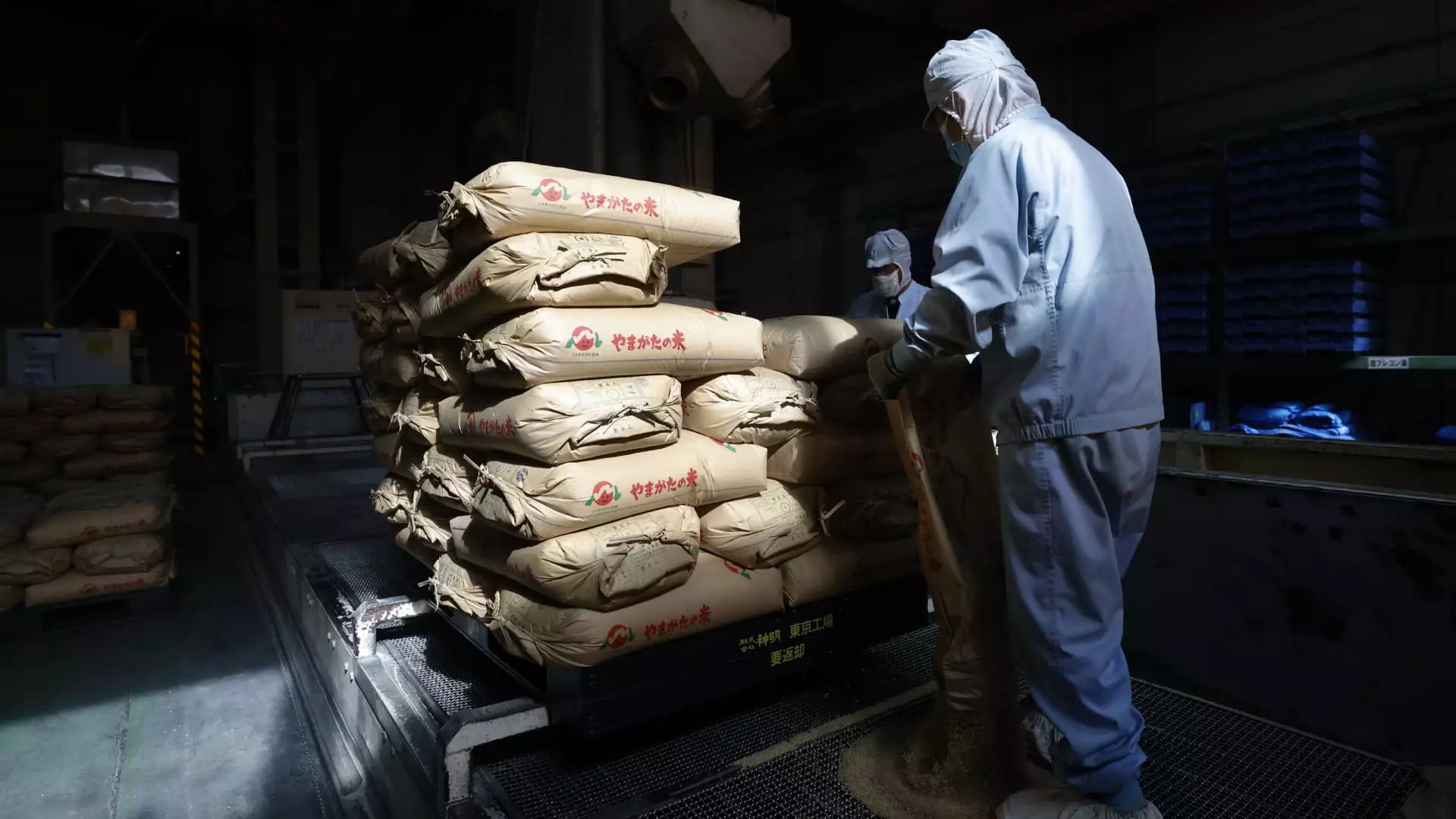
May 2023 marked a catastrophic moment for Japanese consumers as rice prices skyrocketed by an astounding 101.7% compared to the previous year. With prices more than doubling in just a month, what once seemed a staple commodity has become a symbol of a troubling economic reality. Such drastic increases haven’t occurred in over fifty years, leaving many Japanese citizens grappling with the implications of this surge. The rice crisis followed similarly alarming rates in April and March, where price hikes of 98.4% and 92.1% respectively foreshadowed the ongoing catastrophe. For a nation where rice is not just a food item but a cultural cornerstone, these increases signal dire changes ahead.
Inflation and Its Ripple Effects
Compounding the rice crisis is the overarching issue of rising inflation. Japan’s core inflation rose to 3.7% in May—its highest since the start of the year—exceeding economists’ projections. This inflation is particularly concerning as it demonstrates an unsettling trend: price increases have persisted above the Bank of Japan’s (BOJ) target of 2% for 38 consecutive months. The so-called “core-core” inflation rate, which meticulously excludes fresh food and energy costs, also experienced a nudge upwards, casting further doubt on the effectiveness of current economic interventions.
The government’s strategic release of emergency rice stockpiles is intended to provide some relief. However, reducing rice prices through band-aid solutions is like treating symptoms without addressing the underlying disease. The mere act of temporarily mitigating food costs does little to instill confidence in the larger economic framework. Efforts to soothe the anxiety of consumers and businesses alike are commendable, but they lack a long-term strategy that addresses the most pressing issues driving inflation.
The Role of Rice in the Economy
Rice prices account for approximately half of Japan’s core inflation, according to insights from industry experts. This highlights a critical dependency that exposes the fragility of Japan’s food supply chains in the face of global uncertainties. When food prices fluctuate as drastically as they are now, the ramifications extend beyond mere grocery bills; they impact household budgets and, by extension, the overall economy. If rice prices stabilize and potentially decrease, as analysts like Marcella Chow suggest, it could rejuvenate consumer spending and dining experiences across Japan.
Yet, we must recognize that this crisis transcends individual commodities. Instead, it showcases the broader implications of a disjointed food supply chain that is particularly vulnerable to external shocks like geopolitical tensions. The conflicting dynamics suggest that while there might be brief periods of respite with reductions in primary food prices, the overarching turbulence in international markets poses a relentless threat.
Monetary Policy Amidst Economic Realities
In a seemingly disconnected response, the BOJ held interest rates steady at 0.5%, despite the rising cost of living. Governor Kazuo Ueda’s assurance that rates would be raised only when there is substantial evidence pointing towards persistent inflation around the 2% target raises eyebrows. Many critics view this approach as overly cautious and detached from the lived experiences of everyday citizens. The central bank’s reluctance to react swiftly illustrates a significant disconnect between monetary policy and fiscal urgency.
Japan’s economy did experience a contraction of 0.2% in the last quarter compared to the previous quarter, with declining exports exacerbating the situation. While forecasts predict a gradual improvement, the question remains: can we sufficiently address underlying problems before they escalate into a full-blown crisis? Relying on optimistic projections without addressing immediate inflation concerns feels reckless at best and perilous at worst.
The Need for Comprehensive Solutions
As Japan grapples with rising rice prices and persistent inflation, the urgency for comprehensive economic solutions has never been clearer. Piecemeal fixes like releasing emergency rice stockpiles will not suffice in an environment fraught with uncertainty. Policymakers must take a holistic approach that promotes food security, stabilizes prices, and ultimately restores consumer confidence. Only by taking bold actions can Japan navigate this economic storm and rebuild a resilient foundation for its citizens and the larger economy. It’s high time to shift the focus from mere survival to sustainable prosperity.