
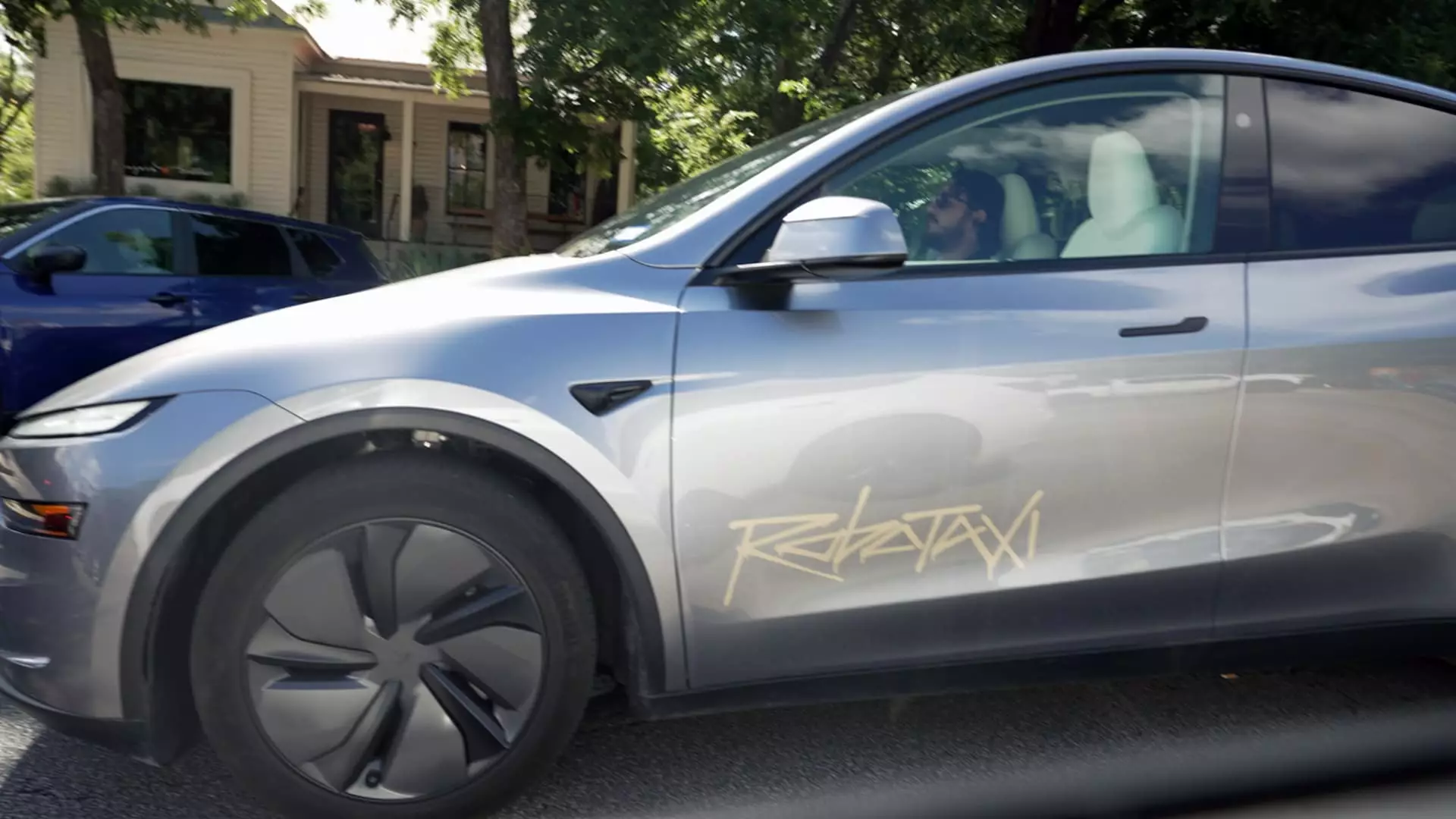
Tesla’s pursuit of autonomous vehicle deployment, particularly its ambitious foray into robotaxi services, exemplifies the modern obsession with revolutionary technology to reshape urban transportation. Elon Musk’s company has positioned itself as a trailblazer, claiming that its camera-only approach will fundamentally alter the economics and feasibility of driverless cars. However, beneath the surface of vigorous media promotion and investor optimism lies a sobering reality: Tesla’s autonomous ambitions are riddled with contradictions, technical shortcomings, and regulatory hurdles that threaten to undermine its promises. The hype surrounding Tesla’s robotaxi expansion into markets like Arizona and Texas needs critical scrutiny, especially given the company’s history of overpromising and underdelivering.
The Myth of Flawless Autonomy—A Reality Check
Tesla’s narrative hinges on the notion that its vehicle sensors and visual systems are sufficient to rival lidar-based approaches championed by competitors like Waymo. Yet this belief starkly contrasts with the complex nature of real-world urban driving. While Musk lauds the simplicity and cost-effectiveness of camera-centric systems, independent experts highlight that such reliance risks safety lapses, especially under difficult weather conditions or complex traffic scenarios. Tesla’s recent pilot in Austin is fraught with incidents—some caught on social media—that cast doubt on the safety and readiness of these vehicles for widespread autonomous operation. The incidents, ranging from minor collisions to rule violations, are symptomatic of a technology still in its early testing phases and not yet ready for mass deployment without extensive oversight.
Regulatory and Safety Concerns—Barriers to Industry Credibility
Despite Tesla’s bravado, regulatory agencies are not so easily convinced. The company’s ongoing legal battles and scrutiny from the National Highway Traffic Safety Administration underscore a fundamental issue: Tesla’s claims about its self-driving capabilities have often outpaced proven safety data. The California DMV’s legal action in 2022, alleging false marketing claims, is a stark reminder that industry regulators remain skeptical of Tesla’s narrative of near-perfect autonomy. As Tesla pushes into new markets like Arizona and California, it faces an uphill battle not just in technological development but in establishing trust amid mounting safety concerns and legal challenges. This skepticism is compounded by the fact that Tesla has yet to receive official approval for fully driverless operations in key states, casting doubt on the company’s timeline for commercial viability.
The Economics of Self-Driving—A Flawed Narrative?
Musk’s insistence that camera-based systems will make autonomous taxis cheaper and more accessible rests on a dubious assumption: that reducing sensors and high-tech components will translate into market-ready, safe, and reliable vehicles. But this perspective fails to account for the enormous costs of rigorous testing, retrofitting existing vehicles, and debugging systems prone to errors, as evidenced by the incidents in Austin. It appears that the push for rapid deployment is driven more by Musk’s entrepreneurial bravado than by an honest assessment of technological readiness or consumer safety. The promise of widespread, affordable autonomous taxis seems increasingly like an aspirational oratory rather than a near-term reality.
The Future of Autonomous Vehicles—Questioning the Hype
In the broader context, Tesla’s aggressive expansion into robotaxis and driverless testing is emblematic of a larger industry trend marked by over-optimistic projections and underdeveloped infrastructure. While the allure of fully autonomous ride-sharing promises convenience and economic efficiency, it neglects the complex socioeconomic and ethical implications. It’s essential for the public and policymakers to scrutinize these advancements critically, advocating for safety standards and regulations that prioritize human lives over corporate spectacle. Tesla’s optimistic timeline and high-profile pilot programs serve as a reminder that technological progress must be tempered with realism, transparency, and an unwavering commitment to safety—values that are often sidelined in the race for innovation dominance.
Despite the excitement surrounding Tesla’s ambitions, the road ahead remains uncertain. As the industry grapples with safety, regulation, and technological hurdles, it’s critical to remember that the promise of autonomous taxis is not just about convenience; it’s fundamentally about ensuring safety and trust in our roads. The hype machine must be tempered with a dose of rigor and humility—only then can society fully harness the true potential of autonomous vehicles without compromising public well-being.