
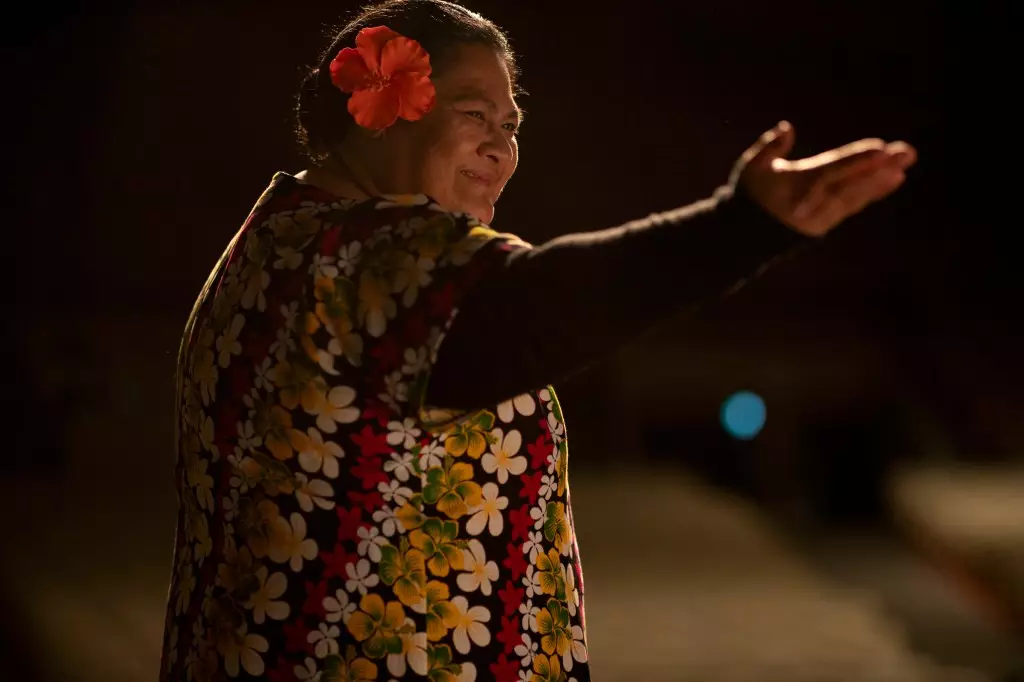
In an era overwhelmed by superficial narratives and predictable stories, “Tinā” emerges as a compelling beacon of genuine storytelling rooted in cultural authenticity. The film’s success, both critically and commercially, underscores an urgent need for diverse voices in mainstream cinema. It challenges the cultural dominance often reinforced by Hollywood, highlighting the importance of stories that reflect lived realities and ancestral traditions. The fact that it has garnered multiple awards at prestigious film festivals and achieved significant box office success in New Zealand and Australia is not accidental. It signals a brewing shift in audience appetite—an openness to nuanced, heartfelt narratives that step outside the conventional.
This film’s portrayal of Mareta Percival’s journey is more than a personal story—it’s a microcosm of the wider Pacific community’s resilience. Magasiva’s decision to focus on a woman navigating grief, identity, and cultural expression through the lens of a soulful student choir reveals a layered understanding of healing and intergenerational connection. Such storytelling demands not only artistic skill but also political courage, as it elevates marginal voices and reminds audiences that true inclusion requires more than tokenism; it requires investment, genuine representation, and storytelling that matters.
Challenging the Cultural Silos in Global Cinema
There is an inherent risk in bringing stories like “Tinā” into the global spotlight: the potential to oversimplify or misrepresent cultural complexities. Yet, the film’s accolades and reception suggest that it succeeds precisely because it resists commodification. It stands as a testament to how authentic cultural narratives can bridge geographic and racial divides when handled with care and integrity. Rialto Distribution’s commitment to a widespread U.S. release illustrates a recognition that American audiences are increasingly hungry for cinema that pushes boundaries and offers fresh perspectives.
However, there is also an implicit critique of how such meaningful stories often remain confined to niche markets or are overlooked altogether. Major studios frequently prioritize formulaic blockbusters over films rooted in minority experiences, perpetuating a cycle of cultural erasure. “Tinā” exemplifies the potential of independent and community-driven cinema to challenge this status quo, advocating for a more equitable entertainment landscape where stories from marginalized communities are seen, heard, and valued.
The Power of Community and Cultural Pride as a Form of Resistance
The film’s core message is not merely about entertainment but about asserting cultural identity in a world that often seeks to diminish it. By highlighting the Samoan musical traditions and indigenous stories within a mainstream framework, “Tinā” subtly critiques global structures of cultural marginalization. It affirms that stories rooted in community, tradition, and emotional truth are powerful tools for resistance against cultural homogenization.
In the context of center-left liberalism, “Tinā” exemplifies how embracing cultural diversity can enrich society rather than threaten it. It advocates for a form of cultural solidarity that resists assimilationist pressures, instead promoting pride in one’s heritage as a universal value. As such, it invites viewers to reconsider the importance of supporting art that not only entertains but also educates and empowers marginalized communities. It’s a reminder that authentic storytelling is an act of social justice—one that can foster empathy, understanding, and unity across different cultural landscapes.