
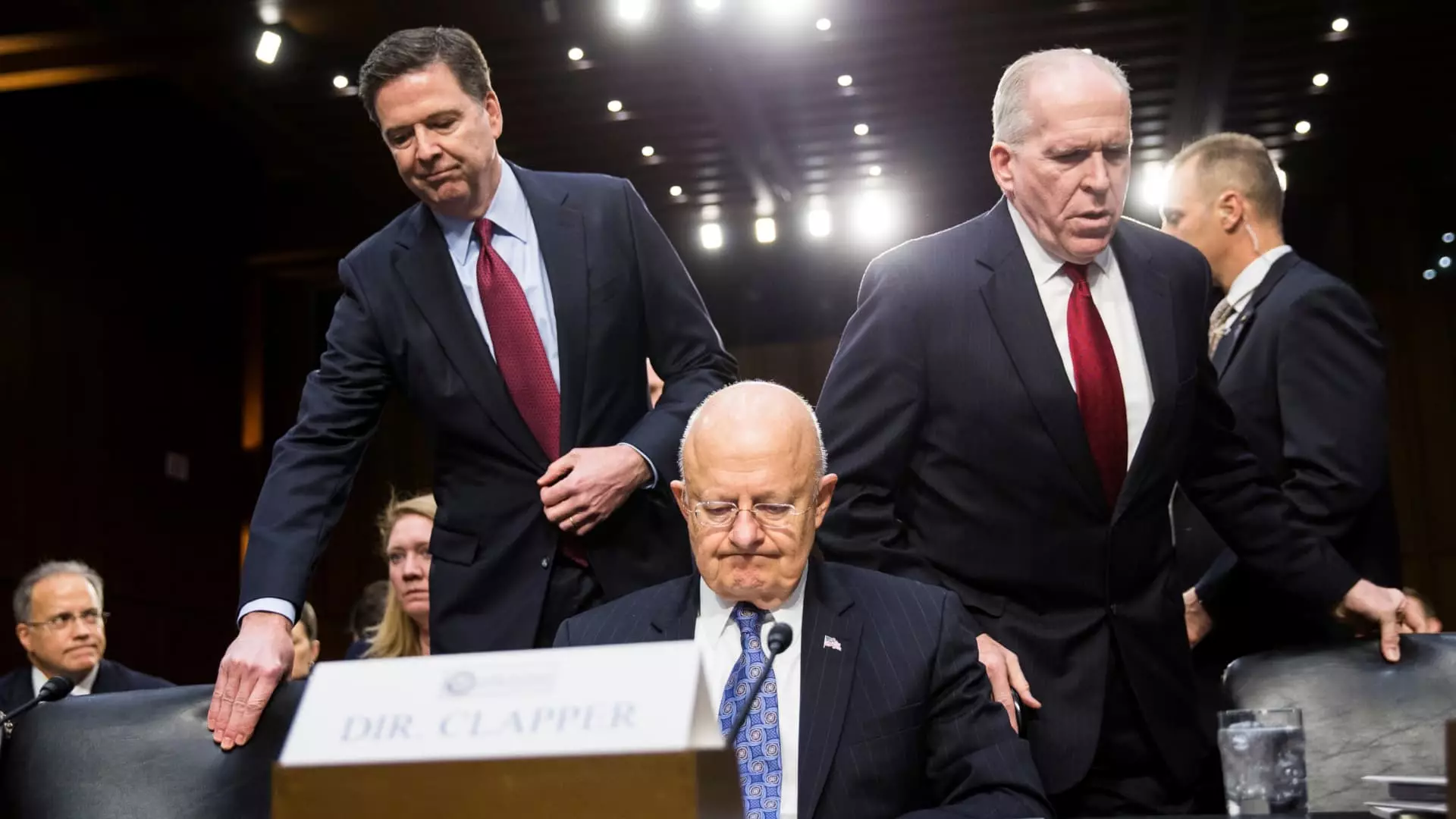
In an unsettling display of political calculations masquerading as pursuit of justice, recent investigations into former intelligence and law enforcement officials reveal a disturbing trend: weaponizing the legal system for partisan revenge rather than genuine accountability. Targeting John Brennan and James Comey, figures who served during a tumultuous period in American politics, under the guise of official investigations, risks undermining the integrity of the justice process. The ambiguity surrounding the scope and depth of these probes is not accidental; it fuels speculation and sow division, rather than clarifying facts or fostering reconciliation. Such moves threaten the foundations of fairness, suggesting instead an effort to intimidate or punish perceived political enemies, ultimately eroding public trust in institutions meant to serve justice impartially.
The Chilling Effect on Civic Discourse and Oversight
When the political establishment leverages investigations as tools of intimidation, democracy itself suffers. The investigation of Brennan and Comey, both pivotal figures in national security and intelligence, sends a clear message: no one is beyond scrutiny, but only if it aligns with specific political agendas. This selective quest for accountability discourages meaningful oversight, as officials may hesitate to perform critical functions for fear of becoming targets. Moreover, the disproportionate focus on figures linked to previous administrations demonstrates a troubling shift towards punitive activism, not genuine investigation. The pursuit of truth should be rooted in transparency, not retribution. By casting shadows of suspicion over respected officials, the current approach risk politicizing the judiciary and intelligence community, sidelining objective standards of justice in favor of partisan objectives.
The Broader Consequences for Rule of Law and Democratic Stability
The recent actions reflect a broader troubling phenomenon: the erosion of the principle that legal accountability must be rooted in evidence, not ideology. President Trump’s administration appears to have institutionalized a culture where legal efforts are weaponized against opponents, blurring the line between prosecution and political warfare. Such practices threaten to weaken the very fabric of democratic stability, where the rule of law is sacrosanct, regardless of political affiliation. The use of law enforcement agencies to settle political scores damages the legitimacy of the justice system and invites a dangerous precedent—it signals to future administrations that the law can be bent or wielded selectively. When officials like Brennan and Comey are scrutinized under suspicion-driven motives, it undercuts their credibility and the essential checks and balances that sustain a healthy democracy.
The Risks of Reckless Investigations and the Call for Ethical Vigilance
The current situation highlights the peril of engaging in investigations fueled more by political vendettas than by concrete evidence. The lack of clarity about what exactly is being investigated, combined with selective leaks and media manipulation, exposes a system vulnerable to abuse. This environment encourages conduct that is ethically questionable—investigations driven by expediency, the targeting of individuals based on their past decisions, and the suppression of dissenting voices. It is imperative for a healthy democracy that justice be administered soberly and transparently, with clear standards and due process. Instead, what we see is a disturbing trend of using investigations as instruments of intimidation, which risks deterring honest public service and eroding public confidence. Prosecutorial integrity and respect for legal thresholds are essential to uphold not only individual rights but the legitimacy of the entire system.
Recognizing the Need for Judicial Restraint and Political Maturity
In the face of rising politicization, there remains a vital need for maturity and restraint within the judicial and political spheres. Investigating past officials can be warranted if grounded in solid evidence, but turning legal mechanisms into tools for political revenge undermines the moral authority of justice. Leaders and institutions must resist the temptation to politicize their powers, instead focusing on rebuilding a system that prioritizes fairness over vendettas. True accountability requires courage, impartiality, and the acknowledgment that justice serves society, not individual political goals. Only through fostering these principles can democracy recover its footing and ensure that investigations contribute to national healing rather than deepen divisions.