
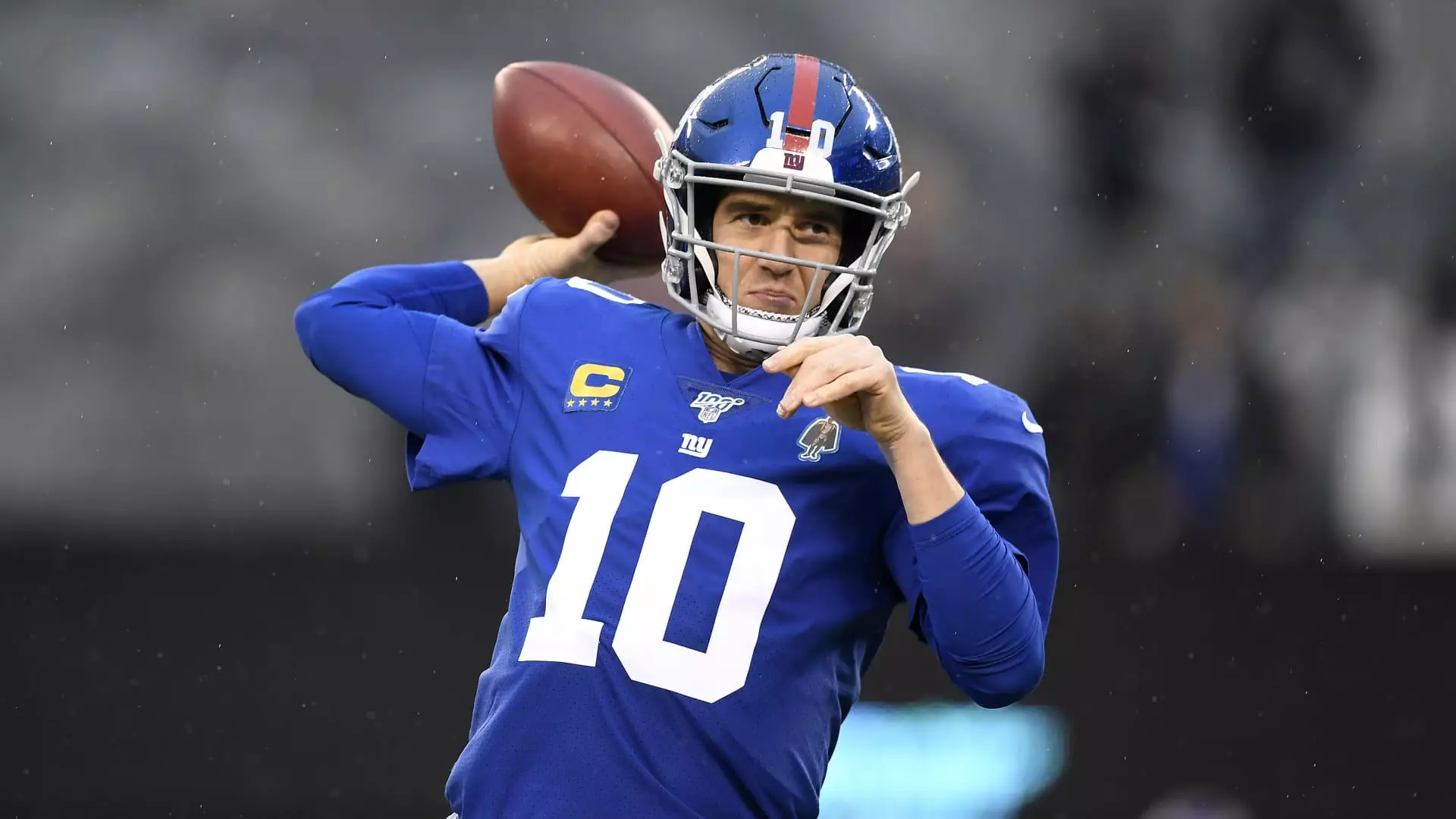
The skyrocketing value of NFL franchises like the New York Giants exemplifies the current obsession with wealth accumulation in the sports industry. What once seemed like attainable investment opportunities for former players and local entrepreneurs now appear to be distant dreams for most. As valuations soar past $8 billion, it becomes increasingly clear that the myth of accessible ownership is just that—a myth. These astronomical numbers distort the perception of worth and create an illusion of boundless prosperity that is fundamentally out of touch with the average individual’s financial reality.
The recent surge in franchise valuations—highlighted by the Pittsburgh Steelers, Philadelphia Eagles, and San Francisco 49ers—underscores a broader trend of sports franchises being valued more like digital unicorns than traditional assets. The notion that a single percentage can be bought for a few million becomes increasingly implausible. This trend warrants skepticism because it masks the underlying economic realities: these valuations are largely driven by speculation, media rights, and regional market dominance, rather than sustainable profitability. For ambitious former athletes like Eli Manning, the dream of partial ownership is increasingly unrealistic—not because of disinterest but because the cost simply exceeds any reasonable expectation of return or influence.
The Illusions of Ownership and Power
In the world of professional sports, ownership is often romanticized as a symbol of power and prestige. Yet, the reality is far more complicated. Manning’s candid admission of being “priced out” reflects a growing disconnect between the public perception of sports ownership and the financial realities involved. Such candidness reveals that these franchise valuations have become detached from genuine economic fundamentals. The inflated numbers serve as a form of social signaling: they perpetuate the narrative that owners are billionaires entitled to extraordinary returns, when in truth, the economic model underlying these valuations often relies on leveraging regional monopolies and media deals rather than organic profit growth.
Moreover, Manning’s decision not to pursue ownership stakes due to potential conflicts of interest and other complications exposes the superficial allure of these investments. For players and former players, the appeal of ownership as a way to secure legacy and influence is overshadowed by the procedural hurdles and ethical dilemmas it entails. Their concern about interfering with their careers, or straining personal commitments, reflects a broader truth—ownership is less about passion and more about navigating an increasingly complex web of corporate, legal, and social expectations. This disconnect amplifies the argument that the fantasy of easy wealth through sports ownership is just that—a pipe dream built on inflated valuations and market hype.
The Myth of Accessibility in Elite Sports
The narrative that sports franchises are accessible investment opportunities is fundamentally flawed. The reality is that these assets have become exclusive clubs for ultra-wealthy individuals and institutional investors operating in a different economic class. For former athletes like Manning, whose net worth is substantial but nowhere near billionaire status, the barrier is insurmountable. Even the prospect of buying a “minority stake” becomes an insurmountable hurdle when valuations reach tens of billions.
This exclusivity reflects a broader shift in how society perceives wealth distribution and economic mobility. The myth that sports ownership could be within reach for talented former players is akin to believing that the American Dream is universally achievable. Instead, it underscores the widening economic gap, where access to high-stakes investments is tightly controlled by a few elites who benefit from inflated asset prices. Manning’s candid comment about being unable to afford a stake demonstrates a broader truth—these valuations are more emblematic of speculation and prestige than realistic investment opportunities for most.
The Broader Implications for Society and the Economy
The growing valuations of sports teams also serve as an alarming indicator of a broader societal issue: the valuation bubble driven by media rights, branding, and regional monopolies. While fans may see these franchises as community assets, the reality is that they are increasingly speculative commodities operating within a financial ecosystem that prioritizes profits over the game itself. This disconnect risks turning sports into a playground for the ultra-wealthy, effectively excluding the very community and former players who have helped build and sustain the franchises.
From an economic standpoint, the obsession with billion-dollar valuations propagates a narrative that wealth and influence are synonymous with success, further entrenching societal inequalities. For former NFL stars like Manning, it’s a sobering reflection that the opportunities once believed to be within reach are now illusions—accessible only through the lens of corporate finance and hyper-inflated markets. As the line between entertainment and high-stakes finance blurs, the central question becomes: who truly benefits from this inflated valuation frenzy? And how sustainable can this bubble be when built on speculative numbers rather than genuine economic growth?