
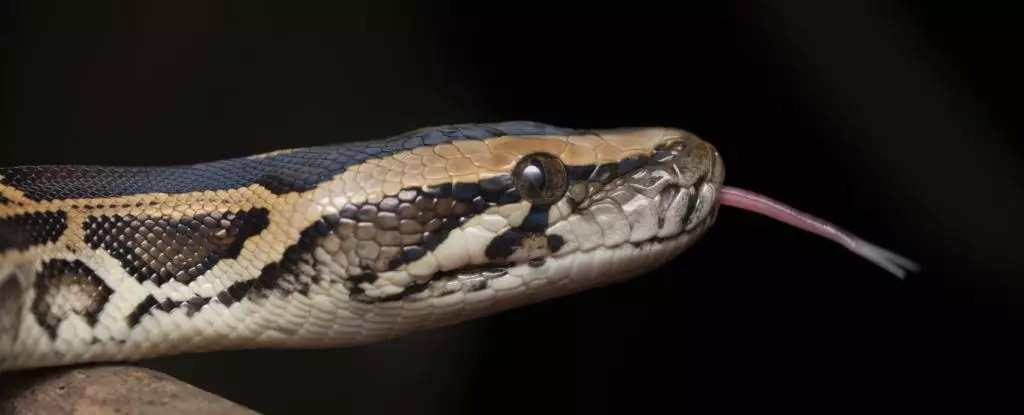
In the grand tapestry of evolution, the snake’s ability to devour prey whole—including bones—stands out as nothing short of astonishing. Unlike most predators that gnaw, chew, or partially digest their food, snakes have perfected the art of swallowing prey whole and relying on their extraordinary physiology to process it internally. Until recently, scientists grappled with understanding how these limbless marvels manage to absorb and digest massive bones laden with calcium and phosphorus without overwhelming their systems. The unveiling of a previously unknown intestinal cell type in Burmese pythons radically rewrites what we know about vertebrate digestion and adaptation, hinting at a level of biological ingenuity that borders on the surreal.
This discovery doesn’t just shed light on snake biology; it exposes the glaring gaps in our understanding of evolutionary mechanisms capable of crafting such precise, specialized adaptations. Unlike other animals that exhibit osteophagy—intentionally consuming bones—the internal cellular machinery facilitating this process in snakes has remained elusive until now. The fact that these creatures have evolved unique cells capable of completely disassembling bones and regulating mineral absorption underscores our limited grasp of biological complexity.
The New Cells and Their Game-Changing Role
The crux of the research revolves around the identification of a distinct type of intestinal cell that functions as a master regulator of calcium and phosphorus. These cells exhibit remarkable morphological features—short microvilli, narrow shapes, and a crypt-like apical fold—differing significantly from typical enterocytes. Their structure suggests a highly specialized role: managing the massive influx of minerals during digestion while preventing systemic overload.
The research carefully demonstrates that these cells contain multi-layered particles rich in calcium, phosphorus, and iron, which are sequestered in crypts when the snake is digesting bones. Intriguingly, these crypts are empty in fasting snakes, fill with particles when bones are present, and adapt further when calcium supplements are offered. This dynamic behavior reveals an elegant evolutionary solution: a biological buffer that ensures the snake can safely digest otherwise hazardous mineral-rich tissues. The absence of bone fragments in fecal matter confirms that the entire skeleton gets metabolized, not just partially digested.
This adaptation is an unsettling revelation in how animals can evolve intricate internal structures to meet their dietary needs. The discovery of these cells challenges the assumption that vertebrate digestion is a relatively uniform process and pushes us to reconsider the broader implications of cellular specialization in evolution.
Implications and Broader Evolutionary Questions
What’s particularly provocative about this finding is its evolutionary significance. The presence of similar cells in a distantly related creature—the Gila monster—raises critical questions about whether these cells represent a conserved ancestral trait or a case of convergent evolution. Either scenario complicates previously straightforward notions of evolutionary pathways. Moreover, if such cells are present in other bone-eating animals, it suggests that complex biological solutions to mineral overload have evolved multiple times across different lineages, emphasizing resilience and adaptability in the animal kingdom.
This discovery forces us to confront a sobering reality: our understanding of vertebrate digestion may be fundamentally incomplete. The discovery of these cells hints at a hidden chapter of evolutionary innovation that we’re only beginning to recognize. It also raises important concerns about how human interference—whether through habitat destruction or domestication—could threaten these specialized adaptations, potentially leading to unforeseen consequences in ecosystems where such animals play pivotal roles.
In a broader sense, this insight invites us to think critically about the narrow scope of our biological knowledge. We often see evolution as a slow, incremental process, but the snake’s intestinal cells exemplify how rapid, targeted adaptations can emerge in response to ecological pressures. It’s a vivid reminder that nature’s solutions to survival are often far more complex and elegant than our current models can accommodate.
Ultimately, the discovery of these unique intestinal cells and their role in digestion underscores the importance of maintaining a nuanced, open-minded perspective in evolutionary biology. They challenge us to recognize the vast potential for adaptation that remains hidden within the natural world—potential we must all strive to understand better, lest we underestimate the resilience and ingenuity inherent in life on Earth.