
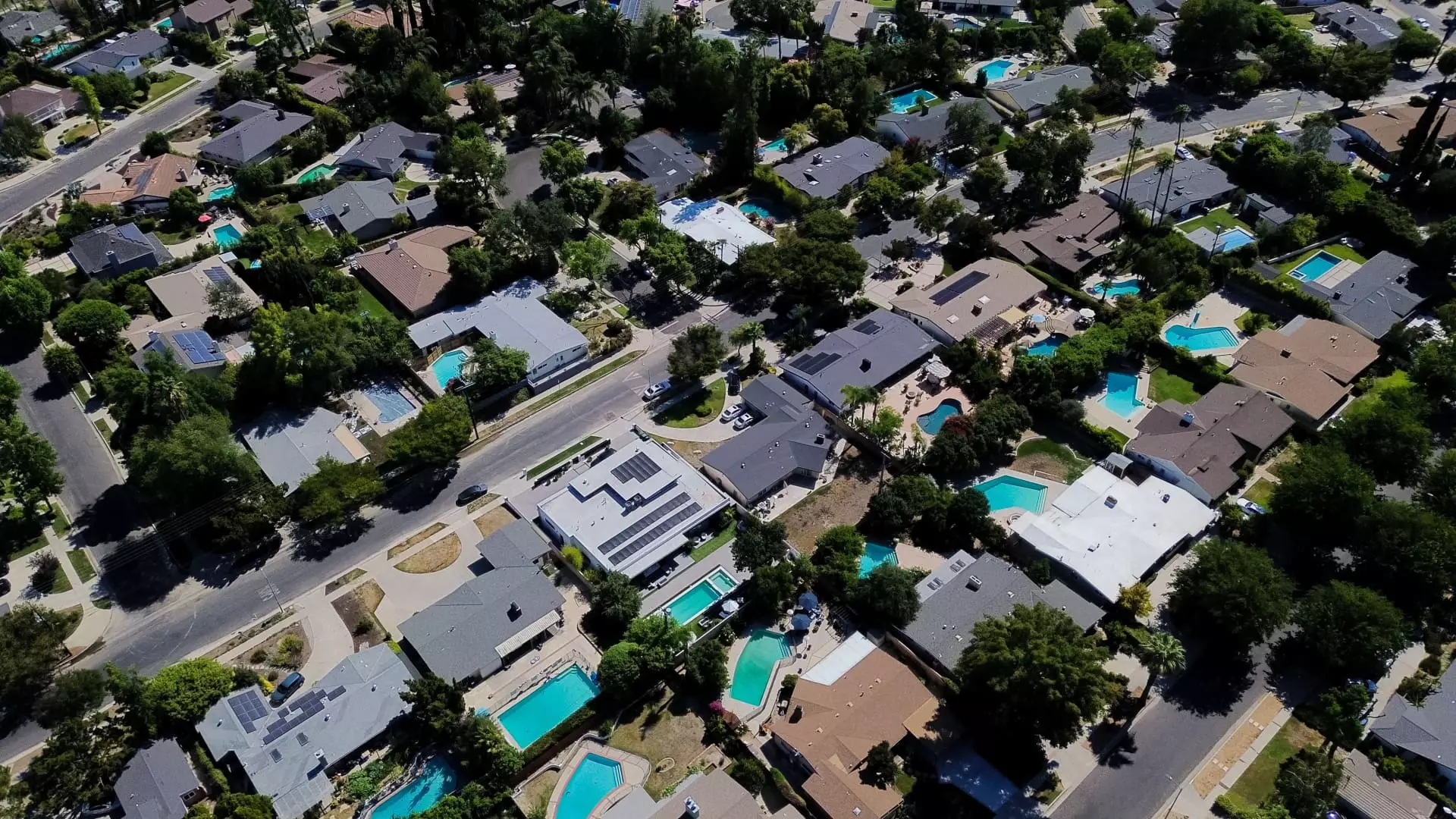
Despite the surface appearance of a resilient housing market, recent data reveal a troubling decline in home sales that cannot be ignored. In June, sales of existing homes fell by 2.7%, a substantial drop far exceeding analyst expectations of just a 0.7% decrease. This unexpected contraction indicates that the housing market, often portrayed as a robust engine of economic growth, is actually struggling to maintain its momentum. The stagnation is exacerbated by persistent high mortgage rates, which have remained above 6.8%, deterring potential buyers and acting as invisible barriers to entry. For many Americans, these soaring borrowing costs have transformed the dream of homeownership into an unattainable aspiration, especially for first-time buyers, who are now forming a smaller proportion of buyers than in previous years.
Mortgage Rates: The Unseen Catalyst of Market Stagnation
Mortgage rates are the silent puppeteers pulling the strings of the housing market. Although they haven’t climbed significantly in recent months, their sustained high levels are enough to keep home sales at cyclical lows. The average rate hovers around 6.77%, a figure that has a crippling effect on affordability. Analysts suggest that a decline in mortgage rates to 6% could result in an additional 160,000 first-time homeowners—a clear indication that affordability remains the primary stumbling block. The systemic issue lies in the broader economy’s risk-averse stance, which keeps mortgage rates elevated and discourages lenders from easing their lending standards. Consequently, fewer families are able to convert their rental or savings into the equity of homeownership, widening the racial and economic disparities in housing opportunities.
Contradictions in Supply and Price Dynamics
While the number of homes on the market is rising—up 15.9% year over year to 1.53 million units—the housing supply still remains lean, with just a 4.7-month inventory at current sales levels. This scarcity fuels a relentless upward pressure on prices, which now average $435,300—an all-time high for June and a 2% increase from last year. Such steady price escalation underscores the persistent undersupply caused by years of sluggish home construction, which has failed to keep pace even as the population grows. This misalignment between supply and demand creates a scenario where homeowners accrue significant wealth gains—$140,900 on average over five years—yet first-time buyers face insurmountable barriers to entry. The market’s highlight is the high-end segment, where homes priced above $1 million have surged by 14%, further widening economic inequality and preserving a housing hierarchy that favors the wealthy.
The Divided Market: Winners and Losers
Not all segments of the housing market are suffering equally. The data reveal a clear disparity: luxury homes and properties priced between $100,000 and $250,000 are experiencing increased activity, with rising sales figures and shorter days on market compared to lower-priced homes. Meanwhile, homes below $100,000 are declining by 5% annually, making it harder for low-income and first-time buyers to participate in the market. The slow pace of sales, averaging 27 days, combined with fewer offers per property (down to 2.4 from 2.9), signals a cooling market—particularly for first-time and lower-tier buyers. Yet, paradoxically, the share of cash deals remains elevated at 29%, suggesting that wealthier investors—both institutional and individual—continue to dominate the landscape, further marginalizing those seeking to buy their first home.
The current housing market narrative is deceptively optimistic—a veneer masking significant structural flaws rooted in economic inequality, persistent high mortgage costs, and chronic underbuilding. The myth of a resilient market ignores the fact that affordability is rapidly eroding and that the market’s apparent strength is concentrated at the upper end, excluding a growing majority of Americans. If policymakers fail to address these fundamental issues—namely, soaring mortgage rates, supply shortages, and housing affordability—the dream of homeownership will remain an elusive goal for most, while the housing disparities will only deepen. The reality is stark: unless systemic changes are made, the housing market risks becoming an increasingly polarized space where wealth, privilege, and opportunity are concentrated rather than expanded.