
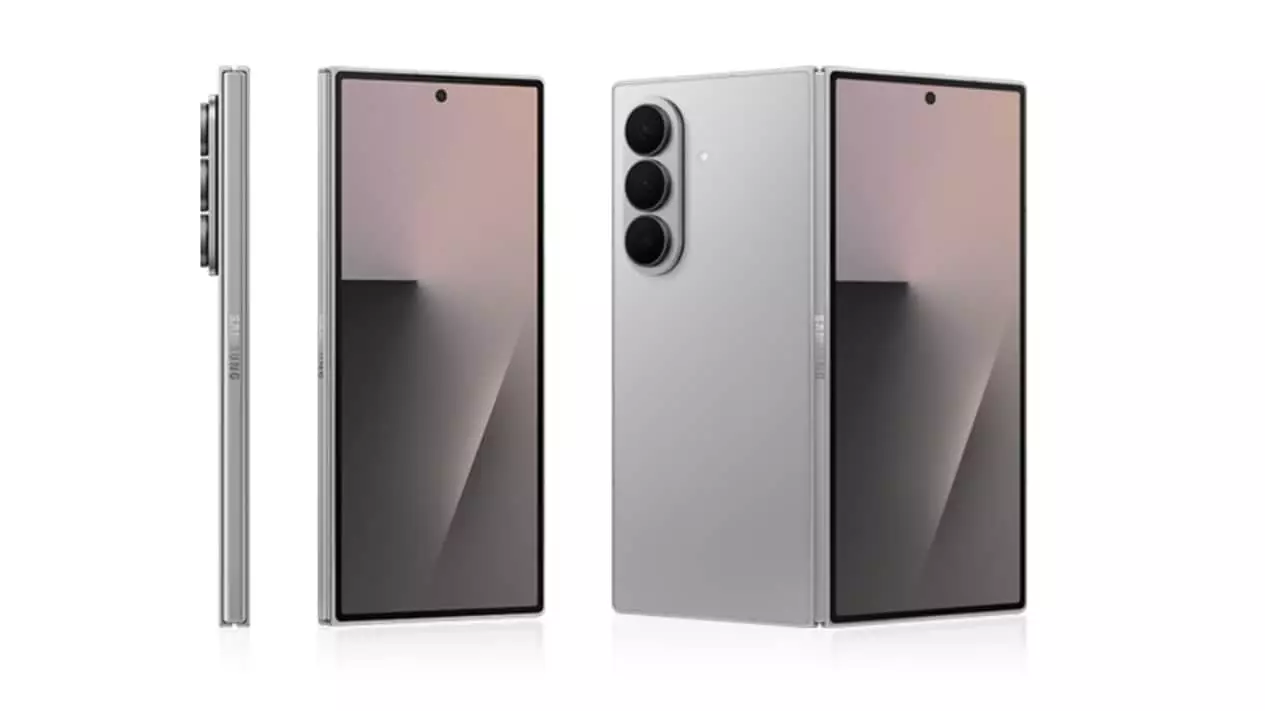
For years, Samsung’s foldable smartphone journey seemed predictable: the sleek, compact Galaxy Z Flip consistently overwhelmed its larger sibling, the Galaxy Z Fold, in sales and consumer preference. The Flip’s fashion-forward design and pocketability made it the darling of early adopters and trendsetters. Yet, recent data from South Korea signals a seismic shift—users are suddenly gravitating toward the more substantial, book-style Fold models. This change is more than just a statistic; it challenges the long-held narrative that diminutive devices define consumer desirability in the foldable segment. The pre-order figures shattered expectations, with the Galaxy Z Fold 7 now leading over its Flip counterpart—not just in numbers, but in symbolic significance. It suggests that buyers are reevaluating what they value most: compactness and style, or versatility and experience.
This shift also raises fundamental questions about what the consumer truly desires from foldable technology. Is it the practicality and novelty of the Flip, or the expansive, tablet-like experience of the Fold? Or perhaps, consumers are no longer content with choosing sides. Driven by evolving lifestyles and the need for multi-functionality, users may now see foldables not as mere gadgets but as essential work and leisure tools. The traditional ‘fashion-first’ approach might be giving way to a preference rooted in functionality, leading to this surprising ascendancy of the Fold.
Market Dynamics and Consumer Insights: More Than Meets the Eye
The figure of over 1 million pre-orders in Korea alone is staggering, especially considering the modest price tags in the broader Indian market and the premium nature of these devices. What makes this figure significant isn’t just the numbers but the underlying consumer psychology. For years, Samsung cultivated a loyal, early-adopter crowd that prioritized innovation, aesthetics, and prestige. However, the data reveals that a sizable portion of pre-orders—particularly from middle-aged consumers in their 30s and 40s—are now favoring the Fold. This demographic shift highlights a maturing market that values productivity and multitasking capabilities.
Moreover, the gender distribution of orders—over 80% from men for the Fold and about 60% from women for the Flip—underscores how perceptions of these devices are intertwined with identity, lifestyle, and even societal roles. The rising interest from women in flip models hints at their appeal as practical, stylish companions that blend into daily life, whereas the growing preference for foldables among men might reflect an appreciation for power and productivity. These nuances challenge the simplified view that foldables are only about innovating the form factor; they are becoming deeply woven into the fabric of consumer identity.
Industry analysts are guardedly optimistic, anticipating that strong pre-order momentum will convert into actual sales. However, what this momentum really exposes is a broader, more complex consumer relationship with technology. The foldable segment, once considered a niche innovation, is now entering a phase where maturity, functionality, and user experience will dictate long-term success. As Samsung pushes its foldable lineup further, questions about durability, ecosystem integration, and real-world utility will increasingly influence how this shift plays out.
The Cultural and Global Implications of the Shift
Interestingly, the growing interest in foldable smartphones isn’t confined to South Korea. The Indian market, a crucial battleground for premium devices, reports nearly matching pre-order numbers with major flagship launches like the Galaxy S25. This international enthusiasm suggests a global acknowledgment that foldables might finally deliver on their promise of replacing multiple devices, offering both portability and large-screen productivity.
Yet, the industry’s optimism must be tempered with skepticism. Such rapid shifts could be superficial—driven by hype rather than substantive user experience. Consumers, after all, are creatures of habit, and change at this scale demands genuine innovation, not just incremental tweaks. Samsung’s strategy of heavily investing in foldables might be justified, but it also places a heavy burden on these devices to prove their durability and utility in day-to-day life. If the foldable trend continues to accelerate, it might redefine what “smartphone” truly means in the 21st century. Or, it could fizzle out if these devices fail to address core issues like battery life, software optimization, and affordability.
Ultimately, the unexpected rise in Fold preferences signifies a nuanced transition—one that balances technological innovation with user-centric design. It’s not just about the next cool gadget; it’s about reshaping consumer expectations and redefining what a smartphone can be in a rapidly changing digital landscape.