
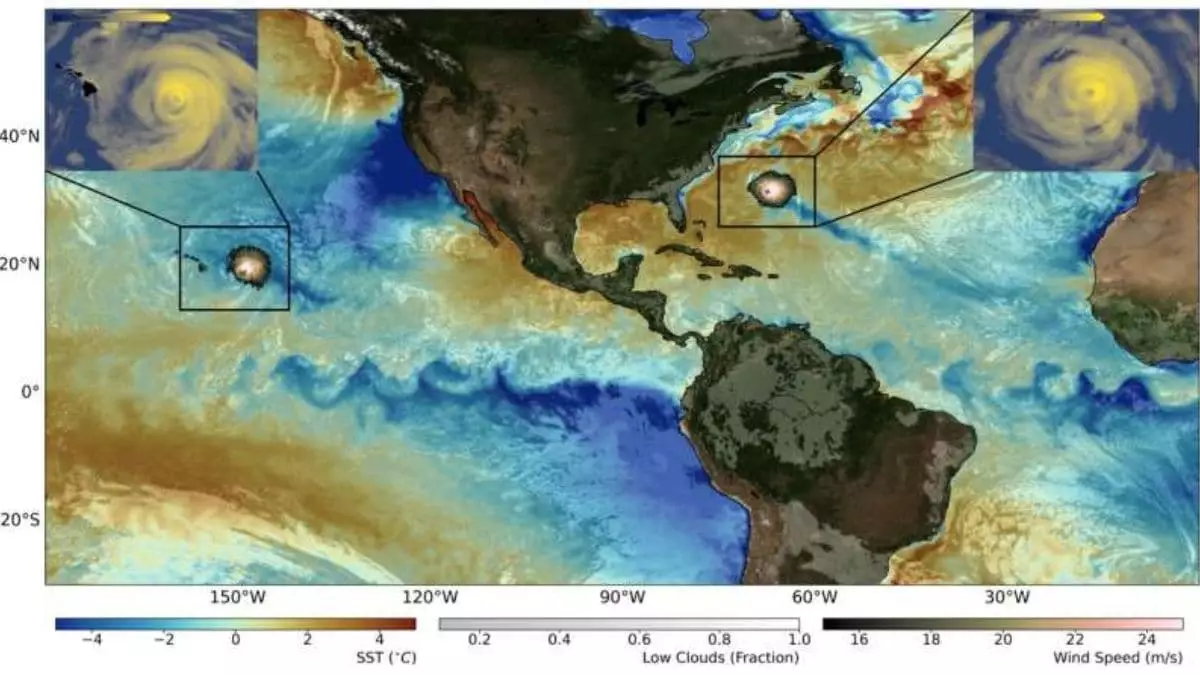
The latest breakthroughs in climate science have shattered complacency, exposing a more terrifying vision of our planet’s future than previously imagined. Advanced simulations, leveraging unprecedented geographical resolution, underscore how climate change’s impacts will intensify in ways that surpass traditional forecasts. No longer can we dismiss global warming as a distant threat; instead, it manifests as a relentless force magnifying local extremes. From the treacherous peaks of the Himalayas to the frigid Arctic, regional anomalies threaten to redefine humanity’s boundaries and challenges. This new level of detail exposes vulnerabilities that conventional models simply glossed over, like how tiny eddies in ocean currents could become catalysts for devastating storms. It’s a stark reminder that our failure to act swiftly and decisively will only deepen these impacts, leaving communities unprepared for the chaos looming just over the horizon.
Localized Disasters Are Becoming Inevitable, Not Just Possible
What’s most unsettling is how these refined models forecast intensification in climate phenomena such as El Niño, La Niña, and the Madden Julian Oscillation — factors closely tied to extreme weather events globally. Their increased frequency and intensity translate into more dangerous floodwaters, landslides, and droughts. Small island nations and high-altitude communities, often overlooked in broader discussions, emerge as early victims of this climate breakdown. Their infrastructural fragility—reliant on fragile communication networks or limited resources—renders them especially susceptible to these severe fluctuations in weather. The alarming prediction that Arctic temperatures could be 2°C higher than expected under global averages is not mere speculation; it’s a clarion call that cold regions will turn novel and unpredictable in their behavior, further destabilizing ecological and social systems both locally and globally.
The Power of Data and the Need for Urgent Action
In response to these terrifying projections, scientists have developed an innovative interactive tool that maps climate data directly onto familiar terrains via Google Earth. Such visualization is more than technological wizardry; it’s a crucial instrument for policymakers. The enhanced clarity offered by these high-resolution models provides the evidence needed for immediate and localized policy responses—investment in renewable energy infrastructure, water management strategies, and disaster preparedness plans that are tailored to each vulnerable region. But this technological sophistication also underscores our collective negligence. Humanity’s failure to curb emissions and prepare for localized extremes demonstrates a recklessness rooted in political inertia and short-term profit motives. If we continue down this path, ignoring the stark warnings embedded in these models, we risk ferrying entire communities into an era of irreversible destruction. Our window to pivot from catastrophic inaction is rapidly closing—yet, the urgency remains largely unheeded.