
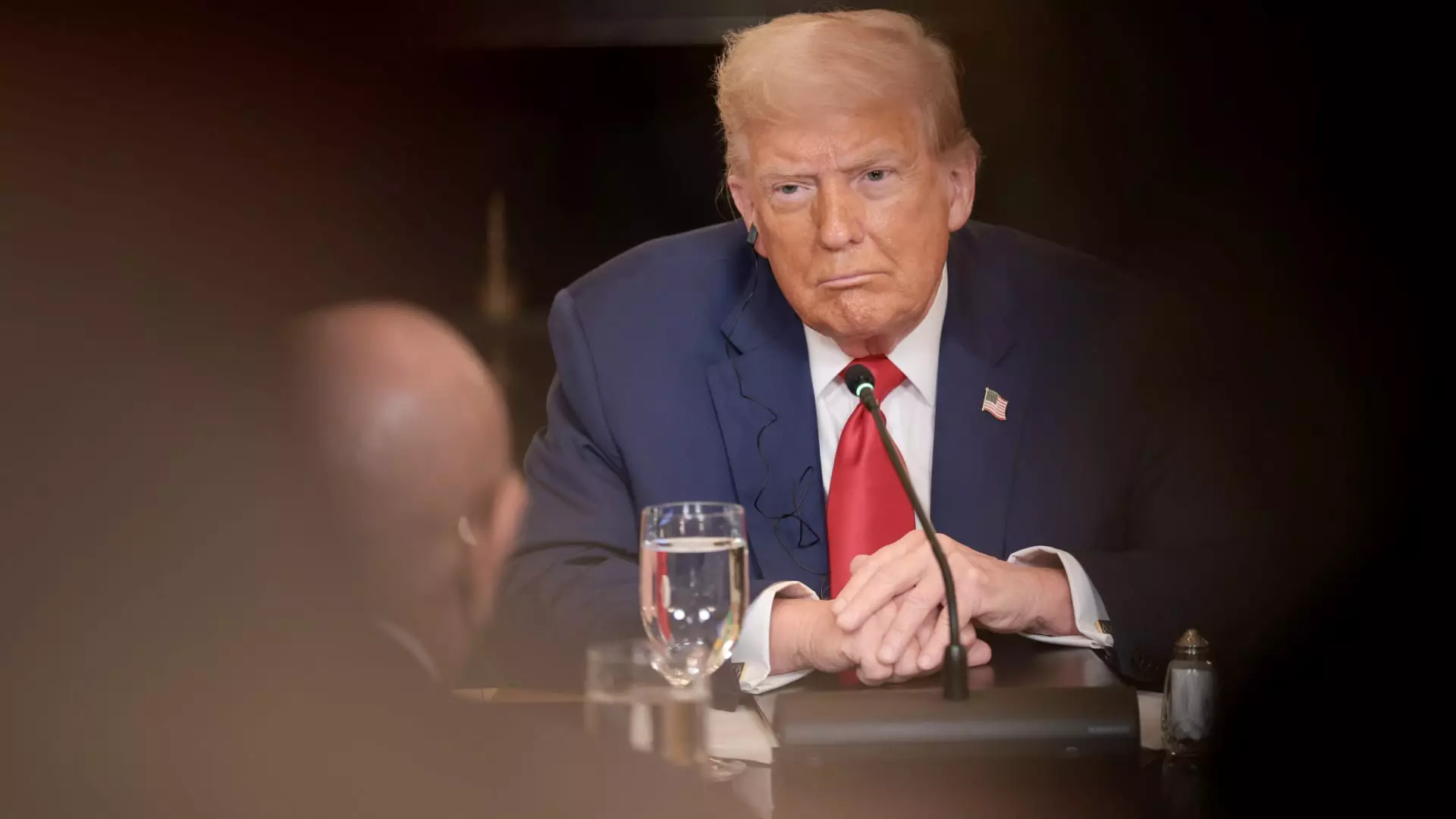
In an era where information transparency is both a right and a necessity, the reluctance of authorities to unseal critical judicial documents often fuels suspicion rather than alleviates it. President Donald Trump’s call to expose grand jury transcripts related to Jeffrey Epstein underscores a broader tension within American governance: the struggle between safeguarding justice procedures and satisfying public curiosity for truth. While legal protocols prioritize confidentiality to protect the integrity of investigations, such barriers are increasingly scrutinized amidst widespread allegations of high-level complicity and cover-ups.
The president’s public stance might seem like a genuine push for transparency, but it also raises questions about political motives. Is this an earnest attempt to unveil uncomfortable truths, or a calculated move designed to rally his base by railing against a “SCAM” orchestrated by Democrats? The timing, shortly after reports of Epstein’s personal correspondence surfaced, suggests a complex game of optics where the line between transparency and political spectacle becomes blurred. Ultimately, the insistence on unsealing these transcripts reveals a deep desire among many Americans for accountability—especially when power and privilege potentially intersect in secretive ways.
The Meltdown of Trust: From Official Narratives to Conspiracy Theories
Epstein’s death in 2019 continues to haunt the collective consciousness, becoming a symbol of governmental opacity and possible corruption at the highest levels. Official reports favor the narrative that Epstein died by suicide, a conclusion that many critics dismiss as too convenient, especially given the numerous irregularities surrounding his death and the powerful individuals connected to him. As political and public discourse devolve into conspiracy theories, the demand for unredacted evidence intensifies, not just as a quest for truth but as a declaration of distrust in federal institutions.
The shadow of Epstein’s alleged “client list” persists like an ominous threat—a secret “blackmail tool” wielded against the rich and powerful, according to some theorists. While the FBI and DOJ emphasize that their reviews found no evidence supporting this claim, skepticism remains. This persistent doubt exposes a fundamental fault line in American society: the belief that justice is sometimes compromised by what is hidden. The refusal to fully release documents fuels narratives that powerful figures are shielded from scrutiny, eroding public faith in the system’s integrity.
Political Chess and the Power Dynamics Behind the Scenes
The reaction from various political factions highlights a broader ideological divide. While Trump’s allies claim the release of Epstein’s files is a politically motivated witch hunt, a growing number of Republicans and even some moderates acknowledge the necessity of transparency. Conversely, the Democrats often emphasize safeguarding due process and the importance of legality, even when the case appears politically charged. This tug of war reflects the complex reality that justice is not just about the law but also about the perception of fairness and accountability.
Furthermore, the involvement—or perceived involvement—of notable figures like Bill Clinton and Prince Andrew complicates matters. For many, these associations suggest an uncomfortable proximity between the powerful and those accused of heinous crimes. Yet, official reports remain silent on these allegations, fueling allegations of cover-ups. The question arises: how much of the truth is being deliberately concealed to protect elites? The refusal to hold a special prosecutor, as stated by White House Press Secretary Karoline Leavitt, signifies a cautious stance—perhaps a recognition of the dangers in prematurely exposing sensitive information that could ignite political turmoil or international repercussions.
The Limits of Official Investigations and the Role of Public Sentiment
While the FBI’s recent memo asserts there’s no credible evidence linking Epstein to a broader blackmail conspiracy or to any “client list,” these claims do little to quell public mistrust. When official narratives dismiss widespread theories as unfounded or exaggerated, they risk alienating those already predisposed to doubt the establishment. The perceived discrepancy between the official story and growing public suspicion underscores a failure of transparency—whether intentional or accidental—that leaves society fragmented.
In a democratic society that values freedom of information, the challenge is striking a balance. Authorities must safeguard the integrity of ongoing investigations, but they also bear the responsibility to demonstrate honesty and openness. Failing to do so inevitably leads to a loss of trust, and more critically, it fuels the very conspiracy theories meant to be dispelled. The controversy around Epstein’s case exemplifies this dilemma: withholding documents may protect certain interests temporarily, but it ultimately breeds suspicion and cynicism among the citizenry.
Reckoning with Historical Power and the Future of Justice
The Epstein saga is emblematic of an uncomfortable truth: the existence of systemic inequalities and the privileging of the powerful often render justice inaccessible or obscure. The push to release grand jury transcripts is not merely about Epstein himself but about challenging the opacity that allows entrenched elites to operate beyond accountability. If justice is to serve as a pillar of democracy, transparency must be prioritized—even in cases as layered and sensitive as this.
As public demands grow louder, political actors are faced with a stark choice: uphold the status quo of secrecy or embrace the difficult process of full disclosure. The outcome will have profound implications—either reinforcing a culture of integrity and openness or cementing a perception that justice is a game played behind closed doors, safeguarded from public scrutiny. For center-leaning liberals advocating for a more accountable and transparent government, this moment is a test of whether institutions can overcome their own inertia and genuinely serve the public interest.