
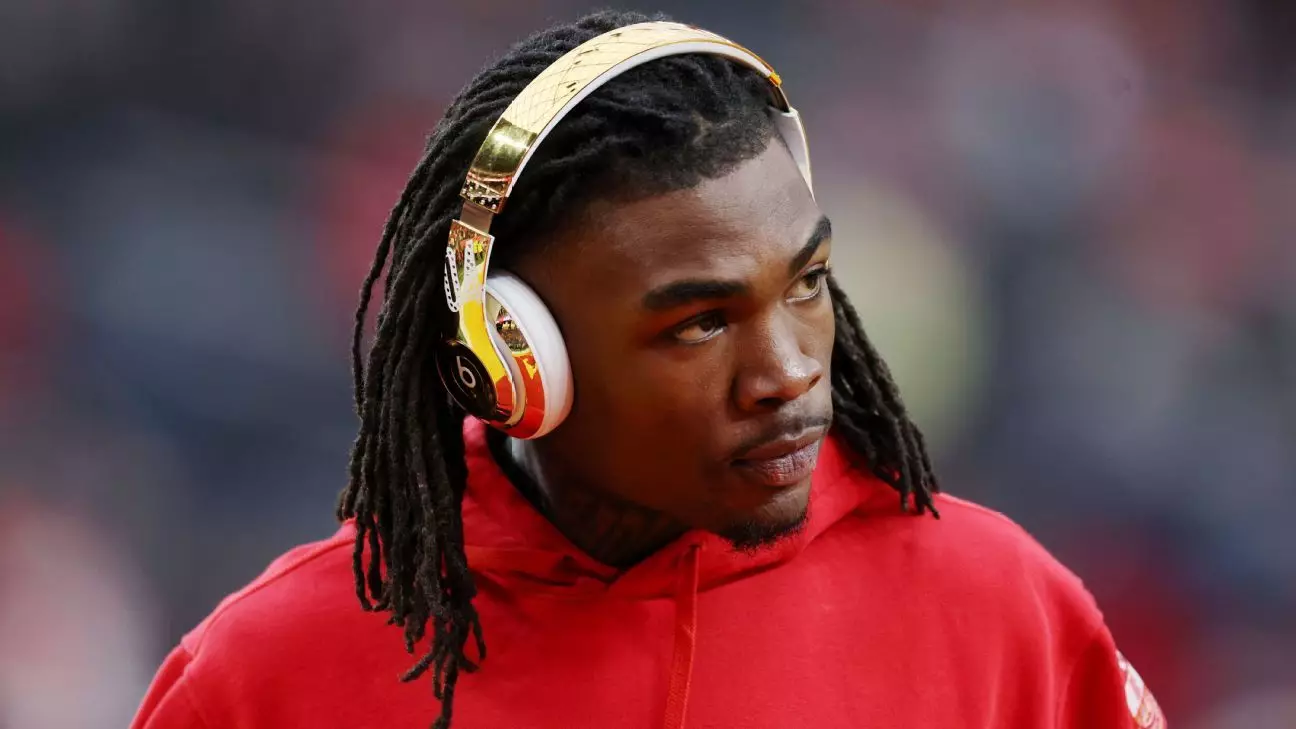
Rashee Rice’s recent legal consequences serve as a stark reminder of how easily fame and talent can overshadow accountability. The Kansas City Chiefs wide receiver, celebrated for his promising career, found himself at the center of a serious incident that reveals much about the moral compass of professional athletes. Despite suffering a significant injury last season, Rice’s choice to drive at nearly 120 mph in a high-performance vehicle demonstrates a disturbing disregard for safety—not only for himself but for innocent bystanders. His acknowledgment of remorse, while seemingly genuine, cannot fully erase the recklessness that took place. This situation underscores a painful reality: talent and privilege do not inherently confer moral immunity. If anything, they amplify the responsibility to demonstrate sound judgment, a lesson Rice must confront as part of his journey toward maturity.
Justice or Privilege? Analyzing the Legal Nuances
What stands out in this case isn’t just the act itself but how it was processed legally. Rice’s plea deal and deferred adjudication effectively balance accountability with a private form of discipline—conditional freedom, provided he fulfills his probation’s terms. This arrangement raises questions about whether elite athletes receive different treatment within the justice system, especially when their actions could have been catastrophic. Paying over $115,000 in restitution suggests an attempt at restitution, yet monetary compensation cannot compensate for the trauma inflicted on victims. The legal system’s leniency, perhaps rooted in Rice’s status or the hope of rehabilitation, seems to mediate justice carefully. However, for those watching from the sidelines, there is an unsettling implication: does the profile of an athlete influence the severity or perception of consequences? An honest appraisal must challenge whether justice is truly served or if privilege—tied to fame—mutes the gravity of such reckless conduct.
From Courtroom to Gridiron: The NFL’s Dilemma
While Rice’s legal issues are critical, they also threaten to tarnish the NFL’s reputation, which is already under scrutiny for fostering a culture that sometimes minimizes misconduct. The league’s decision to possibly suspend Rice shows it recognizes the importance of sending a strong message: actions have consequences, regardless of athletic ability. Yet, that message must be consistent and principled. The NFL’s history suggests a pattern of double standards, where some players escape harsher penalties, fueling public skepticism. This situation demands a broader reflection on how sports organizations can uphold integrity. They possess the power to model accountability beyond the playing field—championing safety, responsibility, and respect. Failure to do so perpetuates a dangerous narrative that athletes are above the law, which can have corrosive effects on young fans and aspiring players. The NFL must see this as an inflection point—a chance to reinforce discipline rooted in moral responsibility rather than mere regulatory compliance.
The Cultural Context: Fame, Recklessness, and the American Dream
Rice’s story doesn’t exist in a vacuum; it reflects larger societal issues concerning youth, privilege, and the so-called American Dream. Talent can open doors quickly, but it also carries the burden of wielding that influence wisely. For many young athletes, especially in a culture that often glorifies risk-taking and instant gratification, reckless behavior can sometimes be mistaken for confidence. The danger lies in the normalization of such conduct, reinforced by media coverage that highlights athletic prowess over moral accountability. It’s tempting to dismiss these incidents as one-off mistakes, but they are symptomatic of a deeper cultural failure—where the emphasis on success at any cost eclipses the importance of ethical integrity. Athletes like Rice must be challenged to view their platform not as a shield but as a responsibility, a chance to exemplify leadership off the field. Only through this paradigm shift can sports serve as a force for positive social change, rather than a breeding ground for recklessness and entitlement.
A Call for Genuine Maturity and Social Consciousness
Ultimately, Rice’s legal and personal apology must be weighed against the broader societal message it sends. Apologies are easy, but true maturity involves active reflection and a commitment to growth. Reckless driving at high speeds isn’t just a personal risk—it’s a failure to recognize one’s societal role as a public figure. The path forward demands more than monetary restitution and courtroom leniency; it requires genuine remorse rooted in understanding the profound impact such actions have beyond oneself. Athletes, especially those with rising prominence, should view their transgressions as opportunities for leadership, not just lessons in humility. In a society that values accountability but often falls short, Rice’s case could serve as a catalyst for conversations about morality, privilege, and the societal obligations that come with fame. If the sports community truly wants to foster responsible athletes, it must insist on standards that extend beyond performance metrics—standards rooted in integrity and a shared sense of accountability.