
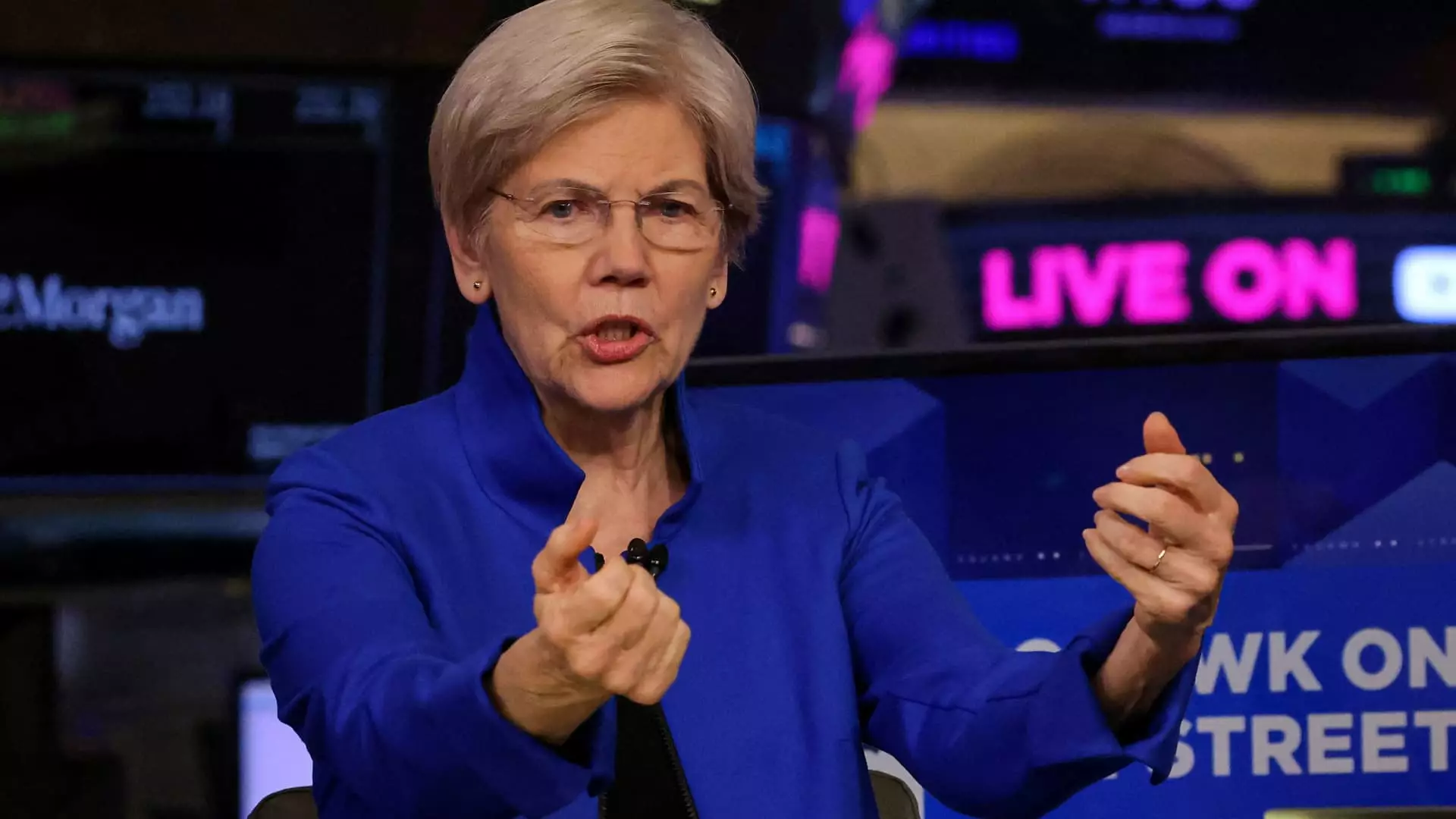
At the heart of America’s economic stability lies the independence of the Federal Reserve—a safeguard that ensures monetary policy is guided by data, not political whims. Yet, recent discourse reveals an unsettling trend: political figures, notably President Trump, threaten to undermine this critical pillar by hinting at the possible removal of Jerome Powell. Such rhetoric exposes a troubling misunderstanding of how sound economies function and threatens to unleash chaos by diluting institutional autonomy. Central banks thrive in the absence of political interference, providing a buffer against volatile electoral cycles and populist pressures. When policymakers or executives try to shoulder this role, they risk deforming core financial principles into tools of short-term political agendas.
This illusion—that a president can directly steer monetary policy—ignores the profound dangers of politicized economic decision-making. Markets rely on the perception that central banks are insulated, making decisions rooted in economic realities rather than campaign promises. Challenging this foundation not only destabilizes financial markets but endangers the credibility of America’s economic governance at large.
Undermining Stability Through Political Vendettas
President Trump’s open hostility toward Powell exemplifies a broader ideological wave that confuses political power with economic expertise. While leaders are elected to enact policies that reflect their ideological leanings, economic stewardship demands a different mindset. Powell’s reluctance to cut interest rates in line with Trump’s expectations is not a failure of leadership but a testament to his commitment to long-term stability. His decisions reflect a nuanced balancing act amid uncertainties related to tariffs and international trade, not capitulation to political pressure.
The danger lies in assuming that economic stability can be achieved through sheer political dominance. History demonstrates that when political actors attempt to control or intimidate central bankers, the result is often chaos—rising inflation, plummeting markets, and a loss of investor confidence. The Fed’s independence must remain sacrosanct, preserved precisely because it shields the economy from the caprices of political cycles. When such independence is questioned or threatened, what ensues is a perilous descent into unpredictability.
Markets Need Guardians, Not Politicians
Financial markets thrive on predictability and trust. The moment they perceive that political forces are dictating monetary policy, instability ensues. A central bank acting autonomously signals to markets and global economies that decisions are based on sober analysis, not political expediency. Powell’s tenure embodies this principle; his focus has been on maintaining inflation control and economic growth amid external uncertainties.
President Trump’s threats to remove Powell expose a fundamental misunderstanding—markets do not react favorably to attempts at political interference, which are perceived as threats to stability. The sharp sell-offs and volatility following rumors of Powell’s potential firing highlight this reality. Moreover, such actions threaten to erode the long-standing credibility of U.S. monetary policy, which has been a bedrock of global economic stability.
By undermining the Fed’s independence, the government risks turning economic policymaking into a hostage of partisan interests. This could lead to reckless rate cuts or hikes driven by election cycles rather than economic fundamentals—a dangerous path that undermines decades of stability advances.
Implications for Future Fiscal and Monetary Policies
If political leaders succeed in eroding the independence of the Fed, future policymaking becomes a game of political expediency rather than economic rationality. Such a shift would likely hamper efforts to combat inflation, stabilize markets, and foster sustainable growth. The reduction of trust in central institutions would also discourage investment, both domestically and internationally, as uncertainty grows about the integrity of U.S. economic governance.
Furthermore, undermining the Fed’s independence sets a troubling precedent that could embolden other political actors to interfere in institutions meant to serve the public good rather than partisan interests. It risks creating a cycle of instability, where economic policy is dictated less by data and more by political battles.
The current situation underscores the vital importance of maintaining institutional integrity. Authority rooted in independence, transparency, and accountability should serve as the backbone of the U.S. economy—yet, these principles are now under threat. As much as political leadership is necessary, it cannot and must not dictate the decisions of independent institutions that safeguard national and global economic stability. To do otherwise is to invite chaos, uncertainty, and long-term economic decline.