
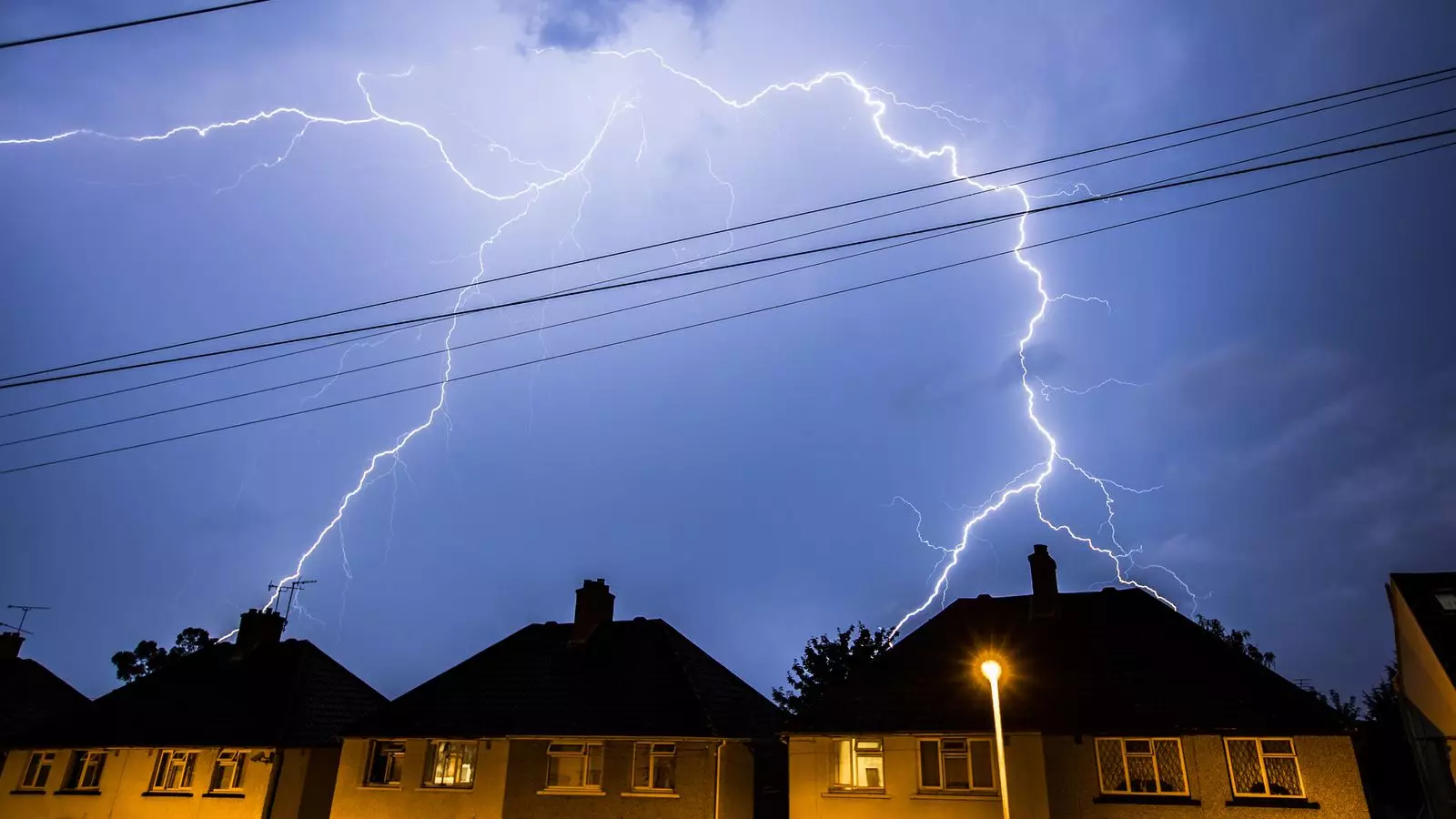
Recent meteorological alerts underscore a stark reality: our climate is undergoing dramatic shifts that threaten the fabric of daily life. The Met Office’s amber and yellow warnings for thunderstorms, torrential rain, and flooding reveal not only the severity of current weather patterns but also reflect a broader systemic failure to address climate resilience. While authorities issue warnings and advise caution, there is an underlying urgency that is often overshadowed by political reluctance and short-term interests.
We are witnessing a natural phenomenon amplified by human activity—an exacerbation of weather extremes that threaten to turn routine emergencies into persistent disasters. Communities from London to Yorkshire face the frightening prospect of becoming isolated, their roads submerged, their homes and businesses vulnerable to floodwaters. Power outages and transport disruptions threaten to paralyze regions, exposing the cracks in our infrastructure and the inadequacy of our preparedness.
Yet, instead of a cohesive response rooted in proactive planning, political narratives tend to oscillate between dismissiveness and alarmism, often ignoring the bigger picture—the urgent need for systemic change. Our current trajectory ignores the warning signals of climate science, risking a future where such episodes become not isolated incidents but routine occurrences. The question is whether society will wake up in time to invest in resilience, or whether we will persist in our complacency.
Narrow Focus and Missed Opportunities in Climate Policy
While weather agencies scream alarms, governmental and corporate responses remain largely reactive, addressing symptoms without tackling root causes. The drought conditions in much of England, which ironically follow an unusually dry start to the year, highlight the paradox of climate management: we are both suffering from water shortages and facing torrential rains. This contradiction exposes a flawed approach, one that views climate anomalies as isolated incidents rather than interconnected crises.
The current droughts, water shortages, and hosepipe bans are symptoms of mismanaged natural resources—courtesy of policies that prioritize short-term economic gains over sustainable infrastructure investments. The decline in reservoir levels, with some regions dipping below 54%, demonstrates a failure to prepare for variability predictability and resilience. Instead of viewing these challenges as opportunities for modernization—investing in sustainable water management, green infrastructure, and adaptive urban planning—governments often resort to reactive measures that fail to address systemic vulnerabilities.
Efforts to mitigate climate change require a paradigm shift, not superficial measures. Yet, political hesitation, combined with a lack of coordinated action, hampers meaningful progress. Major polluters and industries still operate with minimal accountability, delaying the transition toward renewable energy sources and sustainable development. The current weather chaos should serve as a clarion call for robust, inclusive climate policies, not a justification for complacency.
The Social Dimension: Vulnerability and Inequality
Weather disasters are inherently unequal in their impact. Flooded neighborhoods, stranded commuters, and power outages disproportionately affect vulnerable communities, exposing societal inequalities. Those living in poverty or without proper housing bear the brunt of climate-driven disasters—yet their voices are often ignored in policymaking conversations centered on broader economic interests.
The policies enacted frequently overlook the importance of social justice. Investing in resilient infrastructure, equitable access to resources, and community-based adaptation plans is essential. However, the current approach tends to favor technological fixes or reactive firefighting rather than proactive resilience building, leaving marginalized communities exposed to repeat crises.
Furthermore, the mental health toll of climate anxiety and uncertainty is mounting, especially among young populations who inherit a world shaped by our inaction. This emotional burden must not be dismissed as merely an individual concern but recognized as a societal gap that urgent policy reform must fill.
The Future in Our Hands: From Panic to Purpose
Addressing the climate emergency isn’t about succumbing to despair; it’s about recognizing that we stand at a critical juncture. The climate crisis exposes the fragility of our current systems and the imperative for holistic, sustainable solutions grounded in social justice and environmental stewardship.
Rather than viewing these weather warnings as isolated emergencies, society needs to mobilize around the principle of resilience—rebuilding infrastructure with foresight, fostering community-driven adaptation, and embedding climate considerations into every level of policy. Proper investment in green technology, sustainable urban planning, and community education can turn crises into catalysts for positive change.
There’s an unmissable moral obligation to learn from these events—embracing a worldview that balances development with ecological integrity. Only then can we hope to foster a future where weather disasters, while inevitable, are no longer catastrophic, and where communities are empowered and protected against the unpredictable wrath of a Changing Climate.