
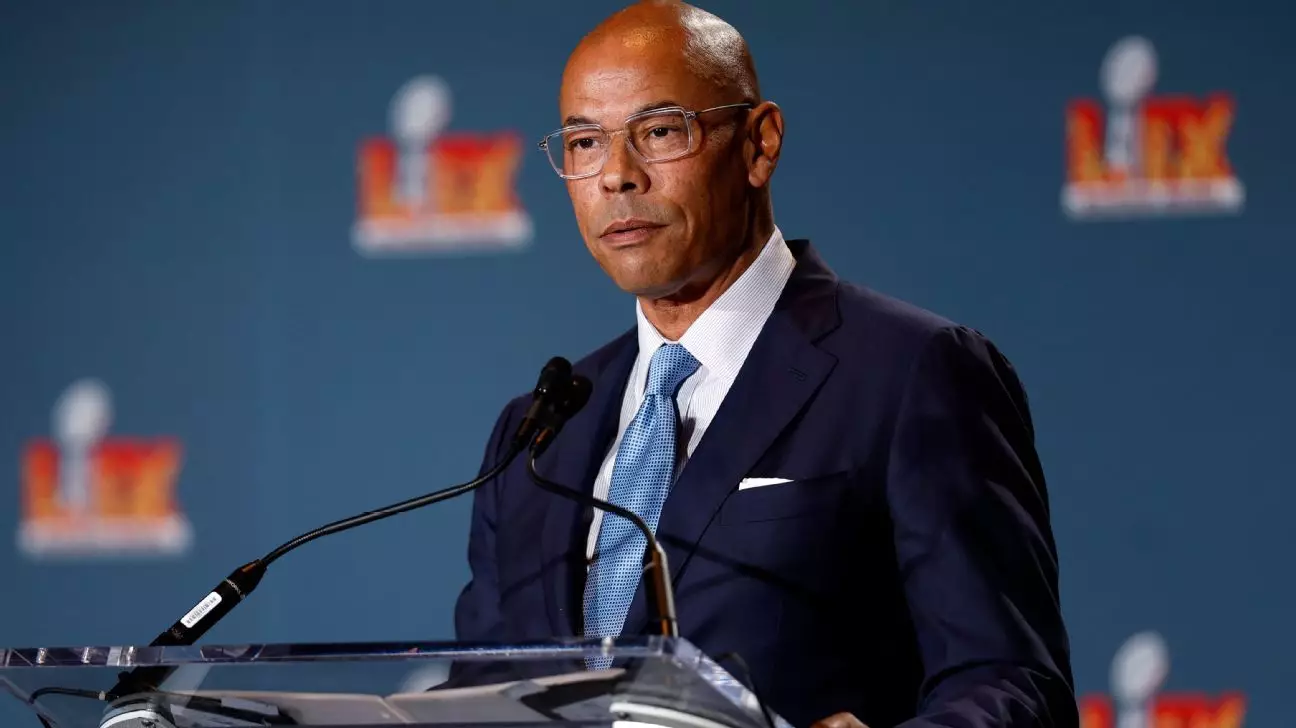
In the wake of Lloyd Howell Jr.’s sudden resignation as NFL Players Association (NFLPA) executive director, a revealing picture emerges about the shadows that lurk behind the veneer of sports leadership. While at first glance, Howell’s departure might seem like an ordinary exit amid controversy, digging deeper exposes an unsettling reality: the sports industry is riddled with conflicts of interest, opaque dealings, and a concerning lack of accountability. Leadership within major leagues often operates in an environment where the lines between corporate interests and players’ rights blur dangerously, fostering a corrosive atmosphere that undermines true reform.
The narrative surrounding Howell’s role at Carlyle Group, a prominent private equity firm, underscores this unsettling trend. His simultaneous involvement with Carlyle—particularly with its aerospace and defense division—while serving as a union leader exemplifies a systemic failure to prioritize the players’ welfare. When union officials hold financial ties to firms seeking stakes in NFL franchises, whether minority or otherwise, it raises a glaring conflict of interest. This isn’t just a matter of personal ethics but a systemic problem that questions whether players are truly protected from exploitative financial schemes driven by corporate motives disguised as progress.
This entire ordeal becomes even more troubling considering the ongoing FBI investigation into NFLPA’s dealings with OneTeam Partners, a multibillion-dollar licensing firm. The fact that such serious inquiries are unfolding simultaneously with high-profile leadership scandals calls into question the integrity of the league’s governance. It suggests that behind the cosmic fireworks of big-name sports, there exists a tangled web of deception, greed, and power struggles that often sideline the very athletes the league claims to champion.
The Harsh Reality of Power and Privilege in Sports Governance
What becomes evident through Howell’s case is the persistent gap between the league’s polished public image and its internal realities. His resignation, reportedly driven by concerns over potential conflicts, is likely just the tip of the iceberg. Such decisions, often cloaked in diplomatic language, mask a deeper systemic flaw: the prioritization of corporate alliances and financial gain over transparency and ethical responsibility.
The fact that Howell’s tenure was marred by controversy—ranging from undisclosed investigations to allegations of past discrimination—raises serious questions about the vetting processes for leadership roles within the NFLPA. Are union elections truly reflective of informed choices, or do they sometimes serve as smokescreens for selecting individuals embedded within entrenched power structures? The opacity surrounding Howell’s appointment and the secrecy that shrouded his hiring indicate a lack of genuine accountability. This environment cultivates an atmosphere where questionable integrity can flourish, ultimately damaging the union from within.
Furthermore, the league’s approval of private equity firms like Carlyle to invest in franchise ownership underscores a troubling trend—sports teams increasingly viewed as lucrative assets for corporate profits rather than community or worker-oriented institutions. Such a paradigm shift dilutes the sport’s cultural significance, transforming it into a financial gamble rather than a unifying force. The aggressive pursuit of financial expansion risks alienating fans and players alike, turning what was once a sport rooted in local communities into a playground for multinational corporations to capitalize on.
A Call for Genuine Reform and Ethical Oversight
This complex web of conflicts underscores the urgent need for reform rooted in transparency and accountability. The NFL and its affiliates must redefine their priorities, placing athlete rights and community interests above corporate profits. Leaders in the sport need to be held accountable not only for their actions but also for their hidden financial entanglements that threaten to undermine the integrity of the league.
True progress demands more than surface-level changes; it requires a radical overhaul of governance structures, a commitment to away-from-the-scenes transparency, and a moral recalibration that prioritizes the voices of players over the interests of corporate investors. Without such reforms, the league risks continuing its descent into a corporate playground, where the true spirit of sport—the competitive, communal, and cultural essence—is sacrificed at the altar of greed.
Howell’s case exemplifies the deceptive facade of integrity often perpetuated in the world of sports leadership. There is a pressing need for fans, players, and policymakers to scrutinize the true motives behind league decisions and to demand an environment where ethical leadership, genuine transparency, and community-focused values are restored at the core of the sport. Anything less is a betrayal not only of the players but of the cultural fabric that sports have historically represented.