
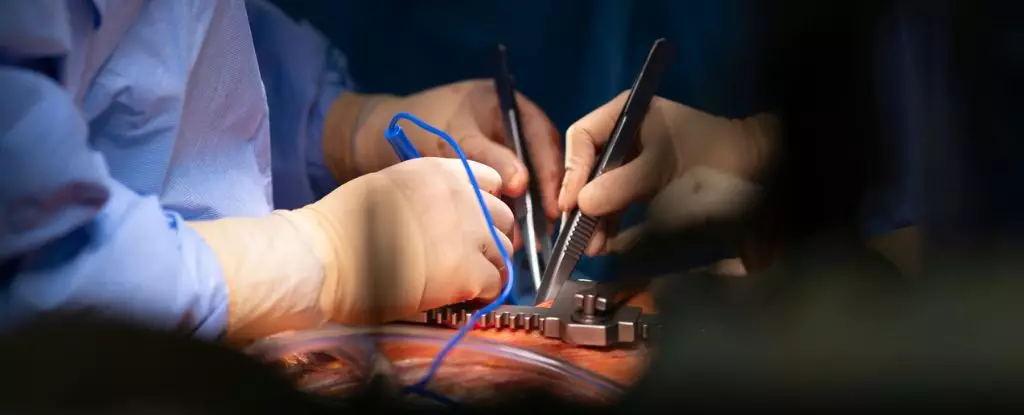
Recent advancements in pediatric heart transplantation have stirred a mixture of awe and controversy within the medical community. Surgeons at Duke University have demonstrated a groundbreaking ability to resuscitate a ‘dead’ heart that had flatlined for over five minutes—an achievement that challenges long-standing notions of death and organ viability. This pioneering effort did not just save one life; it expanded the potential of what medical science can achieve in the realm of organ preservation and transplantation. The subject is both inspiring and unsettling, as it forces us to reconsider ethical boundaries, redefine death, and push the limits of technology.
What makes this development truly remarkable is the successful revival of a tiny infant’s heart through a complex, custom-engineered system involving an oxygenator, centrifugal pump, and reservoir. The mechanical intricacies are astounding—they serve as proof that we are gradually overcoming the fragile barriers that once limited us to donor hearts only from certain states of death. Here lies a powerful message: with innovation and a willingness to challenge traditional limitations, lives can be saved in ways previously thought impossible. Nevertheless, it also raises profound ethical questions about the sanctity of death, the criteria for organ donation, and the moral implications of reanimating an organ that has ceased functioning.
Ethics in Flux: The Controversy of Circulatory Death and Organ Reanimation
The debate surrounding on-table reanimation is more complex than just technological capability; it strikes at the core of medical ethics and societal values. Most organ donors in the United States are declared brain dead, with the heart kept beating artificially until donation. But the scant 0.5 percent of pediatric donors after circulatory death—when the heart stops beating naturally—becomes a contentious issue. Critics argue that re-engaging a heart after death blurs the line of what it means to be truly “dead,” questioning whether the original declaration of death remains valid once the organ is put back into motion. This debate is not just philosophical; it implicates legal, moral, and cultural norms about life and death.
What is particularly provocative about Duke’s approach is the use of external systems to reanimate the heart outside the donor’s body, thereby potentially sidestepping some ethical dilemmas associated with resuscitating a heart in situ. On the other hand, opponents fear that such techniques may undermine established definitions of death, undermining public trust and complicating consent. If, theoretically, a heart can be revived after declaring someone dead, society must wrestle with the implications: Are we redefining death itself? What safeguards are necessary to ensure ethical clarity? These questions are crucial in holding medical advancements accountable and ensuring that innovation doesn’t erode foundational principles.
Alternatives and the Future of Heart Donation
Amidst the moral quagmire, the Vanderbilt University team offers an alternative approach that navigates some of these troubled waters. Their method involves simply preserving the donor heart through a cold-preserving flush, rather than reanimating it in real time. This technique avoids directly reviving the organ within the donor and focusing instead on its preservation for later transplantation—an approach that appears to respect the boundary between life and death more clearly. Early results suggest it is effective, with transplant success rates promising better outcomes with less ethical ambiguity.
This divergence in scientific strategies—between immediate reanimation and preservation—reflects broader societal struggles. It embodies a cautious optimism: yes, we can now save more pediatric hearts, but should we? The core of the debate continues to revolve around balancing the urgent need for more organs in a context of scarce resources against the moral obligation to uphold ethical standards. As technological advances accelerate, it becomes increasingly vital that societal dialogue and policy frameworks evolve in tandem to ensure that innovation aligns with ethical integrity.
In the end, these technological feats serve as a stark reminder that medicine is not merely about extending life but also about navigating the complex moral terrain that accompanies new possibilities. The challenge lies in forging a path forward that respects human dignity while embracing cutting-edge science in the relentless pursuit of saving more lives, especially among the most vulnerable.