
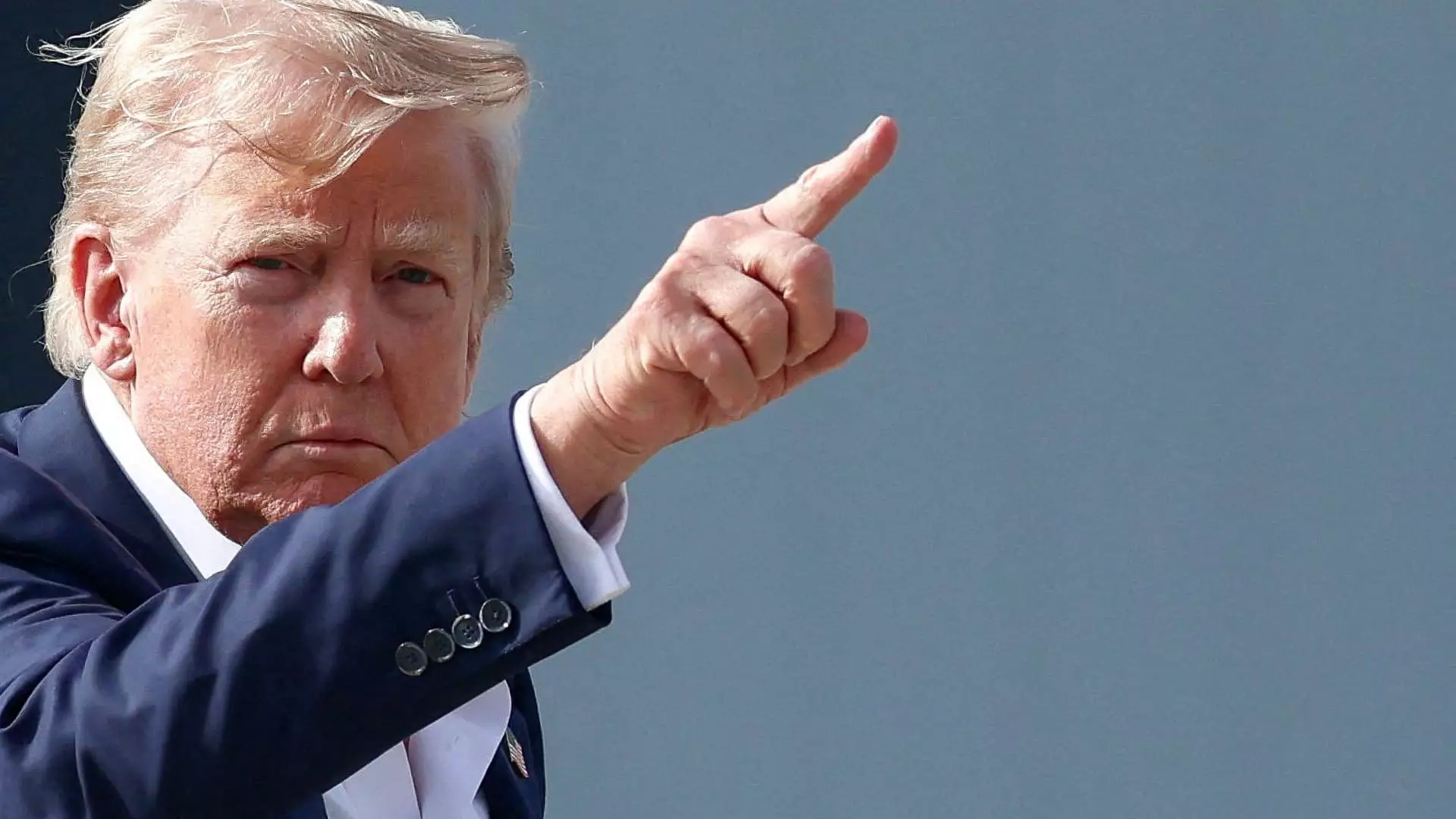
In recent days, the political theater surrounding crime in Washington, D.C., has taken center stage, yet beneath the surface lies a troubling disconnect between rhetoric and reality. While figures like Donald Trump assert that the city is besieged by violent gangs and youthful offenders, official crime statistics paint a different picture. Violent crime in D.C. has actually declined by over 26% compared to last year, challenging the often-exaggerated portrayal of unchecked chaos. This discrepancy reveals how political narratives are often crafted less to inform and more to manipulate public perception, fueling fears that justify extreme policy proposals such as federal takeover.
The relentless drumbeat of “out of control” crime serves political purposes. Trump’s threats to seize control of the city are less about actual safety and more about positioning himself as a protector of order, utilizing fear to galvanize support among constituents exhausted by urban crime stories. This tactic depends on exploiting sensational incidents—like the recent attempted carjacking suffered by Edward Coristine—to sustain a narrative that Washington is spiraling into chaos. But the data suggests otherwise, exposing the narrative as a convenient oversimplification aimed at hiding the complex, nuanced reality of urban policing and community resilience.
The Spectacle of Politicized Crime Reporting
The case of Coristine and the juvenile suspects, heavily amplified in social media and political circles, exemplifies how individual tragedies are often wielded to serve partisan agendas. Trump’s characterization of young offenders as part of a “youth gang” and the call to try minors as adults selectively emphasizes the most alarming aspects of youth violence. Meanwhile, officials like Jeanine Pirro focus on measures that hinge on aggressive law enforcement—drugs off the streets, guns eradication, and harsh sentencing—presuming that stricter policies automatically translate to safety.
However, this narrative obfuscates fundamental questions about systemic causes of crime, such as economic inequality, community support structures, and education. It also neglects the success stories embedded within the city—neighborhoods that have seen reductions in violence without heavy-handed federal intervention. Moreover, elevating individual incidents without considering broader trends risks misunderstanding the rhythm of urban life, which inherently involves fluctuations and complexities that cannot be reduced to sensational headlines.
The Myth of Federal Control as a Solution
Trump’s threat to impose federal control over Washington, D.C., reveals a broader misconception about urban governance. The suggestion that the city needs to be “run how it should be run” by federal authorities dismisses local agencies’ ongoing efforts and the unique needs of D.C.’s diverse communities. Federal intervention has historically yielded mixed results—ranging from improved policing to increased tensions—and often disregards the importance of community-led solutions.
Politicians tout federal power as a panacea for urban crime, but this oversight ignores the importance of structural investments and community engagement. True safety involves more than deploying federal agents; it requires addressing socioeconomic disparities and fostering trust between residents and law enforcement. The emphasis on speed and severity in criminal justice policies tends to neglect the root causes, leaving cities like Washington vulnerable to cycles of violence that are often exacerbated by overly simplistic “tough on crime” rhetoric.
Media and Political Manipulation
In this manufactured crisis, media outlets and political figures serve as amplifiers rather than analysts. Headlines scream about “out of control violence,” yet underlying data contradict these claims. Politicians leverage these inflated fears to justify policies that threaten to strip local governance of autonomy, reinforcing a cycle where fear justification leads to overreach.
The involvement of high-profile figures like Elon Musk adds another layer of spectacle, turning individual acts of bravery or violence into symbols for larger political narratives. The spectacle distracts from the real work—addressing underlying social issues and strengthening local institutions—by instead fostering a climate of fear and urgency. This divisive approach ultimately undermines meaningful policy discussions, framing the debate as a dichotomy of chaos versus order, rather than a nuanced conversation about community needs, prevention, and long-term solutions.
The Center-Left Response: Balancing Safety with Democratic Values
A responsible approach requires resisting the urge to respond solely with draconian measures or federal mandates. Instead, it demands a balanced, pragmatic outlook that prioritizes humane, community-centered strategies. Investing in social programs, mental health services, and youth engagement initiatives can address some of the root causes fueling urban crime. These measures, although slower to show results, foster sustainable safety and preserve democratic integrity by respecting local decision-making.
The danger lies in allowing fear and sensationalism to dictate policy, especially when official data shows progress. Political actors must recognize that safety cannot be achieved through band-aid solutions like federal takeover or mass incarceration. True reform must involve collaboration with local communities, local officials, and public health experts—an approach that respects the principles of center-left liberalism: promoting social justice, investing in human potential, and safeguarding democratic institutions from overreach.
As the debate intensifies, it’s vital to acknowledge that Washington’s challenges are complex, multifaceted, and deeply rooted. Political narratives that simplify or sensationalize only serve to deepen divides and hinder real progress, risking the erosion of local autonomy under the guise of safety. The path forward must be grounded in facts, compassion, and shared responsibility—transcending partisan aims to foster a truly resilient, equitable urban environment.