
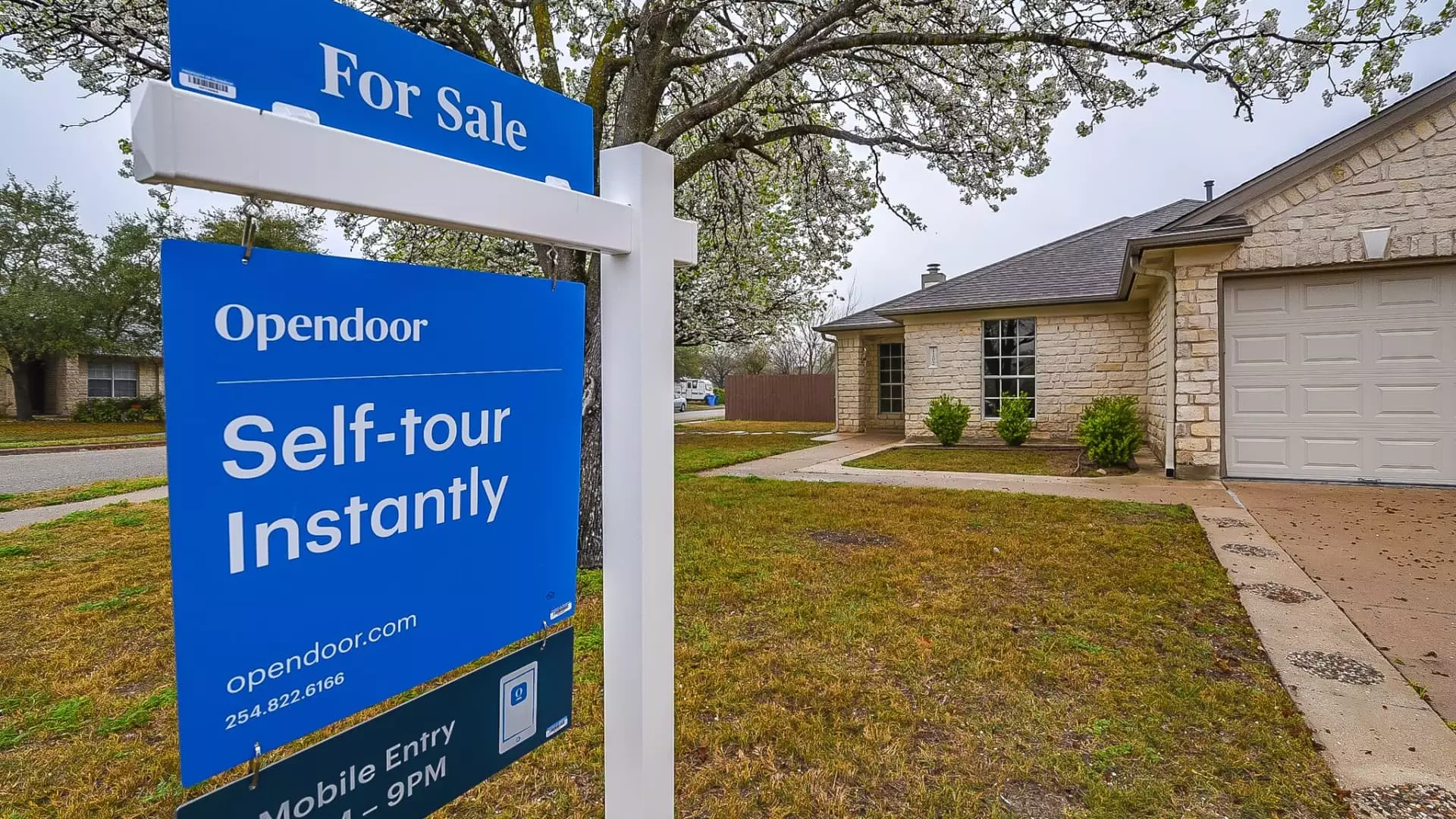
Opendoor’s recent stock surge feels more like a fleeting mirage than a sustainable turnaround. After years of struggle, the company has experienced an extraordinary jump in valuation—its shares nearly quintupled since July—fuelled largely by speculative fervor rather than solid fundamentals. This rapid ascent underscores a dangerous disconnect: investors now seem driven more by hope and hearsay than by evidence of viable business recovery. Such exuberance, while temporarily uplifting stock prices, risks obscuring the underlying weaknesses that continue to plague Opendoor. No amount of hype can mask the fact that the company remains shackled by declining revenues, shrinking market share, and a housing market still struggling under the weight of high mortgage rates.
While CEO Carrie Wheeler expressed gratitude for the newfound enthusiasm, her words appear to mask a sobering truth: Opendoor’s core business is fundamentally challenged. The company’s attempt to pivot beyond traditional iBuying into less capital-intensive referral services signals a recognition that their previous model is no longer viable in this environment. Yet, transforming strategic direction amidst a declining housing market is a delicate operation, and investors should be wary of blindly celebrating a supposed rebirth without scrutinizing the real value this new approach might generate.
The Brooding Shadow of Market Conditions
The housing market’s deterioration is an oppressive backdrop to Opendoor’s ambitions. Rising mortgage rates have choked demand, leading to a sluggish real estate environment characterized by record-high new listings and decreased buyer activity. Despite some positive quarterly reports, the financial reality remains bleak: revenue has plummeted, decreasing by nearly two-thirds since 2022, and future projections paint a picture of further collapse. For the upcoming quarter, the company expects revenue to fall by at least 36% year-over-year, signaling that the recent rally is disconnected from actual business momentum.
Behind the scenes, the company tightens its purse strings, cutting marketing expenditures and shrinking acquisition targets. This cautious approach, while arguably prudent, also reveals a recognition of the ongoing turbulence—Opendoor’s projections for acquiring fewer homes in the coming months signal an acknowledgment that recovery remains elusive. The optimistic narrative that once surrounded iBuying—a model that relied heavily on market conditions—no longer applies in a landscape hampered by economic variables entirely beyond the company’s control.
A Fragile Attempt at Rebuilding Confidence
The recent stock rally has been spearheaded not by consistent financial improvement but by external influencers like hedge fund manager Eric Jackson, whose bullish stance has emboldened investor optimism. Jackson’s confidence that OPendoor could eventually reach a valuation of $82 portrays a hopeful narrative about a future revival driven by increased demand and a return to revenue growth. Nonetheless, such predictions are highly speculative given the current data. The company’s narrow profit margins, ongoing losses, and weak sales forecasts cast doubt on the feasibility of this rosy outlook.
Opendoor’s leadership is aware of this fragility. Their strategic shift to less capital-intensive referral models suggests a pragmatic acknowledgment that the previous business model, heavily dependent on buying and reselling homes, is incompatible with the current economic climate. This pivot could be a crucial step toward sustainability; however, it also highlights how far the company has fallen from its initial ambitions. The emphasis on broadening visibility and storytelling may create a veneer of confidence, but without tangible metrics demonstrating increased profitability or market share, such efforts risk becoming mere spin.
The Vulnerability of Investor Sentiment
Investors’ exuberance appears to be driven more by short-term momentum and speculative bets than by a thorough understanding of the company’s fundamentals. The stark contrast between the stock’s recent rise and the bleak financial outlook underscores the perils of chasing after quick gains amid a decelerating housing market. While some see an opportunity for exponential growth—exemplified by Jackson’s optimistic forecast—such visions may inadvertently foster asset bubbles fueled by misplaced optimism.
A center-left liberal perspective would caution against neglecting the systemic issues that underpin this volatility: rising interest rates, affordability crises, and socio-economic disparities that influence housing demand. The rhetoric surrounding Opendoor’s pivot should not distract from the harsher realities faced by millions seeking affordable homeownership or the economic instability that hampers recovery. While innovation and strategic shifts can be beneficial, they must be undergirded by concrete, sustainable progress—something still lacking at Opendoor.
With the current landscape, it’s clear that the company’s rapid stock gains are not an endorsement of lasting success but a fragile hope intertwined with the uncertainty that defines today’s housing market. Investors, policymakers, and the company itself must remain critically aware of the risks lurking beneath the surface of this fleeting optimism.