
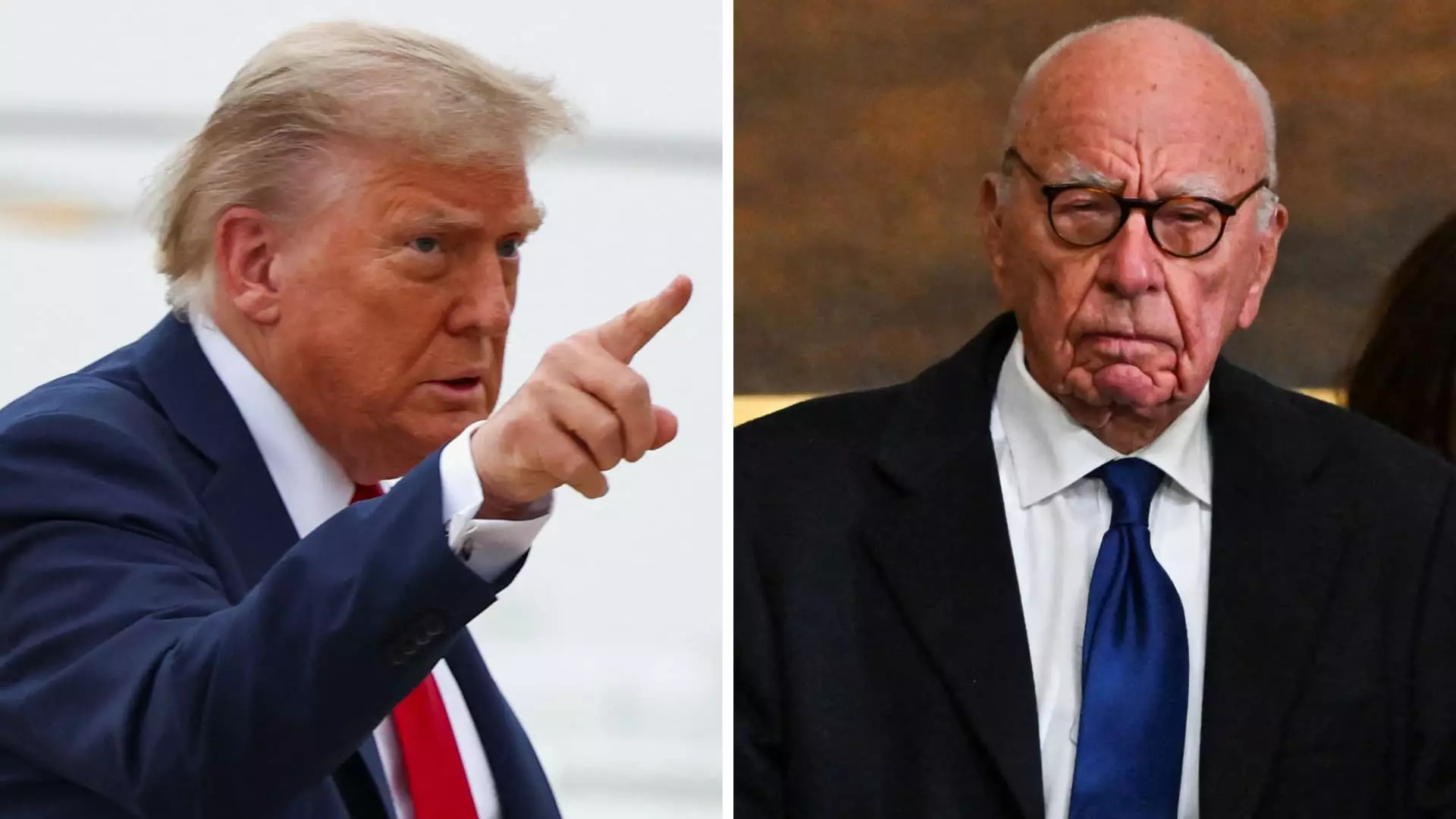
In a striking turn of events, media mogul Rupert Murdoch has entered into a clandestine agreement with Donald Trump that raises profound questions about the manipulation of legal processes and the relationships that bind media powerhouses to political figures. Murdoch, a towering figure in global media, has agreed to provide updates on his health as a prerequisite for postponing his deposition in a high-stakes defamation lawsuit. This maneuver, seemingly mundane on the surface, exposes an uncomfortable truth: the intertwining of media influence, political loyalty, and personal health in the corridors of power.
Far from being a routine legal stipulation, this deal underscores how influence is often wielded through behind-the-scenes negotiations rather than transparent proceedings. Murdoch’s age—94—combined with well-documented health issues, becomes a pawn in a game where health disclosures are weaponized to delay justice and protect established interests. The peculiar requirement of health updates reflects how power is exercised not just through overt political machinations but via control over information—about both health and legal vulnerabilities.
This entire episode magnifies concerns over the integrity of legal processes, especially when they intertwine with potent media figures who wield influence over public opinion and political narratives. Murdoch’s agreement to keep the court informed of his health, with the stipulation that any deviation from transparency could trigger an expedited deposition, hints at a deeper reality: the leverage of elite figures over the justice system itself. Such arrangements undermine the principles of accountability and raise questions about whether justice is truly served when legal proceedings are manipulated through health-related delays.
The Symbiotic Relationship Between Fox News and Trump
An undeniable aspect of this saga is the cozy, symbiotic relationship that Murdoch’s media empire—particularly Fox News—has cultivated with Donald Trump. For years, Fox News has been more than just a news source; it has acted as an echo chamber, amplifying Trump’s narratives while shielding him from critical scrutiny. The network’s symbiotic relationship with the former president hints at a comfortable alignment that extends into the corridors of power and influence.
This cozy rapport raises alarms for those concerned with objectivity in journalism and the integrity of media institutions. When a media giant aligns so closely with a political figure, it creates an echo chamber that distorts public perception and circumvents the checks and balances essential to a healthy democracy. Murdoch’s personal and business interests, intertwined with Trump’s political fortunes, illustrate a troubling confluence of media bias and political favoritism that can distort the very fabric of democratic accountability.
Furthermore, the fact that Trump’s family members, like Lara Trump, have roles within Fox News, underscores a troubling overlap of political, business, and media interests. This complex web of connections suggests that the lines between journalism and political propaganda are dangerously blurred, fueling polarization and undermining rational discourse.
Implications for Justice and Political Fairness
At the heart of this controversy lies a fundamental question: is justice marginalized when powerful elites manipulate legal proceedings through health claims and behind-the-scenes deals? The timing of Murdoch’s health disclosures and the subsequent delay of his deposition seem less about genuine health concerns and more about preserving a shield against accountability.
Trump’s lawsuit over the Wall Street Journal article about Jeffrey Epstein exemplifies how legal battles are often weaponized in broader political conflicts. The lawsuit itself, centered on accusations of defamation and misinformation, highlights the volatile terrain of modern media, where narratives are weaponized to serve protected interests. The involvement of Murdoch, a figure with enormous sway over public discourse, intensifies these concerns.
Additionally, the unpublicized mechanism for Murdoch to provide regular health updates hints at a broader strategy: controlling access, delaying exposure, and maintaining influence over key figures involved in the legal process. When health becomes a bargaining chip, transparency is sacrificed, and the rule of law is compromised. This creates a dangerous precedent where powerful individuals can delay justice under the guise of health issues, thus undermining the very foundations of fairness and accountability.
The Political and Ethical Dilemma
From a center-left liberal perspective, this scenario signifies a profound ethical dilemma. It exposes a democratic system increasingly compromised by relationships that prioritize influence over fairness. The convergence of media dominance, political loyalty, and legal manipulation facilitates a landscape where truth and justice are subordinate to protecting elite interests.
This case shines a harsh spotlight on the need for reforms that limit undue influence—be it from media magnates or political heavyweights—and reinforce the independence of the judiciary. It also underscores the importance of transparency, not just in health disclosures but across the entire spectrum of legal and political processes. Without structural checks, the wheels of justice risk becoming collateral damage in power struggles between capital, political influence, and personal ambition.
The Murdoch-Trump nexus offers a grim illustration of how those at the apex of societal influence can manipulate even the most sacred institutions—justice, in this case—to serve their own interests. The challenge lies in resisting this pervasive trend, demanding accountability, and reinforcing the principles that underpin a genuinely democratic society.