
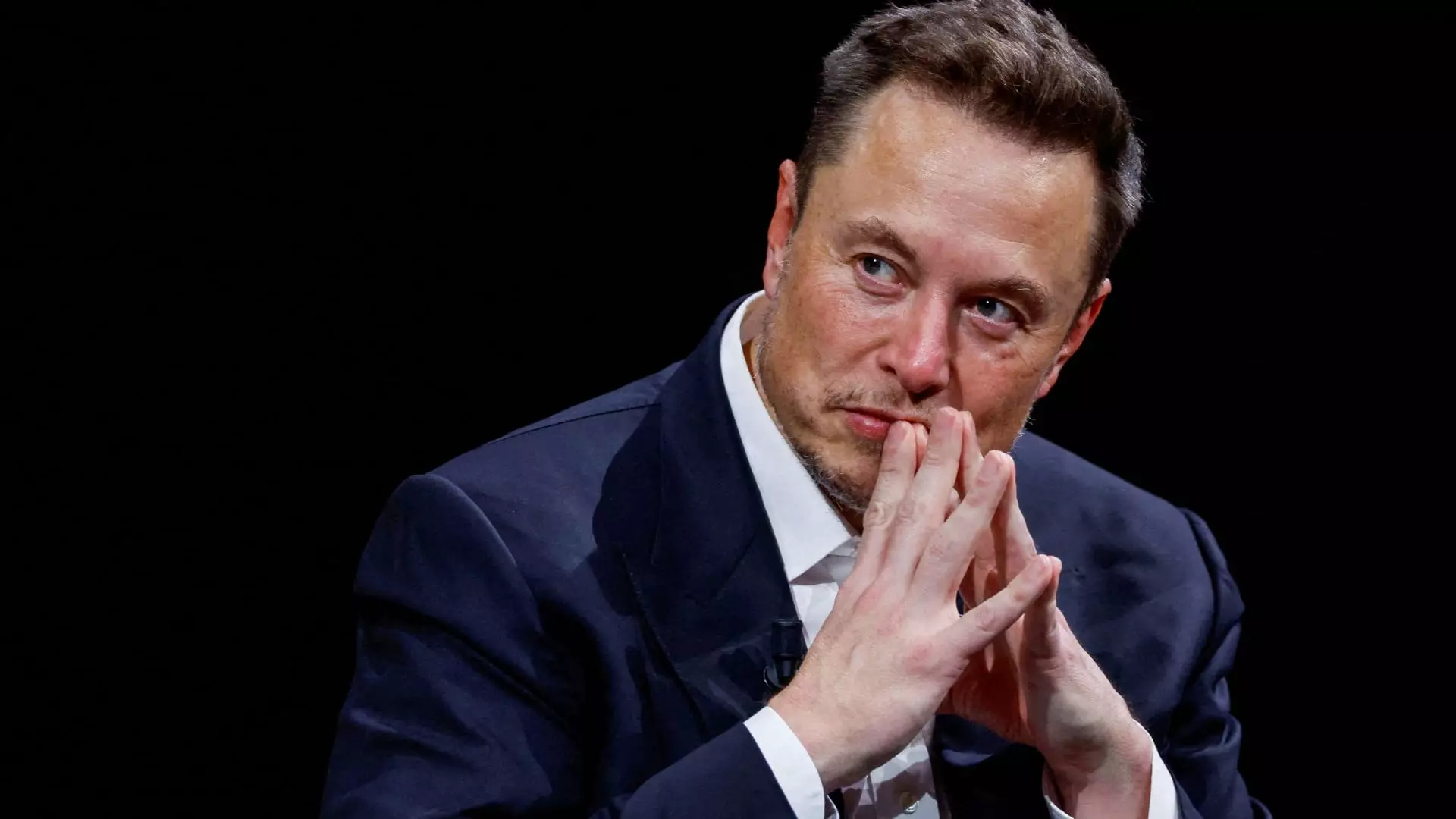
Tesla’s recent decision to award Elon Musk a staggering interim pay package of 96 million shares, valued at nearly $29 billion, exemplifies a troubling trend that merits deep scrutiny. While corporations often justify executive perks as rewards for visionary leadership, the reality reveals a distorted system where influence frequently eclipses merit. Musk’s compensation, intricately linked to complex vesting conditions and legal battles, underscores a troubling pattern: the prioritization of executive wealth over shareholder interests and corporate responsibility.
This package is not rooted in straightforward performance metrics but hinges on Musk’s continued role, regardless of Tesla’s operational outcomes or shareholder value. The fact that such an enormous value is tied to mere tenure rather than concrete achievement raises questions about fairness and accountability. It’s an unsettling spectacle—where the allure of immense wealth for a single individual seems to overshadow the company’s long-term stability or ethical considerations. This pattern of excessive executive rewards risks normalizing a culture where power is wielded whimsically, often at the expense of broader societal interests.
Legal Battles and Political Maneuvering: Musk’s Power Play
The legal disputes surrounding Musk’s previous compensation plans reveal a systemic failure of corporate governance. The 2018 plan, deemed improperly granted by Delaware courts, exposes how corporate boards often operate behind closed doors, serving the interests of their powerful CEO rather than the shareholders. Musk’s subsequent campaigns against Delaware’s legal authority—moving Tesla’s incorporation to Texas and engaging in anti-judicial rhetoric—highlight a troubling tendency among the ultra-wealthy to sideline legal constraints that restrain their influence.
Such actions threaten to undermine the very foundations of corporate accountability. Musk’s pursuit of greater control by publicly claiming he needs ~25% voting power to steer Tesla’s AI and robotics ventures is less about innovation and more about consolidating unchecked influence. His forming of separate entities like xAI—kept in the shadows and conducted without shareholder disclosure—further complicates this power dynamic. These moves resemble a pattern of bypassing public accountability, revealing Musk’s desire to carve out independent spheres of influence that may operate without meaningful oversight.
The Political Ecosystem and the Erosion of Public Trust
Musk’s controversial engagement with political entities and policies reveals a reckless disregard for societal consensus and consumer trust. His backing of Donald Trump, participation in government activities, and public disputes with political figures reflect a prioritization of personal influence over community interests. Such actions contribute to a widening chasm between Tesla’s reputation and the societal expectations of corporate responsibility.
The backlash resulting from Musk’s political maneuvering has tangible consequences. Tesla’s sales decline, especially in key markets like the U.S. and Europe, signals a consumer base increasingly sensitive to corporate ethics and leadership integrity. Musk’s flirtation with political parties and his recent acknowledgment of potential financial hurdles suggest a leader whose ambitions may be diverging from the broader societal good. His comments about upcoming quarters hint at a company operating in a state of financial uncertainty, possibly exacerbated by an image tarnished by political posturing and legal conflicts.
The Future at a Crossroads: Leadership or Legitimacy?
Tesla’s upcoming shareholder meeting and ongoing court cases will serve as critical barometers of the company’s direction. The question remains: will it continue to prioritize unchecked individual power amid a complex legal and political landscape, or will it shift towards genuine accountability and stakeholder engagement? The intense focus on Musk’s personal gains and strategic maneuvers raises serious doubts about the company’s long-term integrity.
In an era where corporate influence profoundly impacts societal progress, Tesla’s leadership exemplifies a broader issue: the danger of concentrated wealth wielded without sufficient checks. While innovation is crucial, it must not come at the expense of democratic principles and fairness. The leadership’s unchecked pursuit of power, intertwined with legal disputes and political gamesmanship, risks turning Tesla from a pioneering enterprise into a symbol of corporate hubris.
As the debate unfolds, it is imperative for shareholders, regulators, and society at large to question whether Tesla’s current trajectory champions the public good or merely serves the ambitions of its most powerful players. Power, profit, and politics have become dangerously intertwined in Musk’s Tesla—a company that still holds enormous potential but increasingly seems to resemble a battleground of influence rather than a beacon of responsible innovation.