
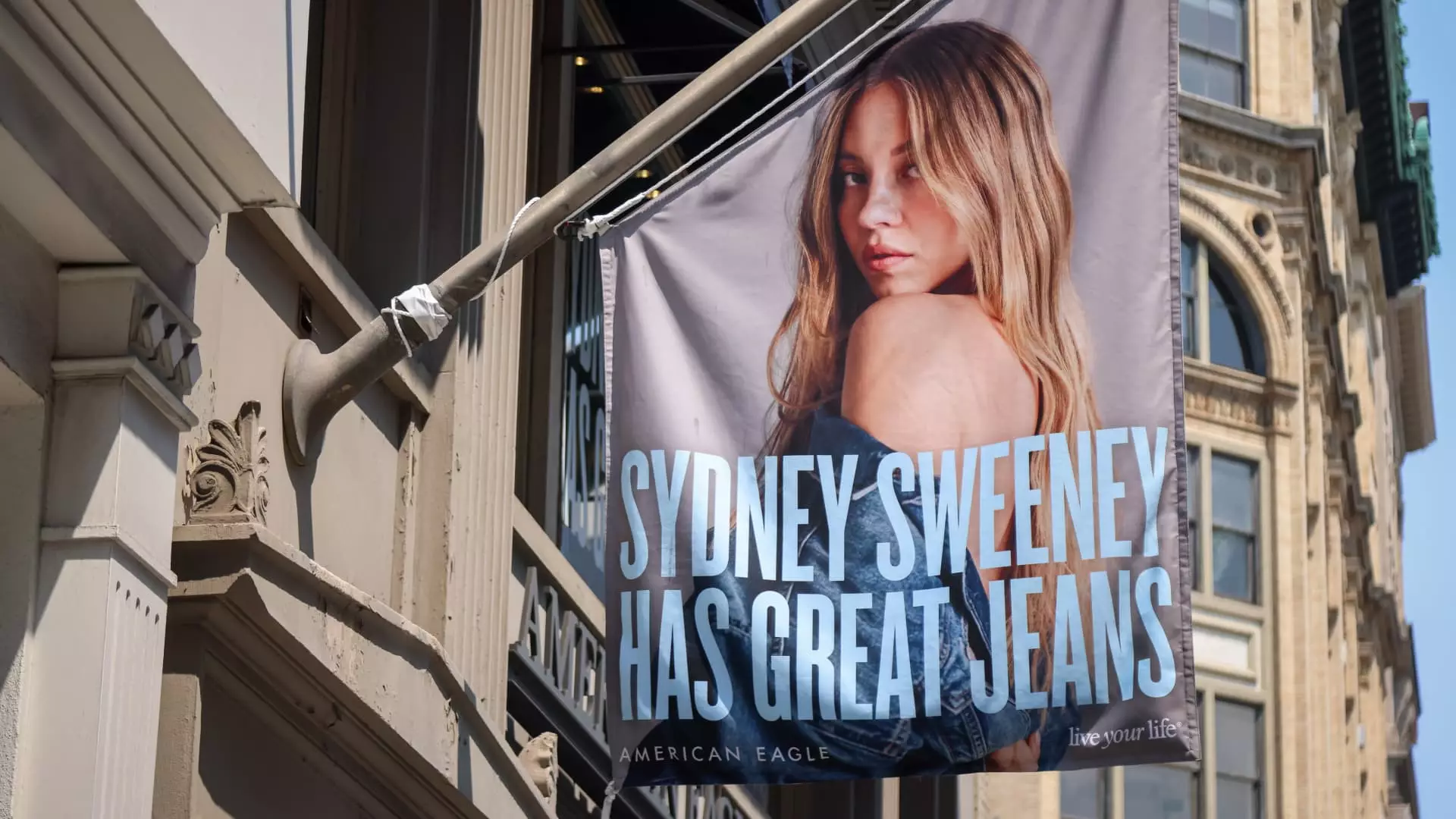
In today’s fractured cultural landscape, the impact of celebrity endorsements stretches far beyond mere advertising; it reflects the deeper currents of societal values, political identities, and consumer loyalties. American Eagle’s recent push with actress Sydney Sweeney exemplifies this dynamic—an attempt to galvanize a segment of consumers that might align more closely with conservative ideals. What initially seemed like a calculated marketing gamble quickly revealed its frailty, especially when Trump’s public praise sent shares soaring over 20%. This episode underscores not just marketing strategy but the fragile equilibrium brands must maintain in a polarized world. The influence of celebrity endorsements, especially when intertwined with political commentary, exposes how vulnerable corporations are to the unpredictable tides of social sentiment.
The Risks and Rewards of Flirting with Political Patriots
American Eagle’s choice to feature Sydney Sweeney, a young actress with a conservative profile, and the subsequent endorsement from Donald Trump’s social media platform, was a gamble rooted in capturing a specific demographic—those who might feel alienated by the perceived overreach of liberal cultural norms. While the immediate financial ripple was beneficial, illuminating the power of external validation, the strategic gamble was also extraordinarily precarious. Harnessing a figure like Sweeney and aligning her with a political figure risks alienating core customer bases that prioritize inclusivity and progressive values. Yet, the quick rebound in stock after Trump’s tweet suggests that, in a climate of widespread skepticism about corporate motives, the raw force of political affirmation can temporarily override broader concerns.
This fickle relationship between politics and marketing demonstrates a broader truth: brands attempting to tiptoe through cultural minefields walk a tightrope with no safety net. Successes may seem amplified, but failures—like the criticism of the slogan and accusations of sexual innuendo—highlight how volatile consumer trust can be when corporations wield political or cultural symbols. It raises questions about authenticity and whether brands are genuinely engaging with their audiences or merely performing for attention in a landscape where superficiality often reigns supreme.
The Cultural Dichotomy and Market Realities
American Eagle’s conservative-leaning advertising surfaced amidst a wave of cultural backlash against what many perceive as overly woke marketing tactics. Conversely, the firm’s attempt to appear more traditional and appealing to the right has exposed its vulnerability to criticism from the left, especially when marketing strategies are scrutinized for underlying connotations or perceived insincerity. While the company asserts itself as simply promoting jeans, the broader societal debate about representation, body image, and sexuality makes every slogan a battleground.
This episode exemplifies the larger struggle corporations face: aligning brand identity with a shifting societal consensus. Whether one adheres to progressive ideals that champion inclusivity or leans towards conservative values emphasizing tradition, brands stand at the crossroads between authentic engagement and superficial pandering. American Eagle’s experience reveals how difficult it is to strike a balance. The risk of alienating either side is high, and missteps are quickly weaponized by critics eager to exploit perceived hypocrisy.
Consumer Attention in the Age of Fragmented Media
In an age where social media is king, capturing consumer attention is more challenging—and more perilous—than ever. American Eagle’s marketing stunt with Sweeney aimed to tap into trending searches and online buzz, correctly sensing that visibility, even if controversial, can translate into increased brand awareness. The spike in Google searches signals a temporary surge in interest; however, translating that interest into sustained sales remains uncertain.
The company’s recent struggles—declining stock, slow sales, and macroeconomic headwinds—highlight the fragility of relying on buzz alone. The current environment demands more than superficial attention; it necessitates authentic connections that resonate with diverse audiences. The risk with sensational campaigns is that their impact is often fleeting, and in the long run, they can undermine a brand’s credibility if not backed by real product value or genuine cultural engagement.
The High Stakes of Cultural Alignment and Corporate Authenticity
Overall, American Eagle’s experience with the Sweeney campaign exemplifies the inherent volatility in modern marketing strategies. As companies navigate a landscape fraught with political sensitivities and cultural divides, the temptation to pander or capitalize on trending topics becomes a double-edged sword. Success hinges on the perception of authenticity—whether a campaign truly reflects core values or simply exploits societal trends for quick gains.
In embracing controversial figures or slogans, brands risk inflaming opponents or alienating loyal customers who may feel their values are being dismissed or misunderstood. Conversely, conservative-leaning marketing can backfire if it’s perceived as superficial or disconnected from the reality of the broader consumer base. American Eagle’s blurred lines underscore the importance—not just of messaging—but of genuine alignment with consumer identities and values.
Ultimately, the episode reveals that influence derived from social media endorsements and political praise is often fleeting and illusory. Behind the spectacle lies a sobering reality: corporations are increasingly vulnerable to the unpredictable whims of societal sentiment. Their survival and growth depend less on fleeting viral moments and more on cultivating authentic, inclusive relationships with a diverse and polarized audience—an endeavor that is, by its very nature, complex and fraught with risk.