
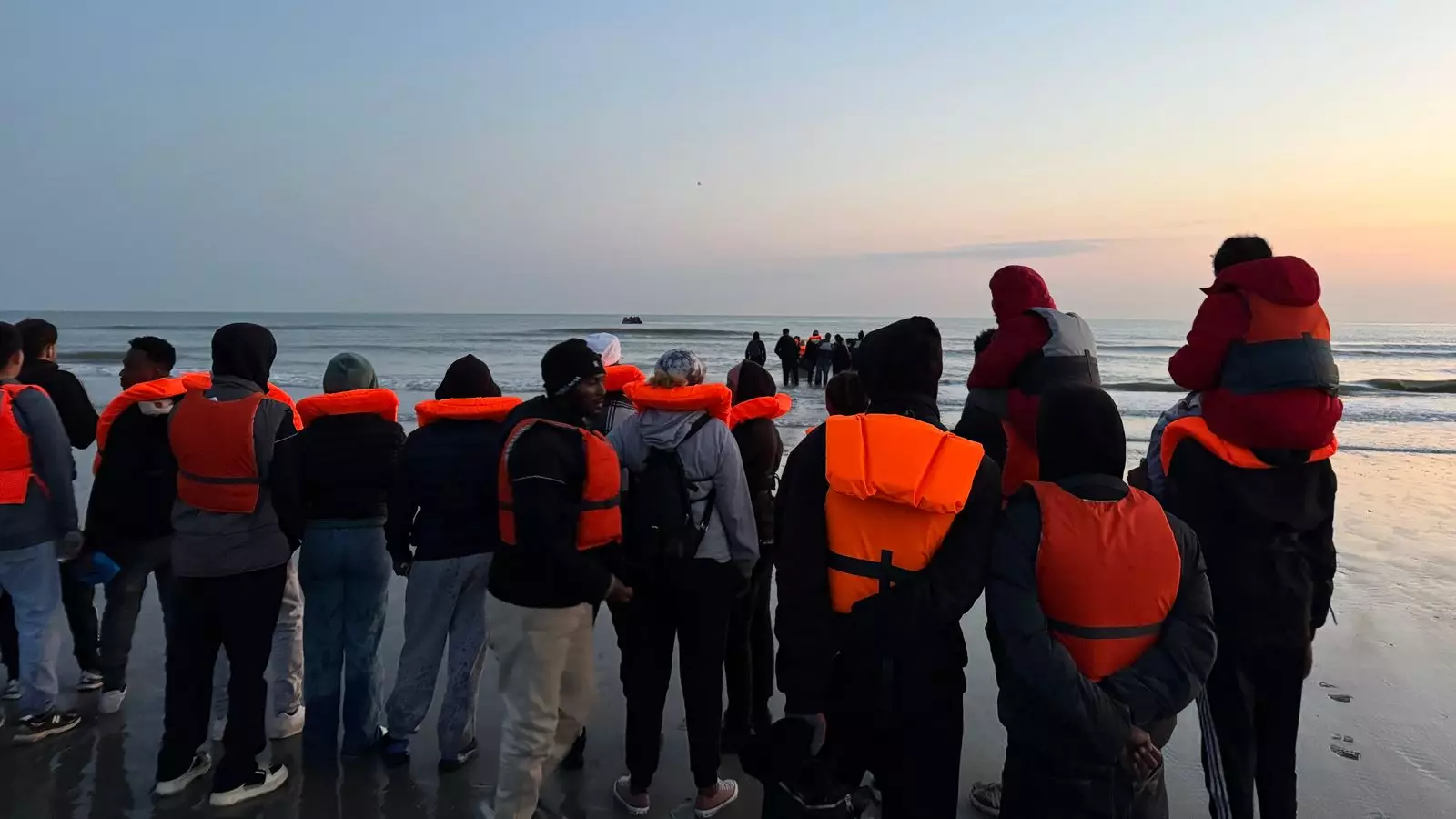
The recent agreement between Sir Keir Starmer and Emmanuel Macron signifies an attempt by political leaders to project control over the migrant crisis, yet it fundamentally falls short of addressing the core issues. The scheme’s premise—returning some Channel crossers to France in exchange for legal pathways—is framed as a bold solution, but closer inspection reveals it is an oversimplified approach that underestimates the complexities of migration politics. It presumes that deterrence, rooted in removal policies, will reduce crossings, but history demonstrates that such measures are often band-aids on deeper systemic failures.
This “one in, one out” scheme, aiming to discourage risky crossings, is based on the fallacious assumption that increased enforcement will significantly change migrant behavior. However, the numbers tell a different story: hundreds of people still risk the perilous journey weekly, irrespective of deterrent efforts. The government’s decision to start with a low return number—initially just 50 people a week—reveals a lack of confidence in the scheme’s immediate effectiveness. Instead of tackling the root causes—international instability, economic disparity, and lack of safe legal options—this approach merely shifts the surface level of the crisis, offering a fleeting illusion of control.
The Politicization of Human Suffering
Framing migrants as reckless lawbreakers incentivized by criminal smugglers is a dangerous oversimplification that fuels xenophobic narratives. The rhetoric that individuals who risk perilous crossings are solely criminals deserving punishment ignores the desperation that propels such journeys. The UK’s focus on returning asylum seekers to France—rather than creating safe, accessible routes—stigmatizes vulnerable populations, turning human tragedy into a political bargaining chip. This strategy not only neglects the moral responsibility to protect vulnerable people but also fosters a climate where migrants are viewed as obstacles rather than individuals seeking refuge.
Furthermore, the political rhetoric surrounding the deal, which labels it as a “good agreement” or a “win,” is critically disconnected from the human costs involved. It’s an attempt at political posturing that sidesteps the practical failures of the policy while attempting to placate domestic fears. The harsh language used by opposition parties, such as branding it a “surrender deal,” reveals the extent to which migration has become a battleground for political identities rather than a genuine effort to construct sustainable solutions.
The Reality of Groundless Expectations and Future Failures
The government’s projections—initially sending back 50 people per week, with the hope of gradually increasing—are based on fragile assumptions. The plan assumes that the mere threat of being returned to France will be enough to dissuade thousands of desperate individuals, but this ignores the reality that for many, crossing the Channel is a matter of life or death, driven by unresolvable crises in their homelands. The scheme’s temporary nature, set to run until June 2026, hints at a deeper recognition that it’s a stopgap at best—yet there’s little evidence it will evolve into a long-term, genuine strategy.
Most troubling is the optimistic narrative pushed by leaders, promising that legal routes will balance out the returns, creating a “fair” system. But with only a limited legal pathway and stringent documentation requirements, many genuine refugees will remain stranded in limbo. The scheme, therefore, risks creating a two-tier system—those who can navigate bureaucracy and those who cannot—further marginalizing vulnerable populations and perpetuating the cycle of unlawful crossings.
A Need for a Broader, More Honest Approach
Ultimately, the scheme exposes the shallow reliance on enforcement and quick fixes. Genuine solutions require addressing the underlying factors driving migration—conflict, economic inequality, climate crises—and expanding safe, legal options for those fleeing danger. It also demands a humane perspective that recognizes the humanity of migrants rather than viewing them solely as problems to be managed.
In this context, the UK’s approach appears shortsighted, prioritizing political gains over sustainable, just policies. It’s a dangerous game to continue fixating on deterrence while neglecting the complexities of global migration. Until policymakers are willing to confront these realities honestly and compassionately, the cycle of crisis and reaction will persist—deepening divides and diminishing legitimacy. This agreement, while superficially presented as a step forward, ultimately reveals a profound inability to confront the ethical and practical truths of migration in the modern world.