
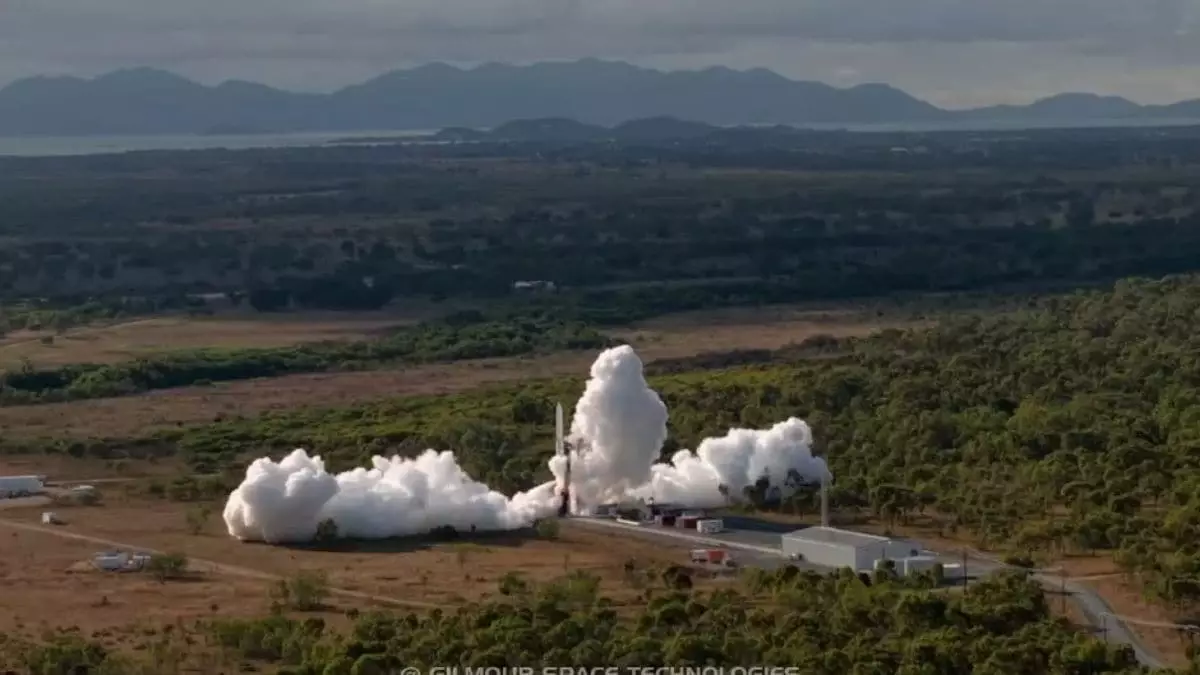
Australia’s recent attempt to reach the cosmos with the launch of its first domestically developed rocket, Eris, epitomizes the perilous gap between aspiration and reality. While national pride surged with the historic outlay of a wholly Australian-designed orbital vehicle, the outcome swiftly deflated ambitions—culminating in a crash within mere seconds of lift-off. It’s tempting to see this failure as a setback, but perhaps it’s more instructive to interpret it as a raw, albeit harsh, lesson in technological humility. Behind the glossy headlines lies a broader question about whether a small, resource-constrained country like Australia is truly prepared to stake a claim in the fiercely competitive domain of spaceflight. The crash was a stark reminder that technological progress is fraught with failures, especially when driven by passionate entrepreneurs rather than robust governmental support. Such failures, while disheartening, are inevitable in the race towards innovation, yet they also expose overoptimistic narratives that paint a picture of inevitable success.
The Overconfidence of a Startup Spirit in a High-Stakes Arena
Gilmour Space’s journey, marked by repeated delays and technical challenges prior to the fateful launch, underscores the risks embedded within small-scale space endeavors. The company’s founder brothers, Adam and James Gilmour, embody the spirit of entrepreneurial optimism—a desire to carve out Australia’s share of the space economy with satellites and orbital launches. However, their relentless pursuit might obscure the reality of the formidable barriers they confront. The company’s publicly stated focus on “learning from every second of flight” indicates a commendable commitment to iterative progress; yet, their narrative risks veering into wishful thinking. The technical hiccup of a payload fairing failure, traced to a power surge, amplifies the precariousness of such pioneering efforts. Do they possess the systematic expertise necessary for sustained success? Or are they merely prone to the all-too-common flaw of equating effort with achievement? The crash demonstrates that dogged enthusiasm alone is insufficient; rigorous testing, systemic safety checks, and government backing are indispensable prerequisites—none of which are irreplaceable by mere commercial bravado.
Is Australia Overestimating Its Readiness?
The country’s aspirations, rooted in over five decades of limited space activity, seem perhaps overinflated in the face of the global giants like SpaceX, China, and Russia. Australia’s recent launch, enthusiastically hailed as a milestone, risked being more symbolic than substantive. It symbolizes Canada’s and many other nations’ similar aspirations—an effort to demonstrate sovereignty and technical capability but often falling short in realistic execution. The narrative around Australia’s space program appears overly optimistic, glossing over the crucial need for sustained investment, technological expertise, and international collaboration. The repeated postponements—first due to weather, then technical issues—reveal a lack of matured infrastructure and risk management. The official statements, emphasizing “valuable data” and “big steps,” tend to dilute the reality that the mission’s failure is a technical setback, not a breakthrough. Such inflated rhetoric can hinder honest appraisal and dampen the strategic patience required to foster genuine capability.
Internal Challenges and External Realities
By placing so much emphasis on a single launch, Australia risks inflating a narrative of national technological prowess that it may not yet possess. The space industry remains an unforgiving domain where failure is more the norm than the exception, especially for newcomers. Without robust government support, long-term strategic vision, and significant investment, such small start-ups risk being caught in a cycle of repeated failures. Furthermore, the international landscape is increasingly competitive, with states and private firms racing ahead with well-funded programs. Australia’s attempt at creating a “homegrown” orbital launch capacity is admirable but appears premature considering the current global landscape. It increasingly looks like a case of ambition overtaking preparedness, which can lead to resource wastage and lost credibility. In this context, the push for national pride through space exploits needs to be balanced with pragmatic realism and strategic patience—qualities that are often in short supply among startup-led ventures.
The Road Ahead: Lessons or False Starts?
While the crash of Eris might seem like a disappointment, it should instead be viewed as a vital chapter in Australia’s developing aerospace story. Innovation takes risky, iterative steps—sometimes forward, sometimes back. For a nation that is still establishing its technological and industrial foundations, focusing on building genuine infrastructure and fostering government-industry partnerships might be a wiser path than leaping into the high-stakes world of orbital launches. The Gilmour brothers’ boldness is commendable, but their push must be tempered with realism, strategic planning, and pragmatic acknowledgment of the steep challenges ahead. If anything, Australia’s early setbacks underscore the importance of patience and resilient innovation. To truly reach the stars, it must first acknowledge the gravity of its current limitations and craft a sustainable, well-supported ascent—not just a symbolic launch to nowhere.