
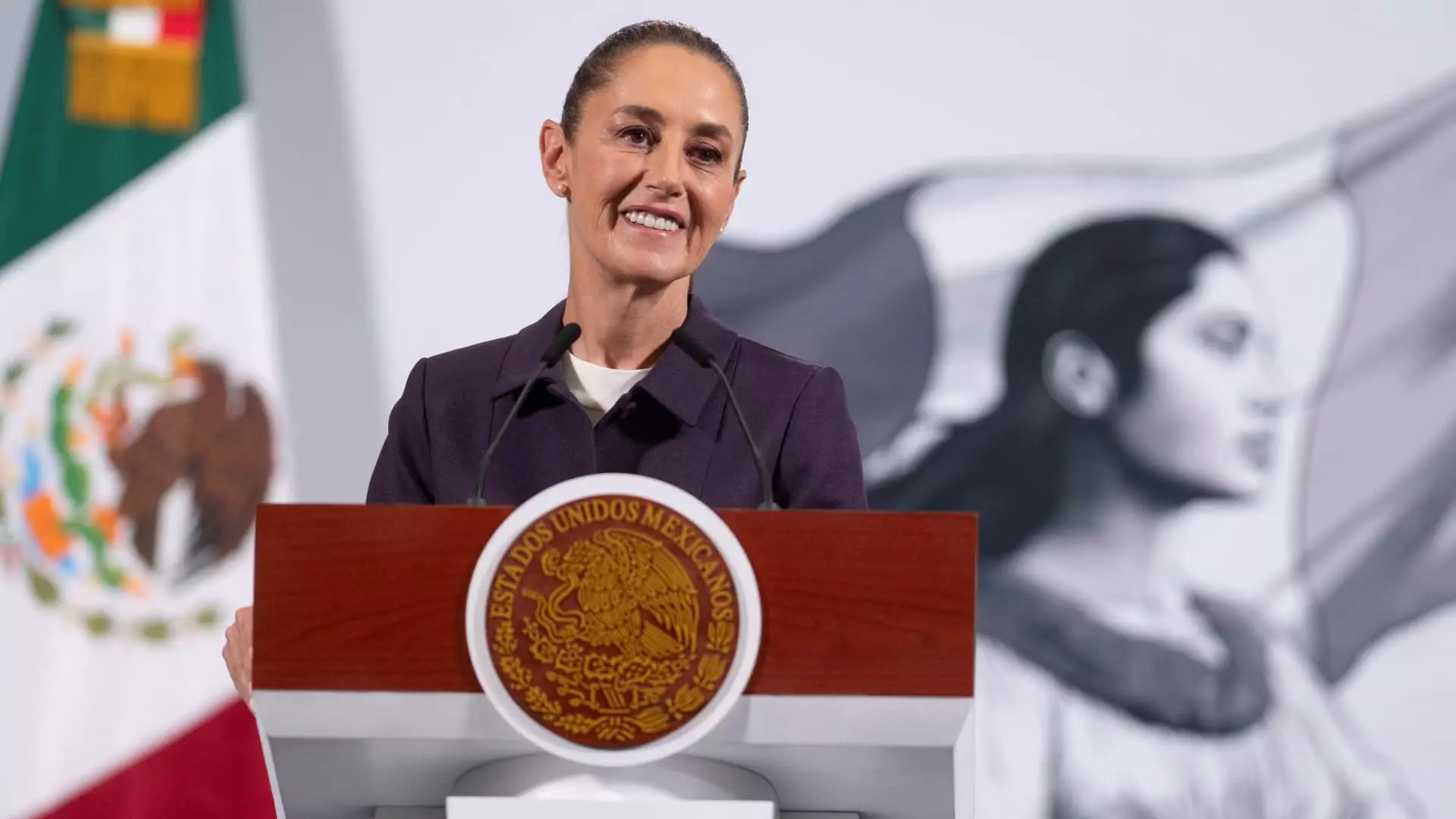
The recent announcement by President Donald Trump to temporarily halt the escalation of tariffs on Mexico offers a glimmer of relief, but it also exposes the fragile foundation of U.S.-Mexico relations. This move feels less like genuine progress and more like a strategic pause in a broader game of geopolitical brinkmanship. While Trump’s decision to delay tariffs may seem pragmatic on the surface, it raises critical questions about the sincerity of U.S. commitments and the underlying power dynamics at play.
Trump’s pivot appears driven more by political calculation than a genuine desire for fair and sustainable trade agreements. The 90-day window provides a temporary reprieve but hardly addresses the core issues—such as structural trade imbalances, border security concerns, or access to equitable trade policies. Relying on short-term measures risks fostering a false sense of stability, obscuring the fact that major reforms remain unmet. Is this delay a sign of meaningful progress, or simply a tactical maneuver to placate domestic constituents and maintain leverage?
The Illusion of Negotiated Success
What stands out unmistakably is the heavy reliance on rhetoric emphasizing “success” and “understanding.” Trump’s characterization of the call with Mexican President Claudia Sheinbaum as “very successful” should be met with skepticism. Diplomatic language often masks unresolved tensions, and in this case, the language obscures the underlying transactional nature of the talks. Mexico’s concessions—such as promising to lift certain trade barriers—might seem like wins, but they hardly resolve the deeper issues plaguing the bilateral relationship.
By extending the tariffs, Trump effectively underscores the leverage that tariffs have as a bargaining chip. But history suggests that using tariffs as a negotiating tool often results in superficial agreements that fail to address the root causes of economic disparities or border-related issues. The assertion that Mexico would “immediately terminate” some trade barriers offers little transparency about what these barriers are, and whether they genuinely hinder free trade or serve legitimate protective purposes. Truth be told, the whole spectacle seems more like political theatre than a genuine effort at cooperation.
The Cost of Short-Termism in Trade Policy
From a broader perspective, this approach reveals a troubling tendency toward short-termism that undermines long-term economic stability. The U.S. economy deeply depends on trade with Mexico—not just for consumer goods, but also for complex supply chains that sustain thousands of jobs. Threatening or imposing tariffs risks creating ripple effects that could destabilize markets, inflate consumer prices, and strain diplomatic goodwill.
Further, the decision to extend tariffs to avoid escalation could foster an environment of unpredictability. Businesses and investors thrive on certainty, yet the current American policy mindset leans toward unpredictable swings—sometimes punitive, sometimes cooperative—based largely on political expediency. Such a climate inhibits strategic planning and damages the credibility necessary for meaningful multilateral agreements.
Are We Missing the Bigger Picture?
Perhaps most concerning is how this episode highlights a broader failure of U.S. leadership in fostering mutually beneficial trade relationships. Instead of working towards balanced agreements that promote shared prosperity, current policies seem rooted in a zero-sum mindset. The emphasis on tariffs as a tool of coercion diminishes the potential for collaborative problem-solving.
Moreover, Mexico’s role as a vital trading partner complicates the narrative. The high stakes demand diplomacy grounded in fairness and forward-looking strategies, not tactical temporary victories. The U.S. must move beyond transactional brinkmanship if it hopes to forge meaningful economic partnerships that withstand the test of time. The current approach, rife with threats and short-lived concessions, risks turning mutual dependency into mutual distrust.
In the end, the 90-day tariff extension may buy some time, but it does little to resolve the underlying tensions or build the enduring trust necessary for genuine trade integration. For the U.S. to truly benefit from its relationship with Mexico, policymakers must prioritize stability, transparency, and fairness—values that are sorely lacking in the current game of tariff poker.