
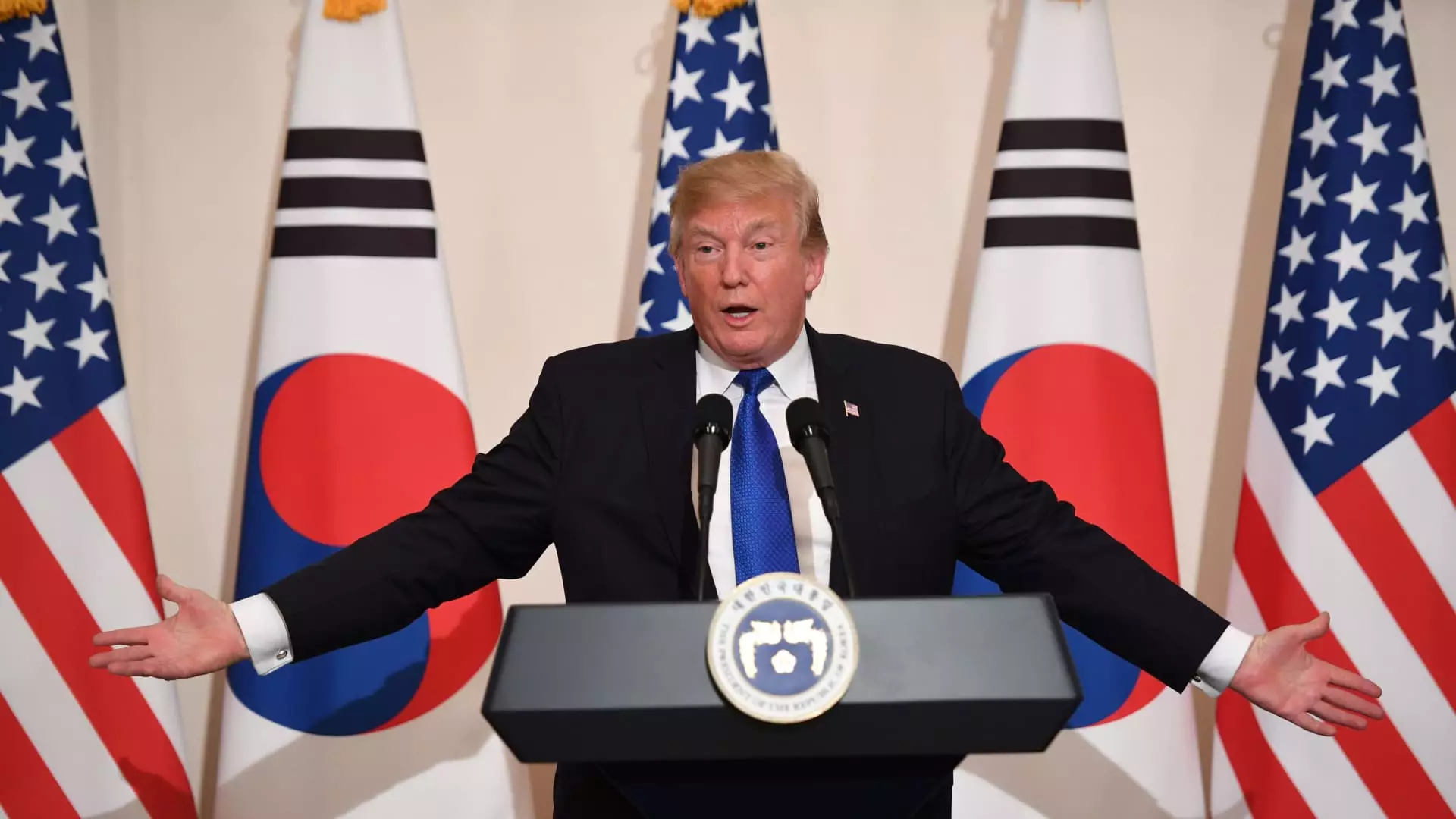
The recent announcement of a “full and complete” trade agreement between the United States and South Korea might initially seem like a positive step towards strengthening international relations and economic cooperation. However, beneath the surface lies a complex web of power dynamics, economic interests, and geopolitical calculations that cast doubt on the purported mutual benefits. Proclamations of shared prosperity often serve as diplomatic façades, masking the underlying reality where economic gains and political leverage are unevenly distributed, favoring the more dominant power—here, the United States.
The reliance on grand figures like the $350 billion investment fund is a classic example of rhetoric designed to project strength and influence, yet it obscures the true nature of such largesse. While U.S. officials claim that 90% of profits from these investments will benefit Americans, this assertion warrants skepticism. Profits often accrue to multinational corporations and wealthy investors, with the national economy experiencing only secondary gains. This framing ignores the broader context: a small elite reaping the lion’s share of benefits while the average citizen’s tangible gains remain ambiguous at best.
The Illusion of Fair Trade and Economic Sovereignty
Looking beyond the surface, the agreement’s terms reveal an imbalance that undermines the very spirit of fair trade. Tariffs on South Korean exports are being lowered from 25% to 15%—a move that appears generous but subtly shifts the power asymmetry in favor of the U.S., which maintains the capacity to impose tariffs when it pleases. The auto sector, a significant component of South Korea’s export economy, faces a provisional freeze rather than a sincere structural rebalancing.
Moreover, the promised $350 billion investment fund, with substantial portions allocated to specific industries such as shipbuilding and semiconductors, reflect an economic strategy rooted in protecting U.S. industries and maintaining technological leadership. While Seoul ostensibly gains by integrating with the lucrative U.S. market, the agreement effectively consolidates American dominance over vital sectors and limits South Korea’s autonomy. The notion that Seoul’s investments “facilitate mutually beneficial outcomes” seems more like an aspiration than a reality, especially considering the possibility of market dependency and the erosion of South Korea’s strategic independence.
The Political Power Play and Strategic Calculations
From a geopolitical standpoint, this deal signals the strategic importance of South Korea for U.S. interests, especially amidst ongoing tensions with China and North Korea. The injection of $100 billion into energy imports and the emphasis on cooperation in energy and industrial sectors serve dual purposes: fostering economic ties and reinforcing military and geopolitical alliances. Yet, the rhetoric of mutual growth conveniently downplays the risk of South Korea becoming increasingly dependent on Washington, surrendering part of its economic sovereignty and diplomatic flexibility in exchange for symbolic gains.
President Lee Jae-myung’s framing of the deal as mutually beneficial also raises questions about political optics. The focus on “strengthening” industrial cooperation and the alliance with the United States may serve domestic political needs, portraying leadership as proactive and resilient. However, such narratives often dismiss underlying vulnerabilities—how the terms of the deal could constrain future policy choices and deepen economic reliance on U.S. goodwill.
The Power of Rhetoric and Reality
Ultimately, the deal encapsulates a broader pattern of global economic diplomacy, where words like “mutual benefit” mask strategies aimed at consolidating influence rather than fostering genuine equality. While South Korea’s tariff rates remain remarkably low, and the agreement appears to favor free trade, it is built on a foundation of economic dependency, military alliances, and strategic calculations that are less about fairness and more about power projection.
The swelling rhetoric about “mutually beneficial outcomes” should be viewed with cautious skepticism. It’s a stark reminder that international trade agreements—particularly with superpowers like the U.S.—often serve as instruments of strategic dominance rather than pathways to equitable prosperity. For South Korea, and similarly situated nations, the challenge remains to navigate these agreements without sacrificing vital sovereignty and economic independence to the whims of geopolitical chess games.