
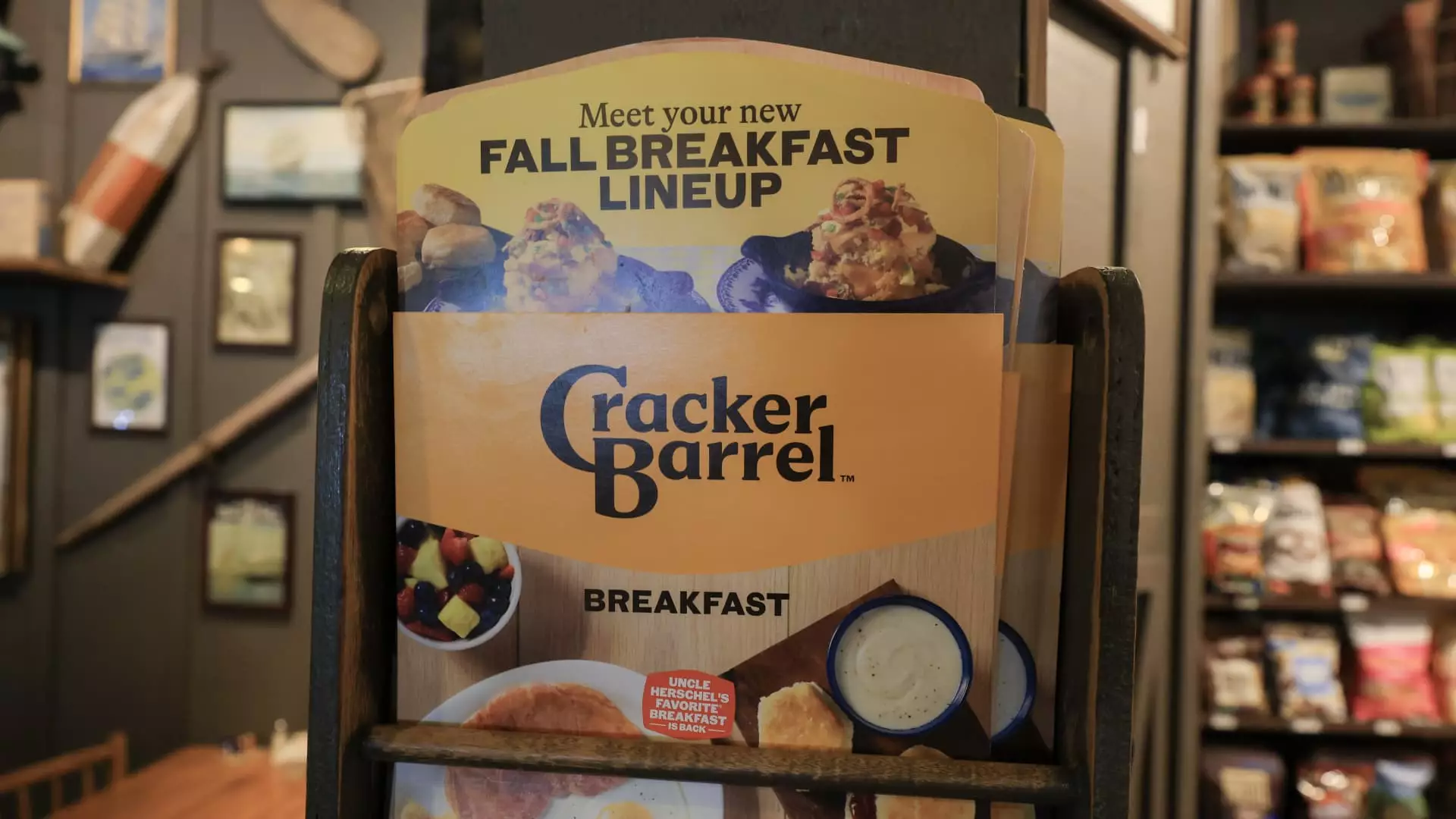
Cracker Barrel’s recent rebranding effort exposes the fragile balance many traditional companies face in an increasingly politicized landscape. The company’s decision to overhaul its logo, stripping away the iconic image of a man leaning against a barrel—once a visual anchor—signifies more than just a design update. It reveals a deeper tension between preserving a nostalgic image and adapting to contemporary social expectations. The removal of “Old Country Store” from the logo and a simplified color palette are marketed as part of a strategic transformation aimed at revitalization. Yet, beneath these surface-level changes lies a contentious debate about identity, authenticity, and cultural signals.
The company’s leadership claims that the refresh is rooted in honoring “the goodness of country hospitality” and maintaining the brand’s authentic charm. However, critics suggest otherwise, contending that this is an attempt to sanitize the brand in order to appeal to a broader, more diverse demographic—potentially at the cost of its core traditional customer base. When brands shift their visual identity, they are not merely changing aesthetic elements; they are making a statement about who they are and the values they embody. In this case, the message perceived by many is that Cracker Barrel is distancing itself from its American roots and heritage, catering to the cultural climate that favors inclusion over tradition.
Public Backlash and Political Weaponization
What makes this transformation dangerous, from a cultural perspective, is the virulent backlash it has incited in certain circles. Social media, especially platforms like X (formerly Twitter), have amplified conservative voices criticizing the change as a capitulation to “wokeness” and political correctness. Donald Trump Jr.’s explicit suggestion that the logo redesign aimed to erase American tradition reveals how deeply branding decisions are valued—often as symbols of cultural identity.
This pattern of reaction highlights how corporate branding has become a battleground for cultural values. When a company like Cracker Barrel—once a symbol of traditional Southern hospitality—makes a seemingly innocent change, it can be perceived as a subtle endorsement of values opposed by a segment of the population. The accusations of “wokeness” are not just about aesthetics; they are accusations of betrayal to cultural identity. The truth is, the resistance reveals a broader anxiety about losing what some see as the last bastions of American authenticity.
The political weaponization of corporate decisions is a double-edged sword. While some see it as an unfair attack, others argue it exposes a fundamental truth: brands hold power not just in their products, but in the cultural signals they transmit. If a brand appears to be abandoning its heritage to chase social trends, it risks alienating loyal customers and triggering a backlash that can have real business consequences.
The Market and Cultural Divide
The financial market’s reaction to the logo change—shares plummeting nearly 10%—is a clear indication of the sensitivity surrounding this controversy. Despite Cracker Barrel’s relatively modest market cap, the stock’s volatility underscores how closely business, culture, and politics are intertwined. The company’s move to modernize its interiors and visual presentation reflects a broader trend among traditional establishments striving to stay relevant in a rapidly evolving consumer landscape.
However, the question persists: To what extent should a brand sacrifice its historical identity to chase modernity? Many devoted customers have expressed disappointment with the new decor, claiming it feels sterile and diminishes the warm, nostalgic atmosphere that once defined Cracker Barrel. For many, a restaurant isn’t just a place to eat—it’s a cultural experience rooted in history and familiarity. Diluting that experience risks turning a beloved establishment into just another generic chain that lacks soul or character.
What’s perhaps most troubling is how these internal shifts can be perceived as capitulation—a sign that the company bows to social pressures rather than standing firm in its values. Whether intentionally or not, the message is clear: When brands alter their image to appease a changing social landscape, they risk losing their identity in the process. The clash is emblematic of a larger struggle—balancing progress and tradition, diversity and heritage, inclusion and authenticity—all within the confines of corporate branding.
In a society increasingly divided along cultural lines, companies are forced to navigate a treacherous waterscape. Cracker Barrel’s experience illustrates that branding decisions are no longer purely about marketing but have become part of the broader cultural discourse. As societal debates over identity, tradition, and modernity continue to unfold, brands must carefully consider the implications of every visual and strategic change—not just for their margins, but for their very soul.