
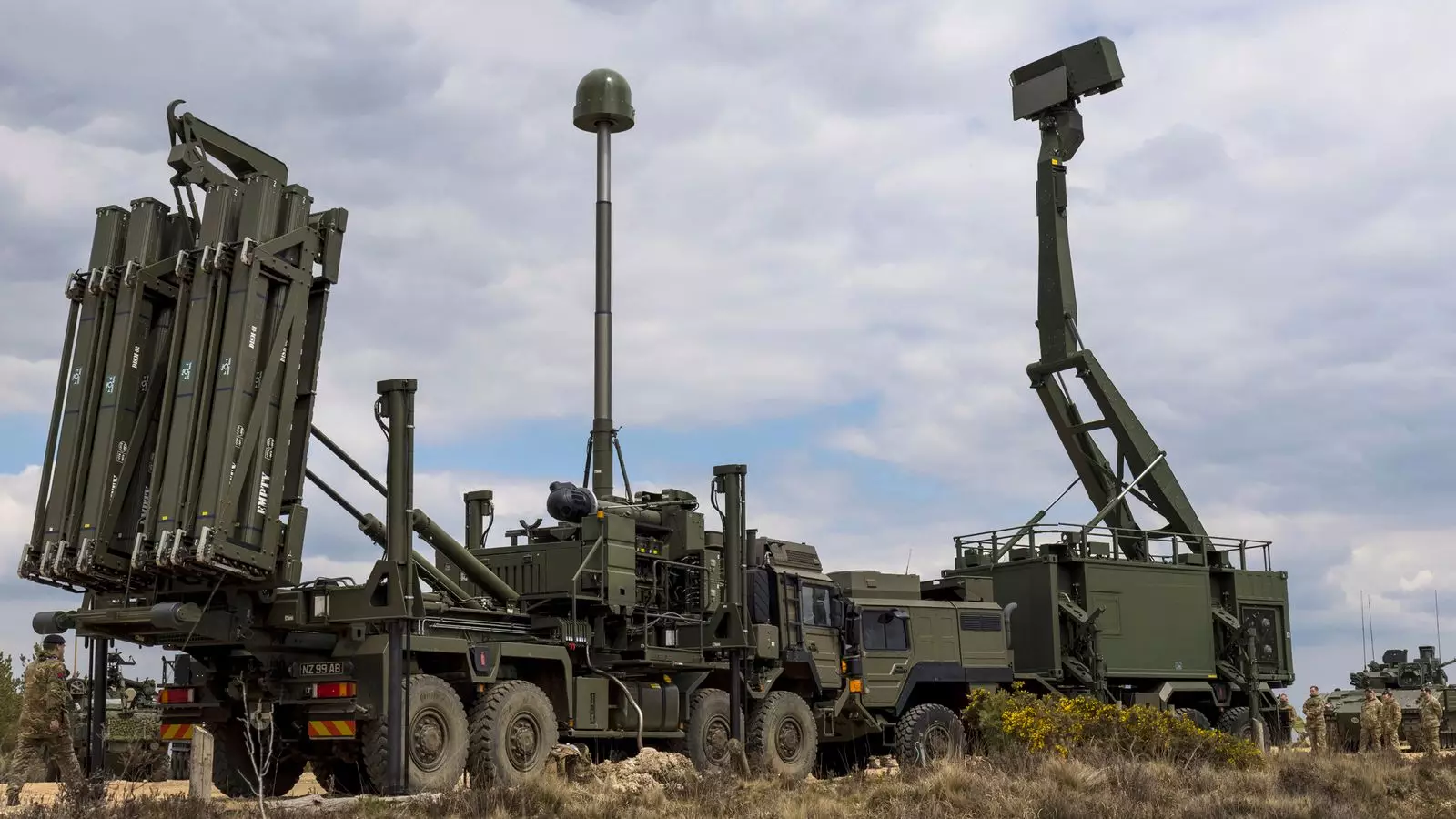
In recent years, Britain has embarked on a series of military purchases that, on the surface, appear robust and modern. The latest move—investing over £118 million in advanced air defense missile systems—is presented as a vital step toward safeguarding national security. However, a critical eye reveals that these initiatives are mere stopgaps, superficial efforts that mask deeper vulnerabilities lurking beneath a glitzy veneer of modernity. The truth is, the UK’s strategic posture remains fundamentally flawed, increasingly exposed to evolving aerial threats that existing systems are ill-equipped to handle.
Historically, the British military relied heavily on the Rapier missile system for air defense. Its replacement, the Sky Sabre, was heralded as a significant upgrade, promising superior speed, precision, and integration. Yet, amidst this technological leap, the core question remains unaddressed: Are these new systems enough? Considering the recent geopolitical upheavals—the invasion of Ukraine, Iran’s destabilizing regional activities, and the emergence of hypersonic weaponry—the answer is an unequivocal no. The British government’s procurement decisions seem driven more by political optics than a sober assessment of actual threats, reflecting a misguided complacency that dangerously underestimates the evolving battlefield.
Shortsightedness in Strategic Planning
The deployment of the Land Ceptor missile and the accompanying radar capabilities should, in theory, bolster the UK’s defensive posture. This missile system can intercept threats up to 15 miles away, which is a notable upgrade from the older systems. But here lies a critical flaw: the UK’s efforts are predominantly tailored for point-defense against relatively low-capacity threats—fighter jets, drones, and attack helicopters—rather than the full spectrum of modern missile warfare. The new system does little to counter ballistic, hypersonic, or cruise missiles, which are precisely the threats that now dominate global military developments.
In the Cold War era, the UK boasted an extensive missile defense network—Bloodhound missiles encircling the nation, designed to intercept Soviet bombers and missile attacks. These vanished into history, deemed unnecessary once Cold War tensions subsided. Today, the UK’s missile defense relies primarily on NATO allies and the limited radar coverage from RAF Fylingdales. This fragmented architecture hinges on assumptions that future threats will replicate past fears, ignoring a rapidly changing landscape where adversaries are deploying increasingly advanced missile technology with alarming frequency and capability. Such complacency echoes strategic myopia, leaving Britain dangerously exposed.
The Rising Tide of Advanced Threats
The Russian invasion of Ukraine vividly illustrated a cold truth: traditional air defenses are quickly becoming obsolete against the new breed of missile threats. Meanwhile, Iran and other regional actors are advancing their missile arsenals, introducing hypersonic weapons that defy current defense methodologies. The UK’s recent purchases, meanwhile, are insufficient to address these developments. The Land Ceptor system, while impressive, resembles an antiquated shield against an ever-evolving aerial barrage.
Moreover, Britain’s geographical isolation offers little reassurance if critical infrastructure becomes a target. The strategic reliance on NATO’s collective defenses effectively shifts the burden, defusing the urgency of developing robust national missile shields. This passive posture reflects a dangerous dependency—banking on allies’ capabilities while neglecting to modernize and expand Britain’s own defenses. Such an approach is shortsighted, potentially catastrophic in a crisis where swift, autonomous response might be the only decisive factor.
The Cost of Complacency
Investing in missile systems like Sky Sabre and Land Ceptor provides a temporary tactical advantage, but it merely masks the pressing issues of strategic neglect. The UK’s current defense budget and planning do not align with the emerging threats posed by hypersonic and ballistic missiles that can strike from great distances with little warning. The contrast could not be starker: a nation willing to make superficial upgrades while ignoring the core deficiencies that leave it vulnerable.
The truth is that the UK remains caught in a cycle of reactive policy—upgrading weapons after crises occur—rather than adopting a proactive stance that prioritizes comprehensive, layered defense capabilities. This defensive complacency jeopardizes national sovereignty and endangers critical infrastructure. Without deliberate, substantial investment into missile defense systems capable of countering future threats, Britain risks becoming increasingly irrelevant in the evolving global military arena.
In the end, these seemingly impressive military purchases serve as tragic reminders of short-term thinking—a nation’s tendency to patch wounds instead of addressing the root causes. As enemies innovate and deploy more lethal weaponry, the UK’s current approach reflects a dangerous underestimation of what true security entails. Waiting until a crisis manifests to act is a costly luxury Britain can no longer afford.