
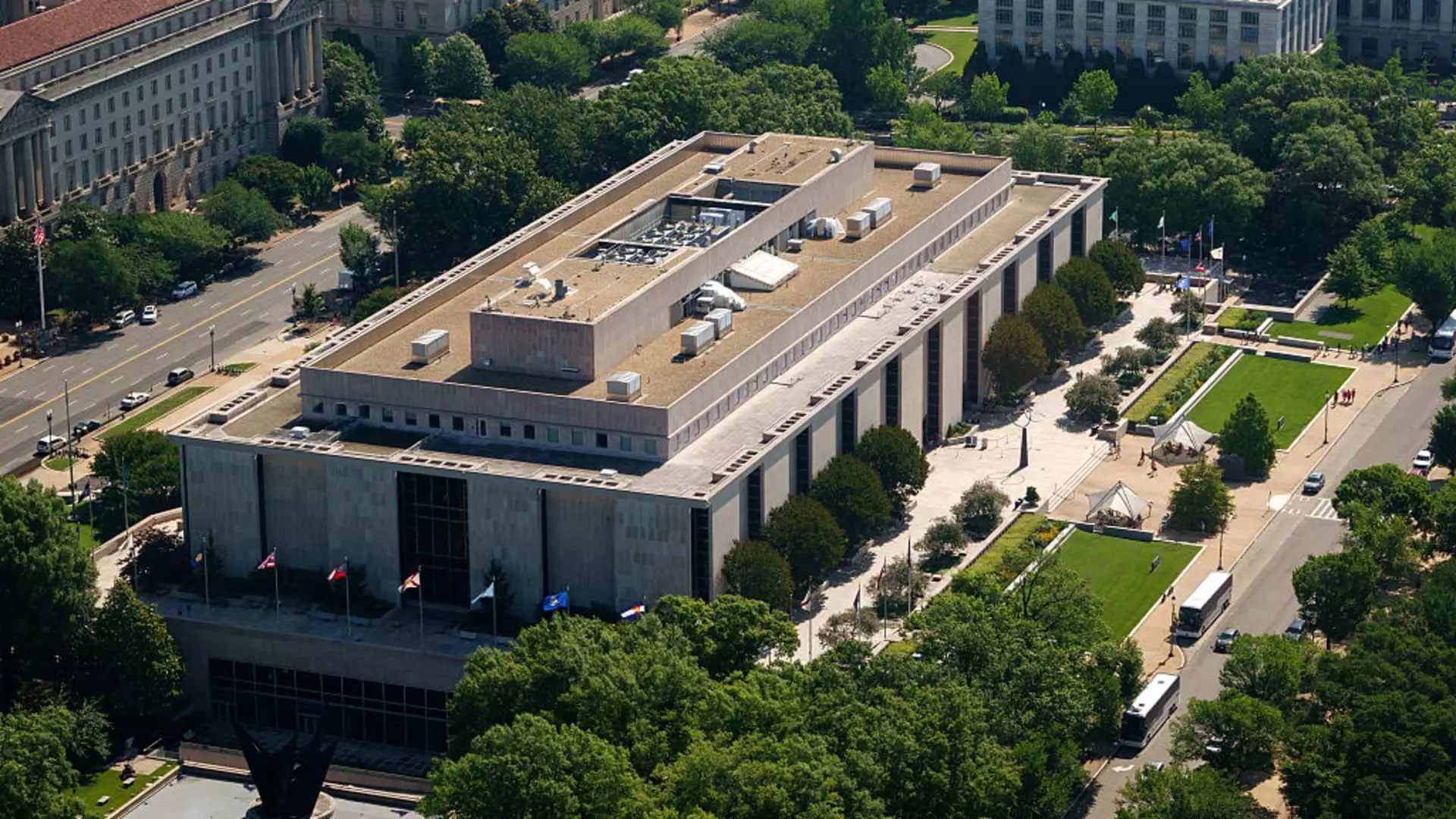
In recent political discourse, an alarming trend has emerged, blurring the line between patriotic oversight and oppressive censorship. The latest assault on institutions like the Smithsonian signals a disturbing shift toward weaponizing government influence to sanitize and control America’s cultural history. What was once a bastion of scholarly inquiry and diverse perspectives now risks becoming a propaganda tool, aligned with a narrow ideological agenda. The push to purge “woke” content from museums is not only a misguided attempt at historical revisionism but also a dangerous erosion of free intellectual inquiry. It’s clear that this new form of censorship cloaked in patriotism endangers the very fabric of democratic society, where open debate and diverse narratives should thrive.
From Colleges to Cultural Institutions: A Pattern of Political Overreach
This assault on museums is hardly isolated. It echoes the administration’s aggressive tactics against universities, where funding coercion has been employed to silence dissent and enforce conformity. When taxpayer money becomes a lever to dictate what can and cannot be discussed, academic and cultural freedom are under siege. The strategy is simple: threaten to cut financial support unless institutions toe the line on a specific worldview. This approach transforms education and culture into battlegrounds for ideological conformity rather than spaces for genuine exploration of history and ideas. The targeted review of Smithsonian exhibits under the pretense of eliminating “improper ideology” feels less like safeguarding patriotic values and more like a calculated effort to rewrite history to fit a sanitized, monopolized narrative.
The Illusion of Protecting American Values
Proponents argue that removing “woke” content from museums is about preserving national pride and unity. But this rhetoric rings hollow when it’s used as a shield for censorship. True patriotism includes honoring the complexities, contradictions, and diverse voices embedded in America’s history. Whitewashing uncomfortable truths—be it about slavery, systemic oppression, or marginalized communities—only weakens the nation’s foundation by ignoring its full story. The narrative Trump and his allies seek to promote is a curated version of history, carefully crafted to inflate national greatness while dismissing less flattering chapters. This not only dishonors the lived realities of countless Americans but also hampers honest dialogue about our shared past.
Implications for Democratic Governance and Freedom of Thought
When government officials weaponize funding and institutional authority to control cultural narratives, democracy itself is imperiled. The Smithsonian, as a publicly funded institution, symbolizes America’s commitment to learning from all facets of history. Efforts to micromanage exhibits under the guise of patriotism threaten to turn cultural institutions into government mouthpieces. History becomes a tool for political consolidation, not enlightenment. This trend sets a dangerous precedent: that opposition or uncomfortable truths can be silenced through financial pressure and bureaucratic overreach. It undermines the very principles of free inquiry and open debate that are essential for a healthy democracy.
The Broader Consequences of Cultural Censorship
Expanding censorship beyond politics into the realm of cultural memory reveals a broader phenomenon: a societal retreat into ideological echo chambers. When institutions increasingly kowtow to political agendas, the diversity of thought and experience diminishes. Future generations will inherit a sanitized version of history, devoid of the complexity and nuance that are essential for critical understanding. It encourages a mentality where dissent is not only discouraged but actively suppressed, leading to an intolerant, myopic culture that seeks comfort in conformity. The effort to control the narratives presented in museums and universities reflects a broader societal malaise—one that champions conformity over authenticity and unity over truth.
The push to purge “woke” content from museums under the guise of patriotism is fundamentally opposed to the ideals that make America a land of freedom and opportunity. While seeking to protect a version of the country that aligns with a specific political ideology, this movement undermines the very foundations of a pluralistic society. Censorship, whether in the form of budget threats or bureaucratic reviews, erodes the intellectual diversity necessary for a thriving democracy. If America is to truly stand as a beacon of freedom and progress, we must resist efforts to rewrite its history and muzzle dissent. Patriotism should not mean unquestioning conformity—it should stand for a proud acknowledgment of all that the nation has been and can become.