
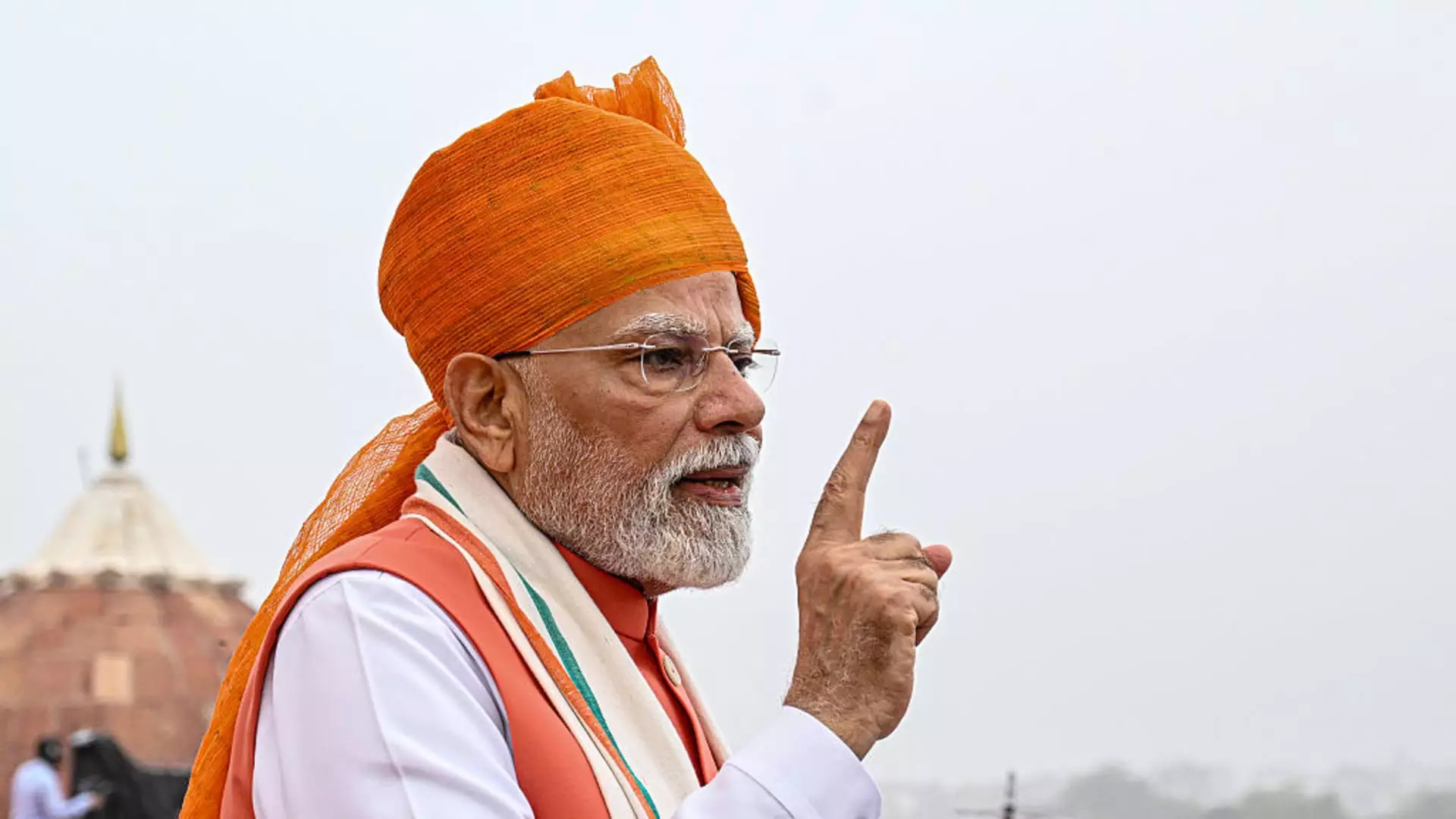
India is at a pivotal juncture, with recent government initiatives signaling a strong desire to overhaul and modernize its economic structure. Prime Minister Narendra Modi’s unveiling of substantial tax cuts and a revised Goods and Services Tax (GST) framework is more than mere policy tinkering; it’s a calculated attempt to stimulate growth amidst a landscape fraught with external pressures and internal vulnerabilities. While these reforms have sparked optimism in capital markets, it’s crucial to critically assess whether they represent a genuine strategy for sustainable development or a potentially perilous gamble that may overlook deeper systemic issues.
The core of Modi’s recent announcements hinges on simplifying India’s tax regime by consolidating multiple rates into a manageable two-tier system—5% and 18%. This overhaul aims to reduce compliance costs, foster greater transparency, and catalyze investment across sectors such as manufacturing, logistics, and consumer goods. On paper, the logic is sound: cleaner, more predictable tax policies tend to attract both domestic and foreign investments, and they can buoy a sluggish economy. However, the devil lies in the details. Implementing sweeping tax reforms amidst a complex federal structure, diverse economic realities, and entrenched bureaucratic interests presents significant administrative challenges that could undermine the intended benefits.
Furthermore, the move to relax tariffs and enhance domestic consumption stands in stark contrast with the current global trade environment, rife with uncertainties and protectionist tendencies. India’s dependence on internal consumption makes these reforms potentially powerful—if they translate into real improvements in disposable income and consumer confidence. Yet, it remains an open question whether these measures will adequately address structural issues like low wages, uneven regional development, and income inequality, which continue to weigh heavy on India’s long-term growth trajectory.
Uneven Prospects: Winners and Losers in the New Tax Landscape
Amidst the reform rhetoric, certain sectors seem poised to capitalize quickly. The automotive industry, which has lagged in recent months, is witnessing a hopeful turnaround thanks to the new tax structure. With automakers like Maruti Suzuki and Hyundai recording substantial gains, it’s tempting to interpret this as a sign that the reforms could rejuvenate sectors that have suffered from sluggish demand and high levies. Yet, this rosy picture must be tempered by caution. Automotive growth remains sensitive to broader economic conditions, credit availability, and global supply chain disruptions—factors that even a favorable tax policy cannot eliminate.
More broadly, the focus on micro, small, and medium enterprises (MSMEs) suggests a pragmatic approach. easing levies and simplifying compliance could indeed empower these vital engines of India’s economy, especially as they are crucial for employment and decentralizing growth. Still, MSMEs also face challenges from undercapitalization, informal operations, and limited access to technology—issues that tax reforms alone cannot resolve. Relying heavily on fiscal cherry-picking risks creating a situation where growth appears robust on paper but remains unbalanced and fragile in practice.
Meanwhile, sectors with less immediate political or economic prominence—like agriculture or formal services—may not see proportional benefits. The reforms’ success hinges on effective implementation and the government’s ability to ensure that benefits reach the grassroots level without exacerbating existing inequalities.
The International Context: Risks of Overreliance on Domestic Consumption
India’s strategic pivot toward boosting domestic consumption by making the tax system more attractive signifies a recognition that export-centric growth is increasingly risky in an uncertain global order. With the U.S. tilting towards protectionism and imposing punitive tariffs—like the 50% levy on Indian goods—India’s dependence on internal markets appears prudent. However, safeguarding growth through domestic consumption isn’t without its pitfalls.
Low wage growth, declining household savings, and a sluggish job market cast long shadows over the long-term viability of a consumption-driven model. Despite the optimism surrounding lowered inflation and increased private spending, these indicators might mask underlying vulnerabilities. For instance, if low income levels persist and credit remains unevenly distributed, the boost to discretionary spending could be short-lived or unevenly distributed, risking a false sense of momentum.
There’s also a deeper philosophical question about whether India’s current approach is sustainable or merely a patchwork fix. The merit of expanding social safety nets, investing in education, and restructuring labor markets remains under-discussed in the current reform narrative. Without these foundational reforms, the risk is that short-term measures could inflate bubbles or lead to increased income disparity—phenomena that could ultimately threaten the stability and inclusivity of India’s growth story.
Balancing Optimism with Caution
Modi’s reforms signal a bold intent to reshape India’s economic outlook, but their true test lies in execution. Market reactions, exemplified by the rally in auto stocks and appreciation in the rupee, reflect a cautious optimism that hinges on the government’s capacity to deliver on these promises effectively. While the reforms could short-circuit some of the harmful effects of global trade tensions, they do little to resolve deeply rooted structural issues—such as labor market rigidity, educational disparities, and regional imbalances—that threaten to undermine long-term resilience.
From a centrist liberal perspective, the path forward must be marked by a strategic blend of prudent reforms, social investments, and inclusive policies. Relying solely on tax cuts and deregulation risks creating a financial class that benefits disproportionally, while leaving the broader population behind. The challenge for India is to navigate this complex terrain with a balanced approach—one that promotes innovation and growth without sacrificing social cohesion or environmental sustainability.
In essence, Modi’s reform agenda is both a shot of adrenaline for a struggling economy and a risk-laden gamble that could backfire if not carefully managed. Its success hinges on whether India can convert these policy gestures into meaningful, inclusive development—something that requires more than just business-friendly reforms; it demands a comprehensive vision for social justice and economic stability.