
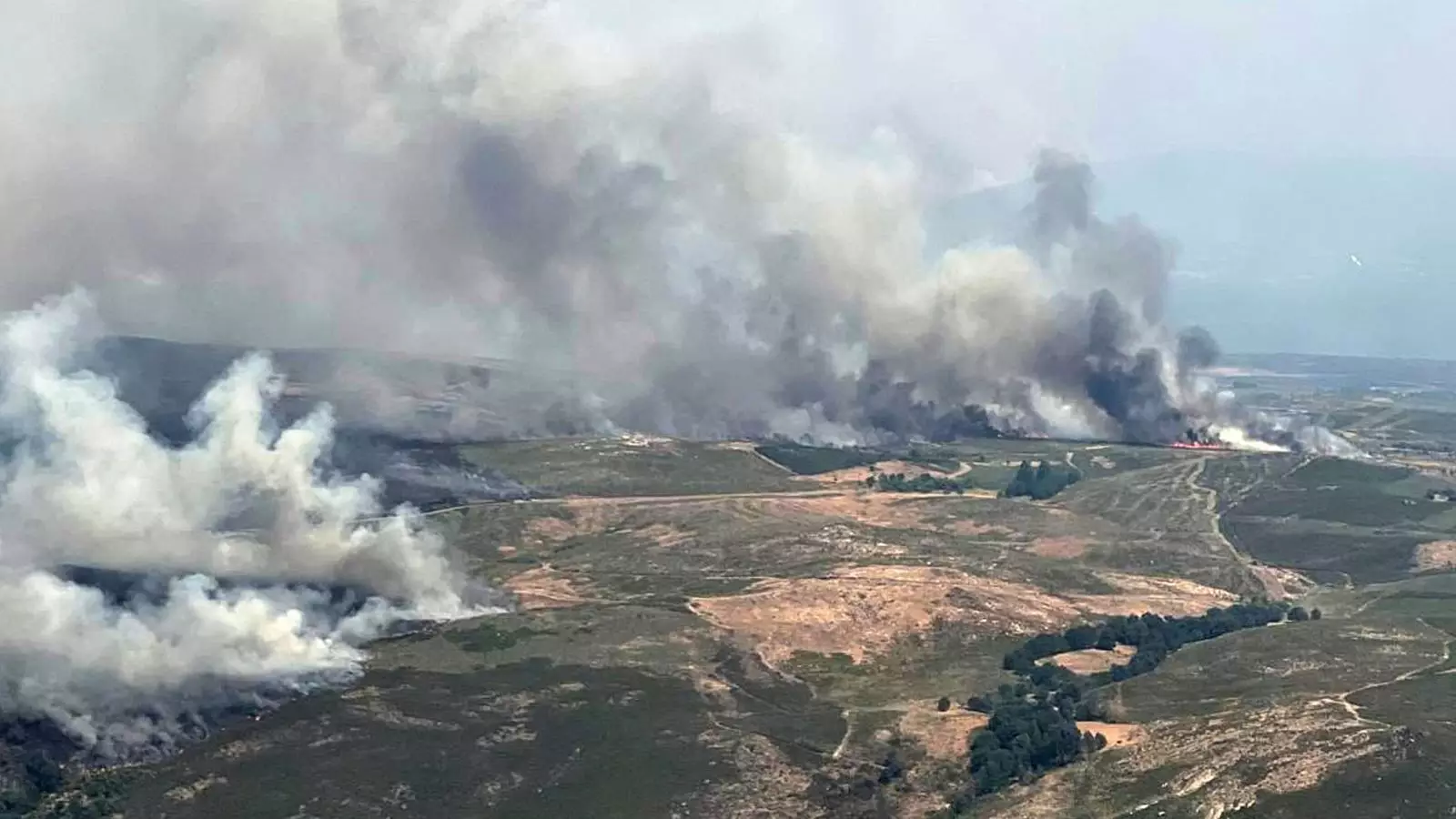
Recent reports of wildfires blazing across Spain and Portugal serve as stark reminders that human hubris often underestimates nature’s destructive capacity. While the sun’s old friend, the blue sky, is temporarily obscured by a smoky haze carried across the Atlantic to the UK, this phenomenon is more than a fleeting meteorological event. It is an urgent signal that our collective failure to address climate change is unleashing forces that threaten to alter the fabric of life. The fires, worsened by decades of environmental neglect and policy inertia, expose the dangerous illusion that natural disasters are isolated incidents instead of symptoms of a profound global imbalance.
The smoke drifting over the UK is not merely a scenic change that enhances sunsets; it’s a metaphor for the murky moral and political landscape surrounding environmental stewardship. Governments, corporations, and individuals alike have delayed meaningful action, choosing short-term economic gains over sustainable practices. The rising frequency and ferocity of wildfires are direct consequences of rising global temperatures, which create perfect conditions for such disasters: prolonged droughts, parched vegetation, and relentless heatwaves. The fires are not random acts of nature—they are the predictable outcomes of a system that continues to burn fossil fuels despite mounting scientific warnings.
Climate Change’s Militant Assault on Humanity’s Security
The current wildfires in southern Europe, claiming lives and destroying landscapes, starkly illustrate the broader implications of climate inaction. When nearly an entire region is engulfed—an area as vast as London—the question arises: How many more must perish before decisive policies are enacted? The deaths of at least seven people are tragic but serve as a warning—a deadly consequence of prioritizing immediate economic interests over long-term ecological health. These disasters expose existing social inequalities, too. Vulnerable communities often bear the brunt, trapped in areas with few resources to escape or recover from the chaos.
What is most troubling is not just the destruction but the systemic complacency that allows such tragedies to unfold year after year. Governments continue to respond with temporary relief rather than tackling the root causes: emissions, deforestation, and inadequate land management. The fires, fueled by human activity, reveal our failure to curb the most destructive habits of the last century. Wildfires devastate biodiversity, displace communities, and drain public resources—yet, they’re still seen as inevitable tragedies rather than preventable crises.
The Spectacle of Sky and Society: How Nature’s Messages Are Being Ignored
While the human tragedy unfolds in southern Europe, the skies over Britain have turned into canvases of red and orange hues—an eerie beauty born from catastrophe. The smoke and Saharan dust that facilitate these atmospheric effects are not benign—they symbolize the interconnectedness of global climate systems and the cascading consequences of human neglect. The science behind the atmospheric phenomena—Rayleigh and Mie scattering—is a poetic reminder that even the natural world responds to human actions, often in ways that baffle and threaten us.
These dramatic sunrises and sunsets should be warnings etched into our collective consciousness. They are a spectacle crafted by a planet under duress, yet society seems more captivated by their aesthetic than their meaning. Instead of confronting and addressing the climate crisis head-on, many prefer to dismiss these visual cues as temporary or harmless weather patterns. This complacency is dangerous; it allows us to ignore the underlying crisis until it manifests in more catastrophic ways—like unprecedented wildfires or rising sea levels.
Moving Beyond Passivity Toward Purposeful Action
The time for passive worries and rhetorical debates has long passed. The wildfires and hazy skies are wake-up calls demanding urgent, ambitious action. Environmental policies must transition from symbolic gestures to transformative shifts. This requires a cultural reassessment—a recognition that sustainable living is not an optional lifestyle but a moral imperative. Supporting renewable energy, protecting forests, and holding polluters accountable are steps that must no longer be delayed by political calculation.
In a world increasingly shaped by climate-related calamities, complacency is a betrayal of future generations. The flames consuming southern Europe mirror the burning of trust in our institutions’ ability to safeguard our world. Our response must be revolutionary, fueled not only by technological innovation but also by moral clarity. We must reject the myth of human omnipotence and accept that we are part of a complex, fragile system that demands respect and stewardship.
Refusing to confront this crisis head-on ensures that events like the current wildfires will become mere preludes to even more disastrous chapters. Our future hinges on recognizing the warning signs etched into the very atmosphere we take for granted. The fiery sweep across southern Europe and the atmospheric drama in the UK are not isolated acts—they are symphonies of failure and opportunities for renewal. The choice is ours: continue to ignore or finally commit to safeguarding the planet with genuine urgency and integrity.