
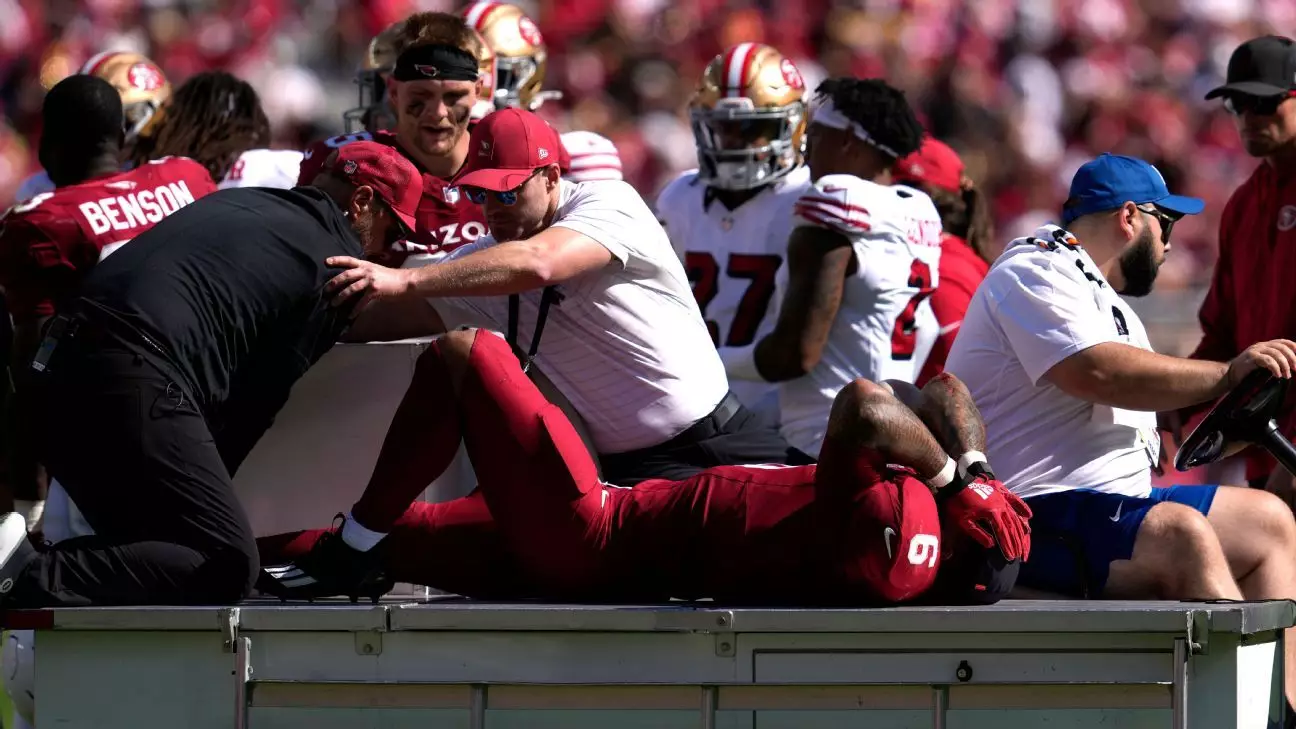
The recent injury of James Conner encapsulates a brutal truth that often lurks beneath the surface of professional sports—the peril that athletes willingly confront each time they step onto the field. Conner’s season-ending ankle injury during a tightly contested game highlights not just the physical toll but the psychological weight borne by players. While fanfare often centers around highlights, victories, and record-breaking feats, the shadow of injury lurks behind every dynamic play. The devastating reality is that no matter how meticulously an athlete trains or how resilient they seem, their career trajectory can abruptly change in a matter of seconds. This injury serves as a stark reminder that sport at its highest levels can be as fragile as glass, disconnected from the glorified imagery often broadcasted to millions.
The emotional toll on players, teammates, and fans cannot be understated. When Conner hit the turf, the collective feeling was palpable: a shared sense of loss, vulnerability, and perhaps even helplessness. Such moments underscore the brutal truth—the sport we celebrate is inherently risky, and the physical costs often go unnoticed amidst the excitement and adrenaline. The fact that Conner, only 30 years old and with a lucrative contract extension in hand, now faces a long camino through recovery, challenges the perception that athletic achievement alone guarantees security. It exposes the often-overlooked reckoning that even the most prepared athletes are susceptible to the unpredictable and unforgiving nature of their careers.
The Cultural Glorification of Physical Risk
In our society, there is a nuanced — yet problematic — endorsement of risking one’s health for the sake of victory, fame, or personal achievement. Football, as a microcosm of this ethos, embodies a culture that laudably celebrates toughness but simultaneously normalizes injury. The swift movement of players and personnel to aid Conner, the visible concern from his peers, and the coach’s measured remarks highlight a collective acknowledgment of risk. Yet, the broader culture tends to gloss over the harsh reality: in pursuit of entertainment and revenue, players are essentially exposed to a sport that can forever alter their lives in an instant.
This raises important ethical questions: are we, as fans and consumers, complicit in enabling this culture of risk? Do the lucrative contracts and the media spectacle justify the physical and mental sacrifices players endure? The fact that Conner’s injury was “severe” and will require surgery, despite recent back-to-back 1,000-yard seasons, illustrates how quickly a promising career can be derailed. His story accentuates the thin line athletes walk—a line that is often overshadowed by the glamorization of their performance. Our society’s obsession with athletic heroism, driven by media glorification of risk-taking, sometimes inadvertently incentivizes players to push through pain, ignoring their own well-being.
The Responsibility of the League and Society
Critical self-reflection reveals that the NFL and similar sporting institutions have a duty that often falls short: prioritizing player safety. While injuries are deemed an inevitable part of the game, it is unacceptable to downplay their frequency and severity. The league must implement and enforce stricter safety protocols, improve injury prevention strategies, and foster a culture that genuinely values long-term health over short-term spectacle. Yet, the systemic pressures to win, draw audiences, and generate revenue frequently overshadow these concerns, creating a culture of acceptance rather than prevention.
From a societal perspective, this incident catalyzes a conversation about broader responsibility. Fans, media, and policymakers should challenge the narrative that glorifies risk without accountability. It’s time to reassess our collective obsession with high-impact sports and demand more comprehensive support systems for athletes. Conner’s injury is not just a personal tragedy; it exposes a deeper societal issue—the normalization of risk for entertainment, often at the expense of human well-being.
By critically examining the sport’s culture and the systemic structures that underpin it, we can begin to foster an environment where athlete safety is paramount. Only then can we truly reconcile our admiration for athletic excellence with the moral obligation to protect those who make the spectacle possible.