
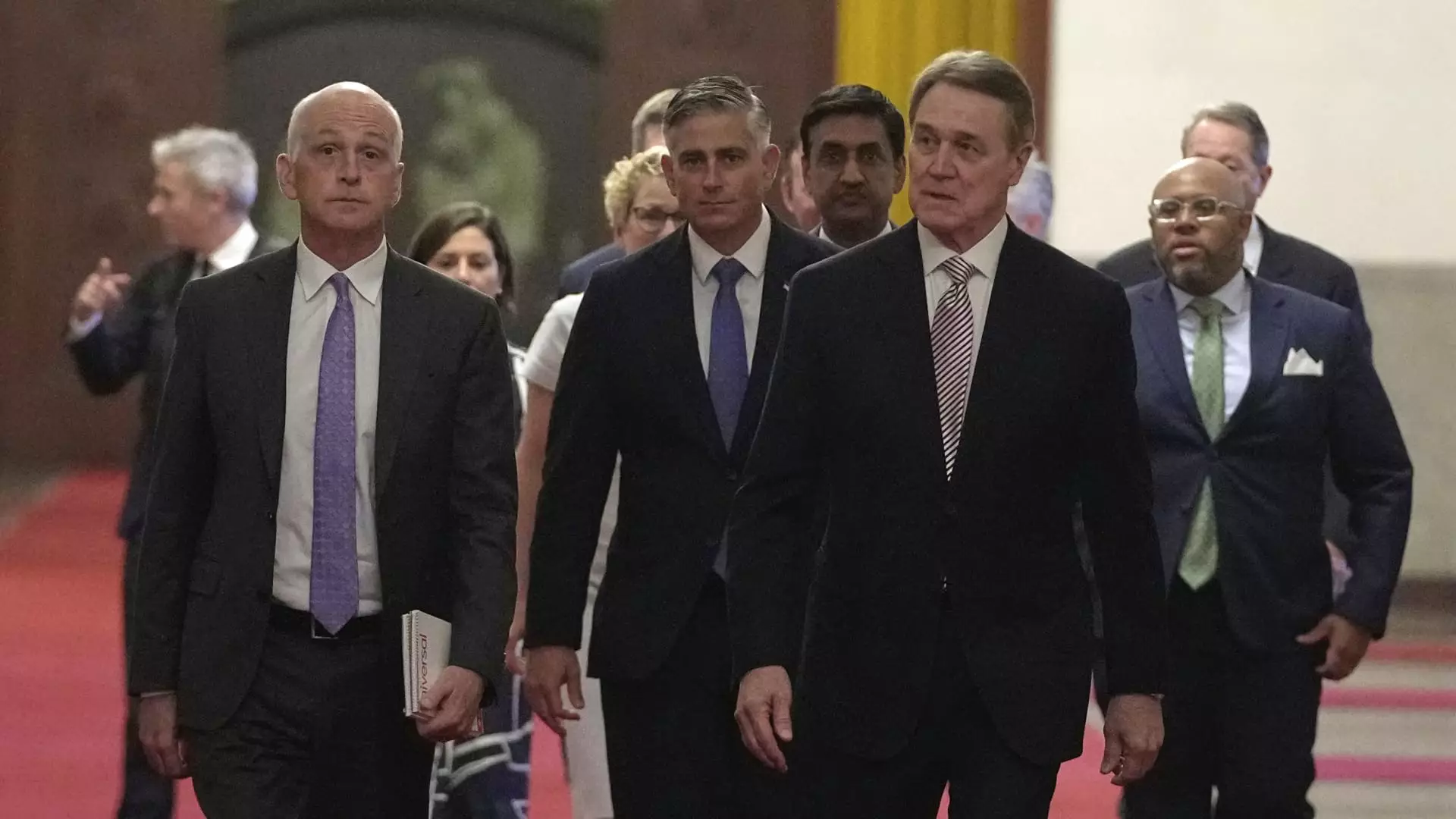
In 2019, a rare moment of diplomatic engagement between the United States and China occurred when a House of Representatives delegation visited Beijing for the first time in years. Since then, the relationship has drifted into a concerning state of hostility, fueled by a mixture of economic conflicts, territorial disputes, and ideological differences. Now, with a brief but meaningful trip led by Representative Adam Smith, there’s a tentative indication that both powers recognize the cost of continued estrangement, even if the motives and future actions remain uncertain. This visit signifies a delicate attempt at diplomacy, a fragile step towards restoring communication channels that have been effectively shut since the onset of the COVID-19 pandemic and subsequent geopolitical conflicts.
Peak Tensions and Misguided Attempts at “Breaking the Ice”
The trip occurred amidst a litany of grievances that have poisoned U.S.-China relations—trade restrictions, accusations over the origins of COVID-19, technological bans, and military posturing in the South China Sea and Taiwan. These issues embody a broader contest for influence and power, often driven more by nationalistic rhetoric than genuine diplomacy. While the Biden administration has spoken about the importance of engagement, it often appears more like a strategic palliative than a genuine effort to forge new pathways. The notion that “breaking the ice” will naturally lead to improved relations is naive at best, neglecting the deeply ingrained mistrust and conflicting visions of global order held by both nations. Engaging in brief visits or talks doesn’t fundamentally reverse the years of hostility; it risks superficiality if the underlying issues aren’t systematically addressed.
Is This a Sign of Genuine Progress or Political Optics?
The bipartisan delegation’s trip, led by a prominent Democratic legislator, serves as a symbolic gesture more than a definitive solution. It is a recognition that the escalation of hostilities—frequent provocations, military displays, and provocative rhetoric—harms global stability. The United States, with its commitment to liberal democratic values and international cooperation, has an interest in maintaining stable relations, especially as China’s rise challenges a liberal order that has underpinned global peace for decades. However, it would be a mistake to interpret these gestures as substantive breakthroughs. Domestic political pressures often favor tough talk and aggressive postures, making sincere engagement difficult to sustain.
Furthermore, the history of U.S. visits to Taiwan, especially those authorized or accompanied by lawmakers like Pelosi and McCaul, complicates the narrative. Such actions inflame tensions and risk reducing diplomacy to a game of geopolitical brinkmanship. These visits, while asserting support for Taiwan’s democracy, often undermine the delicate balance necessary for peaceful coexistence—highlighting a fundamental contradiction in America’s center-left approach that seeks strategic engagement but also political posturing.
The Underlying Dilemma—To Engage or Accept the Status Quo?
Despite the hopes attached to this diplomatic attempt, the core issues remain unresolved. The U.S.’s insistence on preserving its global influence, protecting technological dominance, and supporting democratic allies comes into direct conflict with China’s ambitions of reunification, territorial sovereignty, and rising influence in the international order. The question is whether engagement at this stage can meaningfully bridge these divides or merely serve as a pause before the next flare-up.
For centrist liberals, the challenge lies in advocating for a nuanced approach—recognizing the importance of diplomacy and engagement while remaining vigilant about the risks of appeasement or superficial diplomacy. Genuine progress demands more than symbolic visits; it requires rigorous dialogue on human rights, fair trade, and military transparency, balanced against a realistic acknowledgment of mutual interests.
In the end, the path forward isn’t about naive optimism that talks alone can resolve centuries of rivalry, nor should it be driven solely by a desire to “stand tough.” It’s about maintaining a pragmatic middle ground—pushing for engagement that’s firm, informed, and aware of the inherent complexities that define the U.S.-China relationship. Only through honest, sustained diplomacy—designed to address core issues—can the world hope to avoid slipping into a new Cold War or worse, a direct confrontation that would threaten global stability.