
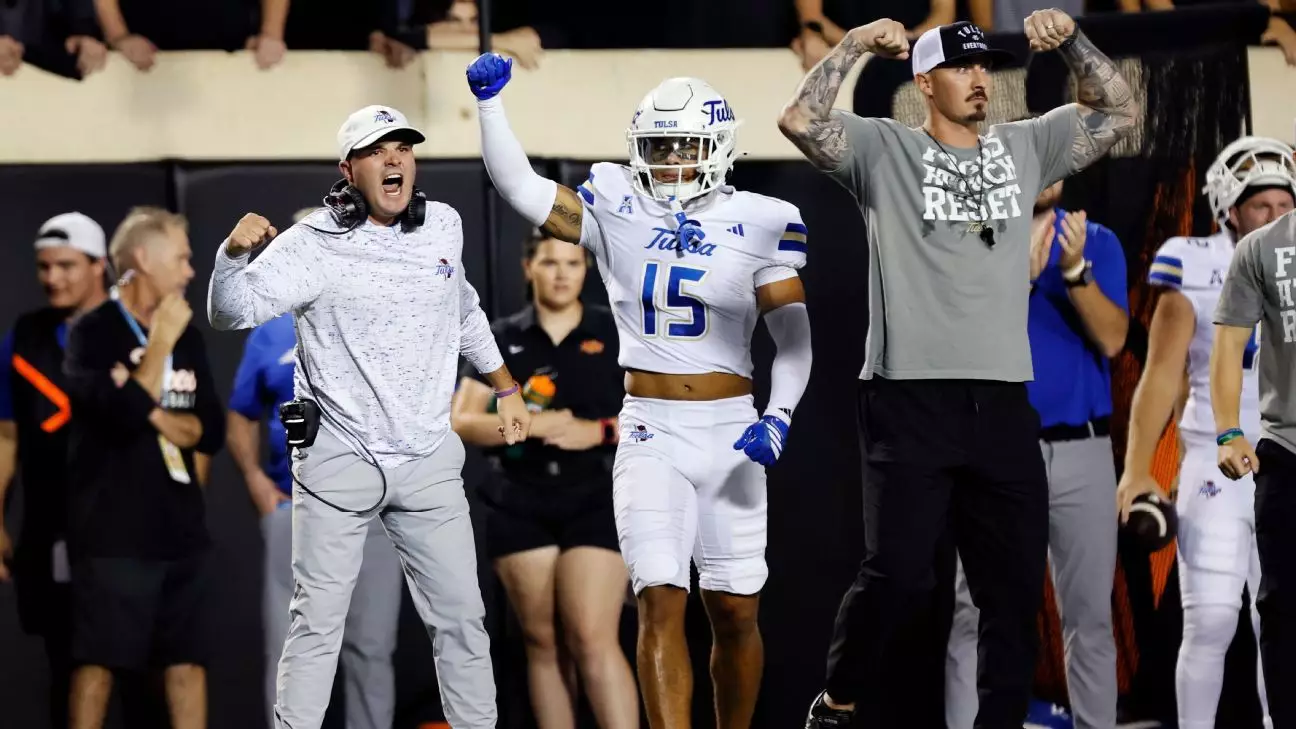
In the landscape of college football, victories are often predicated on tradition, recruiting prowess, and coaching stability. Yet, every so often, an underdog defies the odds not merely to win but to make a bold declaration—one that rattles the very foundations of complacency within powerhouse programs. Tulsa’s stunning triumph over Oklahoma State exemplifies this phenomenon, turning a familiar narrative of dominance into a story of resilience, tactical ingenuity, and the power of team chemistry. It is a sobering reminder that in sports — as in life — the status quo is never guaranteed to remain unchallenged.
This victory wasn’t simply about the scoreboard; it was a blow to the confidence of a program struggling with underperformance and marginalization within the broader collegiate sports hierarchy. Tulsa, historically an underdog within their own conference, seized an opportunity to rewrite their story—emerging from years of mediocrity and complacency fueled by unfortunate loses, such as the historic drought at Stillwater. Their success underscores a vital lesson: perseverance and strategic adaptability can overturn entrenched narratives, even in environments where defeat feels routine.
Coaching Crisis and Systemic Challenges
The fallout from Tulsa’s rise casts a stark spotlight on Oklahoma State’s ongoing struggles. Under Coach Mike Gundy, the Cowboys seem trapped in a cycle of underachievement, with a record that speaks to systemic issues—one win in their last 12 games, and a discouraging 0-9 record when coming off a loss since last season. These figures reflect not just recent form but suggest deeper structural problems within the program, from recruitment gaps to leadership deficiencies. It’s hard to ignore that such trends might stem from a culture too entrenched in past glories, resistant to necessary evolution.
Meanwhile, Oklahoma State’s inability to adapt under pressure reveals a broader malaise afflicting many established programs that cling too tightly to traditional methods without innovating in player development or game strategy. Their recent loss, an embarrassing 69-3 rout at the hands of Oregon, showcases how even historical powerhouses are vulnerable when their foundations weaken. Tulsa’s win perhaps offers a painful lesson: complacency and rigid institutional thinking often lead to decline, while humility and strategic flexibility can foster resurgence.
Gundy’s acknowledgment that Tulsa “outcoached” them early in the game highlights a crucial truth. Too many programs rest on their laurels, underestimating the evolution of the sport and their opponents. As college football becomes increasingly competitive and nuanced, leadership must prioritize agility and continuous adaptation—qualities that Tulsa visibly embraced in this encounter.
The Power of Identity and Resilience
What makes Tulsa’s victory truly compelling is its embodiment of resilience. Facing a rival with historic dominance at Stillwater—a place where they had not won since 1951—the Golden Hurricane demonstrated that perseverance and belief can challenge even the most entrenched hierarchies. Their quarterback, Baylor Hayes, played with poise and decisiveness, completing 23 passes for 219 yards and a touchdown without a single interception. Meanwhile, Seth Morgan’s consistency with four field goals illustrates discipline and focus—traits often absent in underdog narratives but crucial here.
This game was a testament to the importance of mental toughness and team cohesion. Tulsa’s ability to stay composed, execute their game plan, and capitalize on their opponent’s weaknesses proved that success in sports, and arguably in politics or society, largely depends on internal strength rather than external advantages. Their coach, Tre Lamb, capturing the moment’s significance by calling it “a huge win” and a statement of Tulsa’s return as a relevant program, exemplifies the importance of conviction in leadership. It’s more than just a game; it’s a declaration that resilience and strategic resolve can shatter established norms.
In a broader societal context, Tulsa’s victory can be seen as an allegory for marginalized communities or overlooked groups fighting against entrenched systems. It serves as a reminder that defying expectations requires unwavering commitment, innovative thinking, and unity—values that transcend sport and reach into the very fabric of societal progress.
The Cost of Complacency and the Need for Change
For years, programs like Oklahoma State have been riding the waves of past reputation, seemingly resting on their laurels rather than actively addressing core issues within their systems. Their current struggles serve as a warning: without proactive change, stagnation becomes a self-fulfilling prophecy. The coach’s acknowledgment of being out-coached hints at a deeper problem—an inability or unwillingness to evolve with the game’s shifting landscape.
Remarkably, Tulsa’s win underscores the importance of humility and the willingness to learn from failure. Instead of capitulating, they used adversity as motivation, demonstrating that audacity and tactical foresight could tip the scale. This is a critical lesson for larger institutions across sectors: success is fleeting, and complacency is a direct route to decline.
The game also raises questions about power dynamics within college sports. Does dominance breed arrogance? Are programs so confident in their superiority that they neglect innovation? Tulsa’s victory injects a dose of humility into the conversation, suggesting that even long-standing giants must remain vigilant, adaptable, and hungry for growth.
—
This critical examination reveals that true progress often comes from unexpected places. Tulsa’s upset is more than a fleeting sports victory; it’s a mirror reflecting broader societal truths — that resilience, innovation, and humility are essential for sustained success, particularly in systems resistant to change.