
In recent developments, the rhetoric emanating from regulatory bodies and political figures exposes a disturbing trend: the erosion of free speech under the guise of maintaining public interest. The controversy surrounding FCC Chairman Brendan Carr’s remarks about late-night host Jimmy Kimmel is not merely a dispute over media content but a glaring illustration of how authority can threaten foundational democratic liberties. When officials threaten to revoke broadcast licenses over dissenting or controversial opinions, the line between regulation and censorship blurs dangerously.
The language used by Carr—“we can do this the easy way or the hard way”—evokes images of mob intimidation, not responsible governance. Such rhetoric is especially alarming because it signals a willingness to leverage regulatory power to silence voices that challenge particular political narratives. Both the timing and the tone indicate an attempt to punish media personalities who dare to address sensitive political issues, in this case, a critique of Charlie Kirk’s death. This not only threatens the independence of journalism but sets a perilous precedent that could extend indefinitely, fueling a climate where media outlet decisions are dictated by political convenience rather than journalistic integrity.
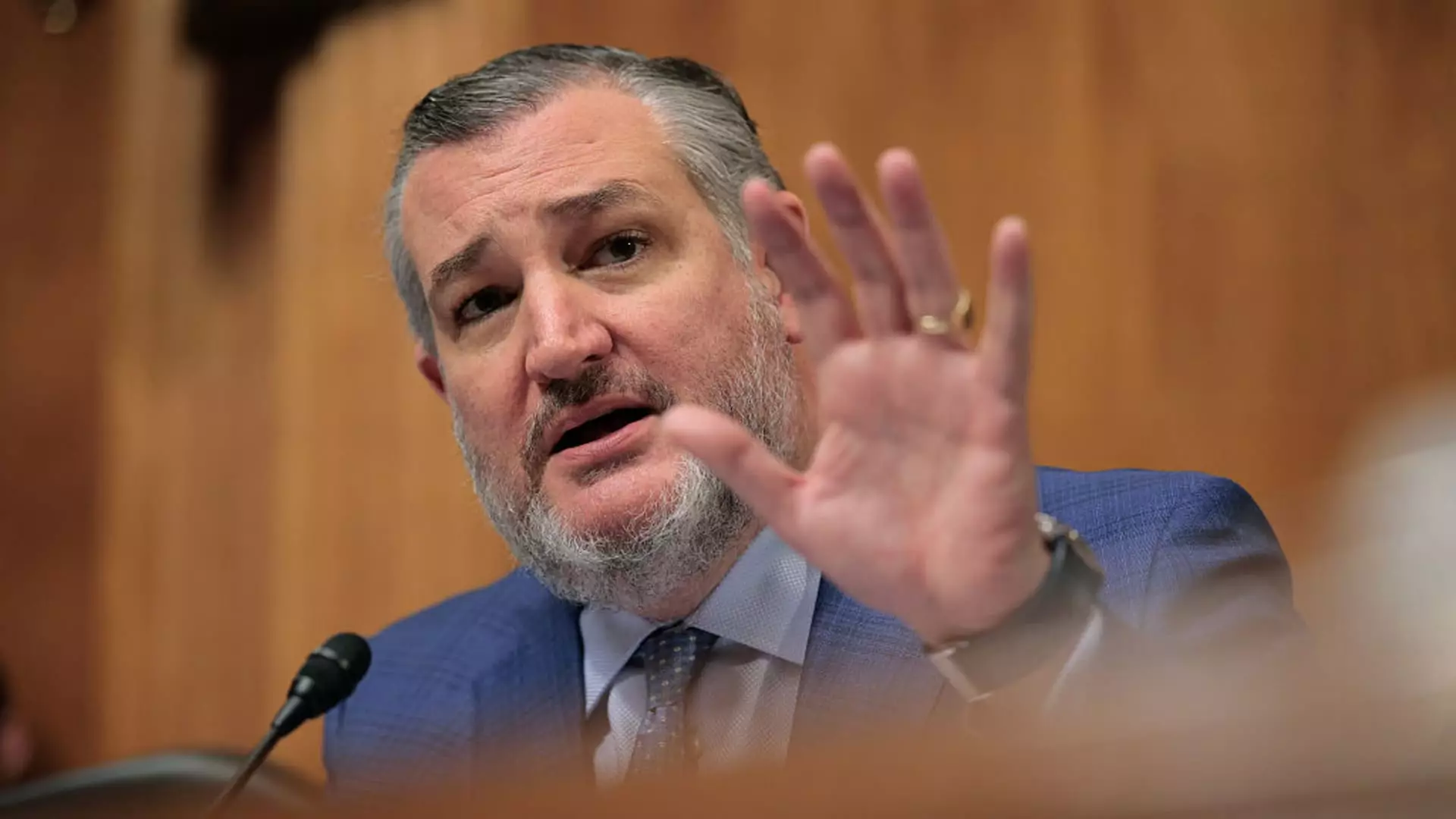
Cruz’s critique underscores a vital principle: the importance of checking governmental overreach. While many may sympathize with the impulse to sanction extreme or harmful speech, using regulatory threats to silence critics or controversial opinions risks undermining the very fabric of democratic debate. Cruz’s comparison of Carr’s statement to a mobster’s intimidation tactic is more than hyperbole; it raises a vital concern about the moral boundaries regulators should not cross. When the threat of censorship becomes a tool for silencing dissent, democracy itself becomes vulnerable.
The Political Implications and Center-Left Responsibility
The reactions to this situation reveal how deeply divided narratives about free speech have become. President Trump’s praise for Carr’s stance, coupled with Cruz’s cautious warning, exemplify the polarized political spectrum. The center-left, however, must stand firm in advocating for balanced regulation—protecting against harmful content without trampling on free expression. The tendency to applaud regulatory threats as “protecting public interests” overlooks the larger danger: suppression of diverse voices and the chilling effect that such threats have on journalism and political discourse.
It is imperative that moderation and accountability are prioritized over heavy-handed tactics. The broader societal implication of allowing regulatory bodies or political figures to determine which opinions are acceptable is a drift toward authoritarianism. Even when disagreements with media figures like Kimmel are valid, responding with threats of license revocation endangers the principles of a free press. Democratic societies rely on the ability of broadcasters and journalists to investigate, critique, and satirize without fear of government retribution.
Furthermore, the fact that ABC and Nexstar chose to pre-empt Kimmel’s show indicates the tangible power of such threats. This self-censorship, justified by the mere possibility of regulatory punishment, signifies a dangerous precedent for media independence. The consequence is an increasingly homogenized narrative controlled by those in power, to the detriment of a vibrant, pluralistic dialogue.
The Role of Media and Public Accountability in a Healthy Democracy
As citizens, it is crucial to recognize that the health of our democracy hinges on the resilience and independence of our media institutions. When regulatory threats are weaponized, it is the public’s democratic right to be wary. The notion that a media figure’s critique could justify severe repercussions is fundamentally at odds with the principle of free expression. It undermines the watchdog role of journalism, casting a shadow over the potential for media to serve as a check against governmental overreach.
For those of us committed to a centrist liberal outlook, protecting free speech is paramount—not as an unchecked free-for-all, but as a carefully balanced framework that fosters accountability without silencing dissent. Democratic societies are strongest when dialogue remains open, even amid disagreement. Imposing punitive measures on media figures for their opinions against the current political tide is not only unjust but a slippery slope toward authoritarianism.
Ultimately, this episode serves as a test for our collective commitment to democratic values. It challenges us to scrutinize how institutions and political figures wield power, especially when the stakes involve fundamental rights. Situations like these remind us that vigilance is necessary to prevent the normalization of censorship and to uphold the principles of free expression that are vital to an open and inclusive society.