
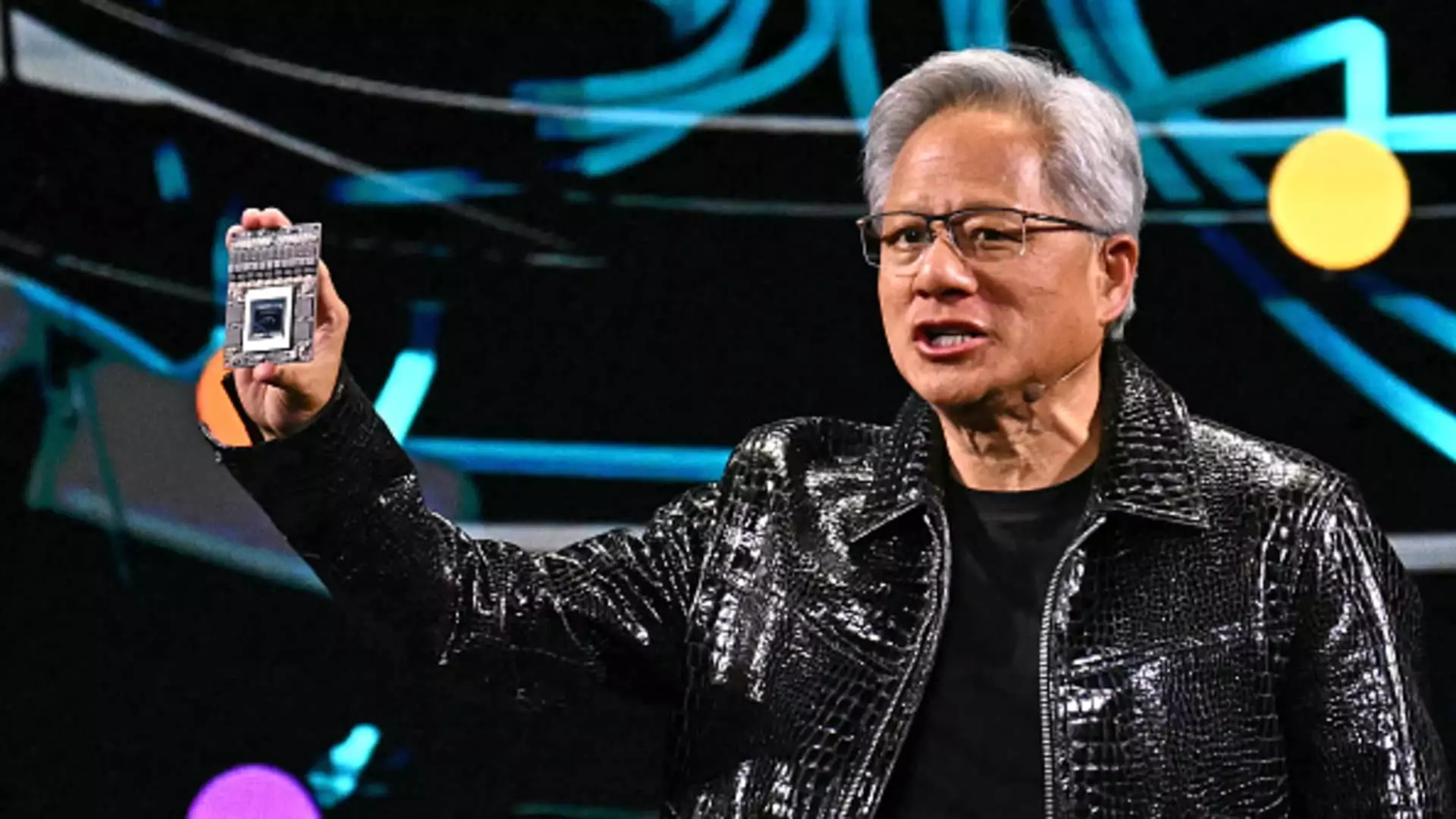
For decades, the narrative that American tech giants like Nvidia hold an unrivaled grip on global innovation has persisted. This perception, fueled by relentless marketing and strategic dominance, cloaks the reality that such dominance is increasingly tenuous. China’s recent restrictions on American AI chips highlight a fundamental truth: the world is no longer willing to cede technological sovereignty without resistance. Jensen Huang’s expressed disappointment betrays a wistful attachment to an outdated confidence, ignoring the broader geopolitical forces that are reshaping the landscape. The era of American technological infallibility is waning, revealing vulnerabilities that could jeopardize the entire industry’s future.
The notion that U.S. companies can control their markets unilaterally is naive. Huang’s comments about being “disappointed” underscore a deeper misunderstanding: technology is no longer a one-way export. China’s strategic push into AI and semiconductors signals a decisive shift from consumer to competitor, challenging the West’s assumptions of dominance. The narrative that American companies are “serving” a market must be reevaluated, acknowledging that global power dynamics are now a matter of mutual influence and contestation, not passive market participation.
Geopolitical Alliances Versus Economic Realities
The recent restrictions on Nvidia’s chips in China are more than a business setback; they expose the profound vulnerability of relying on geopolitical goodwill. Huang’s acknowledgement of “larger agendas” reveals an uncomfortable truth: tech companies are pawns, caught between the ambitions of nations. The U.S. government’s export controls reflect an increasingly fraught effort to maintain technological supremacy, yet they also accelerate China’s drive for self-sufficiency. The strategic tug-of-war weakens the illusion that innovation is solely driven by market forces; it is increasingly shaped by political imperatives.
Huang’s reluctance to include China in financial forecasts strikes a discordant note—admitting to uncertainty in a crucial market. This uncertainty is emblematic of an industry on the brink of a fundamental transformation, where geopolitical rivalry threatens to fragment global tech ecosystems. The assumption that American companies can insulate themselves from such tensions is a dangerous delusion. Instead, companies like Nvidia must adapt to a reality where their influence is limited by national interests, not just market demand.
The Illusory Promise of International Investment
Despite these hurdles, Nvidia’s sizeable investments in the U.K.—£11 billion—highlight a critical strategic pivot. The posturing is clear: American tech firms are seeking safer harbors for their ambitions, diversifying reliance away from an uncertain China. Yet, this shift also raises questions about the sustainability of the “global tech ecosystem” as a unified entity. As other U.S. giants like Microsoft and Google make multibillion-dollar AI bets in the U.K., it becomes evident that the industry must recalibrate its expectations. The free-market assumptions of the past no longer apply in a world where political allegiances and security concerns dominate investment decisions.
Huang’s statement about China’s importance underscores a begrudging acknowledgment that the Chinese market remains a vital, if complicated, piece of the puzzle. The real challenge lies not in maintaining access but in reconciling conflicting national interests. American companies are caught in an uncomfortable tension: supporting China’s burgeoning AI sector while navigating the U.S. government’s restrictions and diplomatic pressures. This duality illustrates the precariousness of relying on a globalized supply chain and market strategy built on shared growth when geopolitical currents threaten to tear it apart.
The Future is Nonlinear and Uncertain
In sum, the current trajectory suggests that U.S. tech dominance is an increasingly fragile myth, built on assumptions of stability that are rapidly dissolving. The restrictions imposed by China serve as a stark reminder that technological power is no longer a unilateral game. The industry’s reliance on geopolitical goodwill is a risky gamble, and Huang’s candid admissions inadvertently underscore that vulnerability.
The narrative that American innovation will continue unimpeded is not only overly optimistic but dangerously naive. A more accurate view recognizes that global technology leadership will be shaped by political sovereignty, national security concerns, and strategic alliances. Nvidia’s struggles in China are symptomatic of a wider erosion of the myth that the United States maintains unrivaled technological primacy. Instead, it is becoming increasingly clear that the future belongs to those nations willing to assert their sovereignty and invest strategically—regardless of American expectations. This new reality demands a sober reevaluation of what true technological leadership means in an interconnected and geopolitically fractured world.