
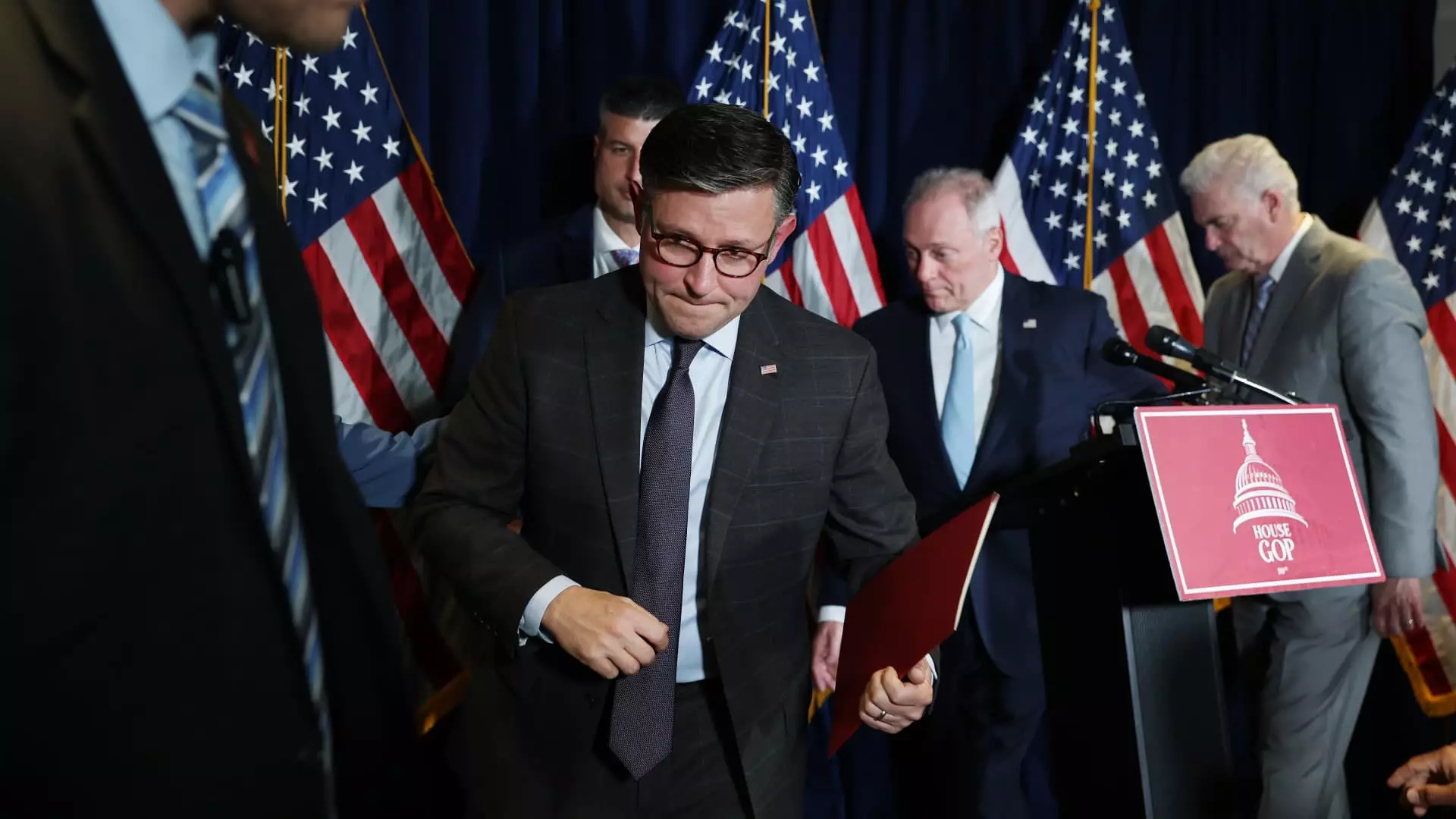
In the whirlwind world of Washington politics, few issues are as incendiary and consequential as the ongoing government funding debate. The recent rhetoric from House Speaker Mike Johnson vividly illustrates a deeply polarized approach that puts partisan interests above collective welfare. Johnson’s dismissive stance toward Democratic demands for extending health insurance subsidies not only underscores legislative gridlock but also exposes the fragility of governance in an era increasingly driven by ideological battles. While politicians posture and assign blame, the American economy and everyday citizens bear the brunt of this paralysis—a dangerous game of brinkmanship masking an inability to prioritize the common good. This confrontation reveals a troubling truth: when political gains eclipse pragmatic solutions, the very fabric of national stability begins to fray.
Partisanship vs. Practical Governance: A Worrying Trend
The core issue at stake—funding the government past September 30—is fundamentally a question of whose priorities take precedence. Democrats’ insistence on maintaining ACA tax credits reflects a commitment to accessible healthcare and economic stability for millions. Conversely, the Republican strategy, as articulated by Johnson, seeks to delay negotiations until a less politically charged moment, framing such subsidies as extraneous to the immediate budget needs. This tactical delay, however, comes at a steep price: the potential rise in health insurance premiums by as much as 75% for most Americans, with rural communities hit hardest. It’s a stark reminder that ideological rigidity on either side can have tangible repercussions, fueling economic insecurity and widening disparities.
The danger lies in the collective failure to negotiate with genuine bipartisan intent. When lawmakers prioritize ‘gamesmanship’ over functional resolution, they erode public trust and risk economic turbulence. The threat of a government shutdown is not merely a procedural hiccup but a symptom of broader systemic dysfunction rooted in partisan self-interest. The obsession with assigning blame—blame often projected onto opponents rather than acknowledging shared responsibility—undermines the very essence of representative democracy.
The Economic and Human Costs of Political Deadlock
A prolonged government shutdown, even if temporary, extends beyond politicking; it jeopardizes economic growth and damages the psyche of millions of Americans. Economic analysts warn that such stalemates could undo the modest gains made in labor markets over recent months. Consumer confidence wanes when government functions are compromised, and delays in federal spending can have ripple effects across countless sectors—from small businesses to large institutions.
Furthermore, the potential collapses in healthcare affordability owing to the loss of ACA subsidies threaten millions who rely on these subsidies for affordable coverage. For individuals in rural areas, the impact could be devastating—insurance premiums may skyrocket, and access to necessary care could deteriorate. These are not abstract numbers but real lives—families facing uncertainty, seniors worried about coverage, working-class Americans on the edge of economic stability. Such results cast a troubling shadow on the supposed virtues of fiscal conservatism championed by some congressional leaders.
The Political Cost of Stubbornness—A Threat to Democratic Legitimacy
Democratic leaders, led by figures like Chuck Schumer, are cautious but firm, aware that past shutdowns have left Democrats with battered reputations for capitulation. While they are eager to avoid another damaging stalemate, their legitimacy hinges on their ability to stand firm but still forge workable solutions. The political reality is that securing the necessary 60 votes in the Senate will require bipartisan cooperation—an increasingly elusive goal in today’s hyper-partisan climate.
In the broader context, this gridlock exposes a troubling erosion of the institutional mechanisms meant to serve as guardrails for democracy. When vital issues like healthcare funding become hostage to partisan battles, public faith in governmental competence diminishes. The intertwined risks of economic downturn and a shaken social contract underscore why such political brinkmanship should be met with fierce skepticism and criticism: it is not just a procedural delay, but a testament to the urgent need for reform in how policymaking is conducted in this country.