
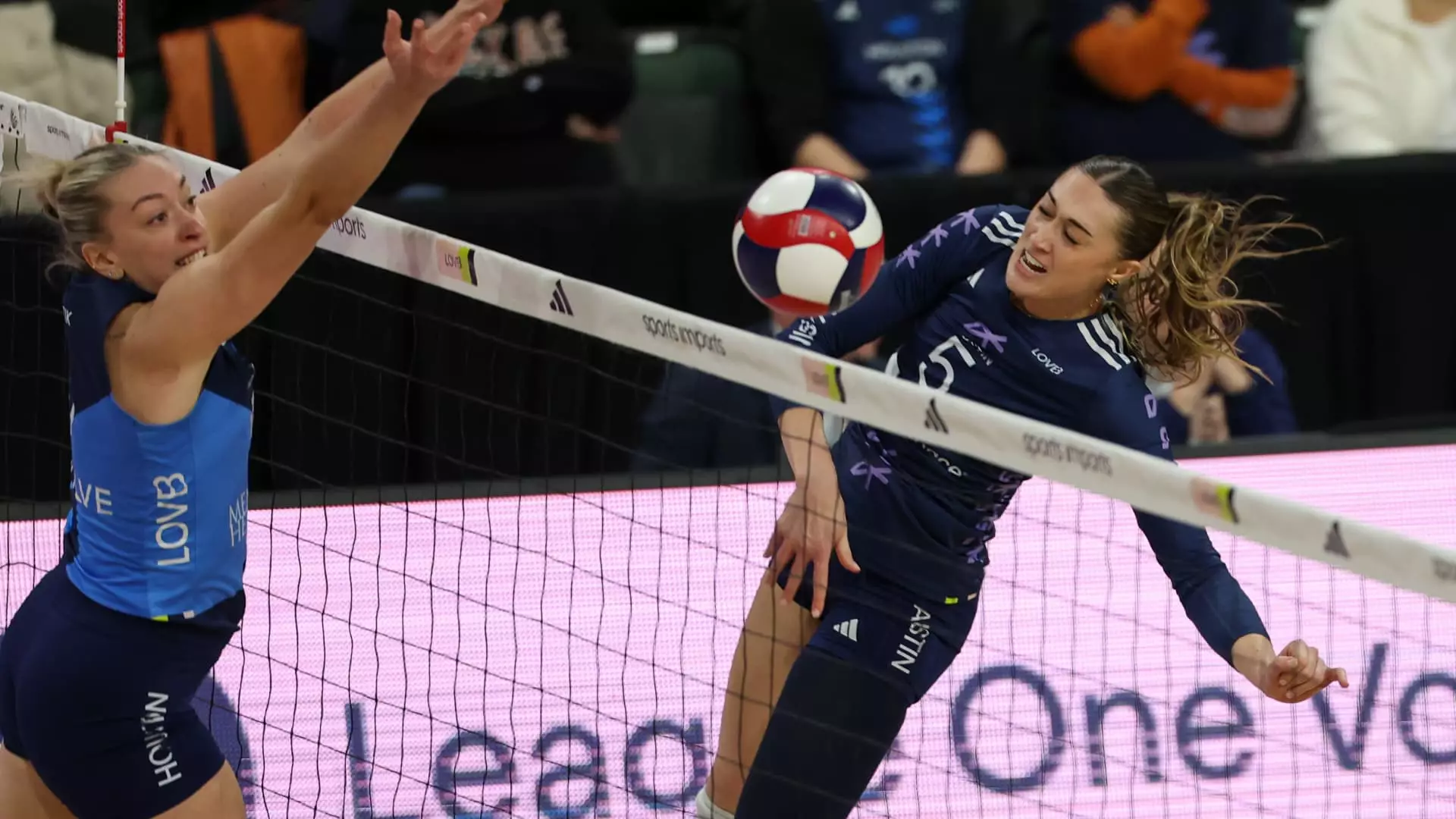
In an era where sports broadcasting is fiercely competitive and increasingly driven by visibility rather than merit alone, the recent deal between Versant and League One Volleyball (LOVB) signals a pivotal shift. While the announcement may seem like positive progress on the surface, closer scrutiny reveals it as a calculated maneuver that underscores the commodification of women’s sports in the broader entertainment ecosystem. This collaboration promises prime-time exposure, yet it raises critical questions about genuine support versus strategic exploitations within the sports industry.
Versant’s decision to broadcast “Match of the Week” exclusively on their USA Network, along with playoff and championship matches, reflects a growing recognition of volleyball’s rising popularity. But is this a testament to authentic growth, or merely a calculated bid to capitalize on an evolving market that is still seeking its sustainable footing? The fact that the deal is multi-year suggests a seriousness that could be beneficial, yet one can’t ignore the underlying commercial motivations that driven this move. As broadcasting rights for women’s sports increase, the question remains: Are we witnessing authentic progress, or are these moments just fleeting blips in a landscape that is still predominantly driven by men’s sports and traditional media giants?
The Illusion of Inclusivity: A Center-Left Perspective on Sports Commodification
From a center-wing liberal viewpoint, it’s tempting to celebrate any expansion of women’s sports coverage as a step toward equality. Yet, superficial gains like primetime slots shouldn’t distract us from the systemic issues. The media deals, like the one between Versant and LOVB, risk falling into the trap of mere tokenism—using women’s sports as a shiny new asset to boost ratings and profits without tackling the deeper questions of structural inequality in sports access, funding, and representation.
While the surge in volleyball participation is undeniable, these statistics often paint a rosy picture that masks persistent disparities. High school and college programs are experiencing record participation, but does that translate into equal opportunities, wages, and professional recognition? The high attendance numbers at events like Nebraska’s NCAA tournaments are encouraging, but they are still exceptions rather than the norm. It’s essential to interpret these signals critically—are they genuine signs of societal change, or are they staged spectacles driven by media hype and commercial interests?
The deal’s emphasis on adding millions of viewers in prime viewing slots may boost league revenues and, potentially, players’ pay, but it also commodifies female athletes’ talents in a way that risks prioritizing spectacle over substantive progress. This is the double-edged sword of commercialization: it can elevate awareness but also dilute the authenticity and integrity of women’s sports. That balance is delicate and often skewed toward the latter, especially when such deals are motivated by bottom lines rather than athlete welfare or sport development.
Market Dynamics and Ethical Ambitions: Are We Buying Into the Hype?
While the media rights agreement provides loftier ambitions for LOVB, including growth and visibility, it’s worth questioning how much of this is rooted in genuine enthusiasm versus strategic corporate positioning. Versant’s existing deals with the LPGA and WNBA demonstrate an awareness of the lucrative potential in women’s sports—yet these are also arenas that remain underfunded and undervalued relative to men’s leagues.
The fact that Versant is spinning off from Comcast underscores an evolving corporate strategy: treat women’s sports as an asset class that can be shunted around for maximum profit. Such moves are not inherently malicious, but they do evoke skepticism about motives. Are these leagues truly shaping a future where female athletes can thrive independently, or are they merely pawns in a broader game where media rights are bought and sold, and sporting excellence is secondary to market share?
The media landscape is teetering on the edge of a new era—one where athletes and leagues must navigate not only their craft but also the commercial interests that frame their visibility. The question is whether these deals will foster long-term growth or serve as a short-lived sponsorship boom that ultimately leaves the athletes vulnerable once the spotlight dims.
The recent media rights deal marks a critical juncture—one that must be approached with both optimism and skepticism. While progress is visible on paper, entirely transforming the cultural perception and economic realities of women’s volleyball—and women’s sports broadly—requires more than a few prime-time slots. It demands systemic change driven by genuine commitment, equitable investment, and an unwavering respect for the athletes themselves.