
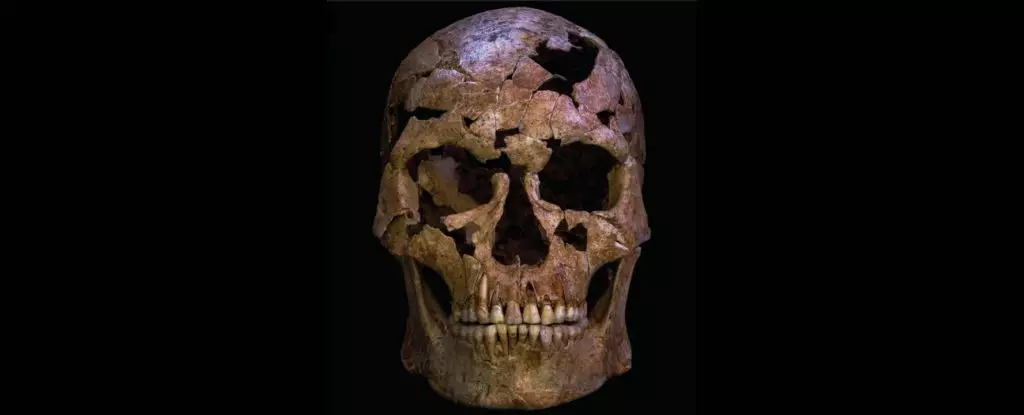
History often romanticizes the distant past as a time of survival and primitive innocence, but recent archaeological discoveries shatter this comforting illusion. The find of ancient bones in Vietnam, potentially the earliest evidence of interpersonal homicide in Southeast Asia, forces us to confront the brutal realities that have shadowed human history for millennia. Far from being a peaceful progression, our story includes violent clashes, territorial disputes, and lethal conflicts, even among small groups of hunter-gatherers. Recognizing this grim truth challenges idealized narratives and emphasizes the importance of understanding human violence as part of our shared evolution.
This discovery isn’t merely about ancient bones; it’s a stark reminder that violence is woven into the fabric of human existence. The idea that humans have always been capable of brutality questions our capacity for empathy and social cohesion, urging a reevaluation of how we interpret progress. Are we inherently violent beings who have merely been trying to tame our impulses, or is there potential within us for compassion and coexistence? The answer may lie somewhere in between, but these bones from Vietnam push us to acknowledge that violence—personal, often tragic—has been a constant companion across ages.
Bone Chilling Evidence of a Prehistoric Murder
The case of the Vietnam bones, dating back approximately 12,000 years, is both gripping and unsettling. What makes this discovery especially compelling is the meticulous work done by archaeologists to piece together the events leading to this man’s death. The damage to his skull was caused after death, but what tells a more disturbing story is the injury to his neck—an embedded quartz point, likely used as a projectile, lodged with precision in his cervical region. Such detail reveals not just that violence existed, but that the violence was targeted, deliberate, and effective enough to cause fatal injury.
Furthermore, the man’s health prior to his death appears intact, and his bones show no signs of prolonged illness that might explain sudden death. The infection from the neck wound, coupled with the evidence of trauma, paints a chilling picture: a man caught in a violent confrontation, possibly over resources or territory, who succumbed days or weeks later. This isn’t just accidental death or misfortune; it’s a clear manifestation of human conflict. The presence of a non-local, deliberately crafted projectile also hints at complex social interactions—perhaps trade, conflict, or even personal enmity—that could have escalated to lethal violence.
What the Evidence Tells Us About Early Human Society
The implications extend beyond the immediate violence; they force us to grapple with what early human life was really like. The discovery suggests that even in hunter-gatherer societies, conflicts could turn deadly. The man’s cervical rib with signs of infection suggests a scenario where human aggression, weaponry, and perhaps social disputes intertwined. This challenges the notion of prehistoric peoples as merely passive survivors, instead portraying them as individuals capable of acts that left lasting wounds on others.
This find also raises questions about the prehistoric trade networks, given the non-local origin of the projectile. It hints at a broader social landscape where different groups or tribes interacted—sometimes peacefully, sometimes violently. The deliberate crafting of the projectile corresponds with the emergence of complex behaviors, including weapon specialization, which would become a foundation for more advanced warfare and social stratification over subsequent millennia.
In truth, this violent act serves as a mirror; it reflects the darker facets of human nature that remain relevant today. Recognizing such ancient acts of violence from our distant past does not necessarily condemn humanity but rather provides insight into the roots of our interpersonal dynamics. It emphasizes the importance of fostering social cohesion and understanding in our modern age, where violence still persists, often wrapped in the guise of political or ideological conflicts.
The ancient bones are a sobering testament that conflict is not a recent invention but a fundamental aspect of what it means to be human. The ongoing task for society and historians alike is to learn from these dark chapters—acknowledging our capacity for harm while striving toward a more empathetic and just future.