
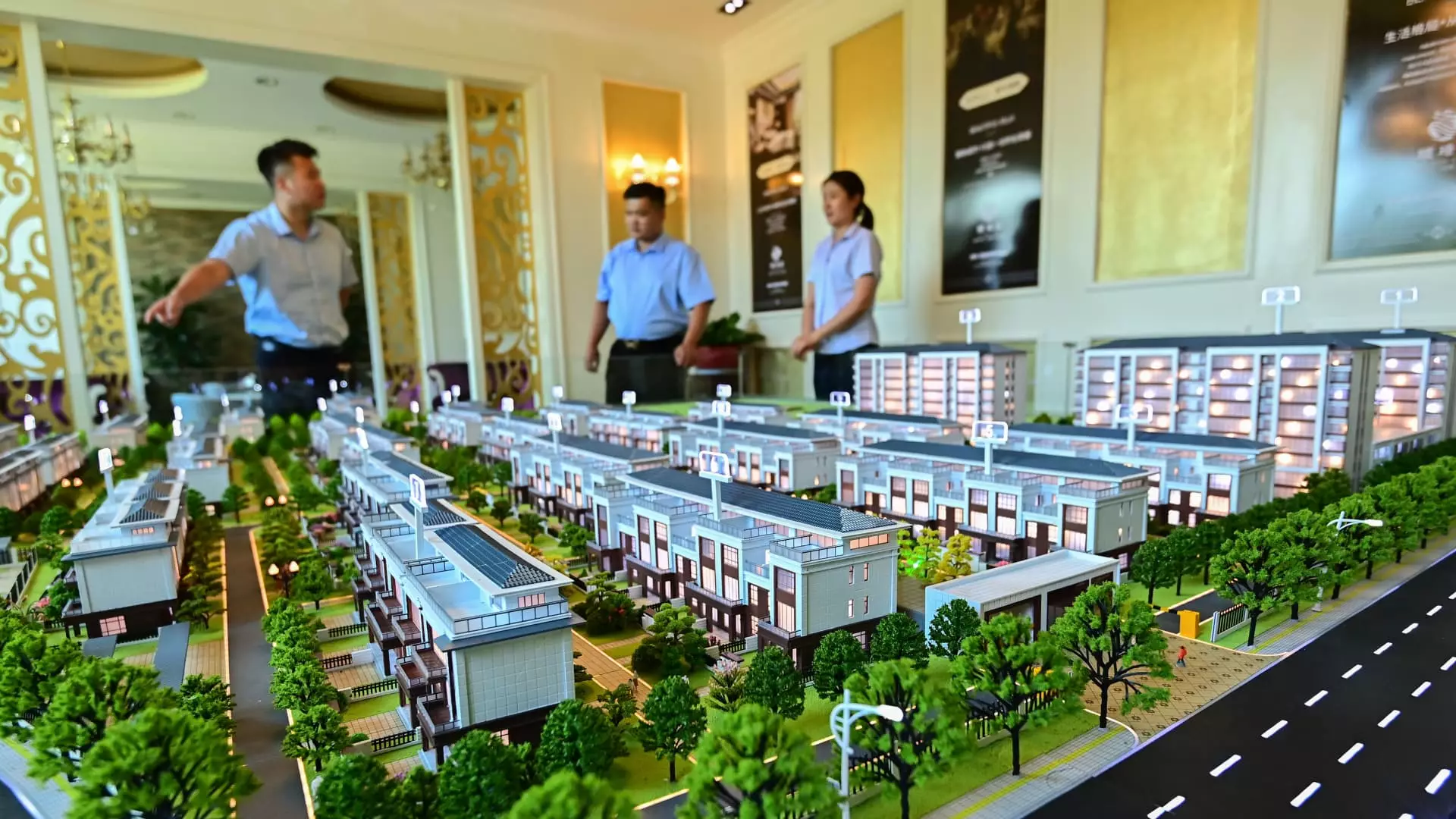
China’s real estate sector, once a powerhouse of growth, is now increasingly marred by a perilous downturn that has lasted for several years. The fundamental drivers of demand for housing are facing severe challenges, compounded by the nation’s shrinking population. With projections indicating that demand for new homes will hover significantly below previous highs—estimated to remain under 5 million units annually compared to a staggering 20 million in 2017—it’s difficult not to view this situation as precarious. Goldman Sachs economists recently voiced concerns that this demographic trend suggests a downward spiral, wherein the housing market will grapple with a continuous erosion of demand.
The crossroads that China’s real estate market finds itself at reflects deeper societal changes. The forecast of a reduction in population from 1.41 billion to below 1.39 billion by 2035 is not merely a statistic; it represents fundamental shifts in family dynamics and individual aspirations. The fact that fewer babies are being born while more residents age signals that the housing market may be losing its pivotal base of support.
Demographic Decline and Its Implications
Challenging as it is, the issue of declining birth rates and an aging population in China cannot be ignored. Despite policy attempts to incentivize parenthood, including the relaxation of the one-child policy, the efficacy of these initiatives remains dubious. Childbearing is increasingly seen as economically burdensome in a society where job stability and income growth are not keeping pace with aspirations. Furthermore, young adults are inclined to postpone family-building in favor of career advancement and personal fulfillment—a sentiment the government seems ill-equipped to combat. This paradigm has led to a phenomenon where a demographic shift negatively impacts the demand for housing.
This reality starkly contrasts the dynamic property market of the past. The closure of approximately 36,000 kindergartens in a span of two years affirms that the demand for educational institutions—often intertwined with housing demand—has reached a critical juncture. A mother in Beijing shared her experience of a 20% drop in her apartment’s value, which she purchased at a premium to secure access to quality elementary schooling. Such anecdotes underscore the troubling intersection of housing and educational viability; as schools close and populations dwindle, property values diminish.
Financial Realities and The Market Response
The economic ramifications of this demographic downturn cannot be overstated. The presumed safety net of rising property values has eroded, and those who invested in real estate with the expectation of continued growth now find themselves in perilous waters. The latest statistics indicate a disturbing trend: new home prices have plummeted at their fastest pace in seven months, providing a stark wake-up call to investors who presumed a bounce-back was imminent.
While past decades have seen urbanization as a catalyst for housing growth, this trajectory is stabilizing, contributing to stagnant demand. In essence, there’s a dual threat: the demographic decline coupled with a maturing urbanization process is rendering the property market vulnerable. Goldman Sachs estimates suggest that investment property holders may become net sellers as they react to these trends, and we are yet to see the full extent of this potential fallout on property values.
The Complexity of Policy Measures
Despite a slew of government interventions aimed at rectifying the ongoing property slump, the results have been disappointing. Measures that have been introduced seem to lack the necessary depth to address underlying issues. There is a sense that Beijing’s initiatives are treated as band-aids over systemic problems. This reveals a troubling reality: while policymakers may acknowledge the necessity of stimulating demand, they may be neglecting the broader societal factors at play.
The divergence between policy response and actual household sentiment highlights a critical flaw in the approach. Without a comprehensive overhaul of economic conditions that deter young people from having families, including housing affordability and job security, the dream of revitalizing the property market may remain just that—a dream. The reluctance to face these issues directly only serves to prolong the distressing state of the real estate landscape.
As we observe these shifts unfold, a fundamental question remains: will China’s leaders evolve their strategies in accordance with the emerging demographic realities, or will they persist with myopic interventions that fail to address the heart of the crisis? The implications of this choice extend well beyond just the property market—they will chart the contours of China’s economic future.