
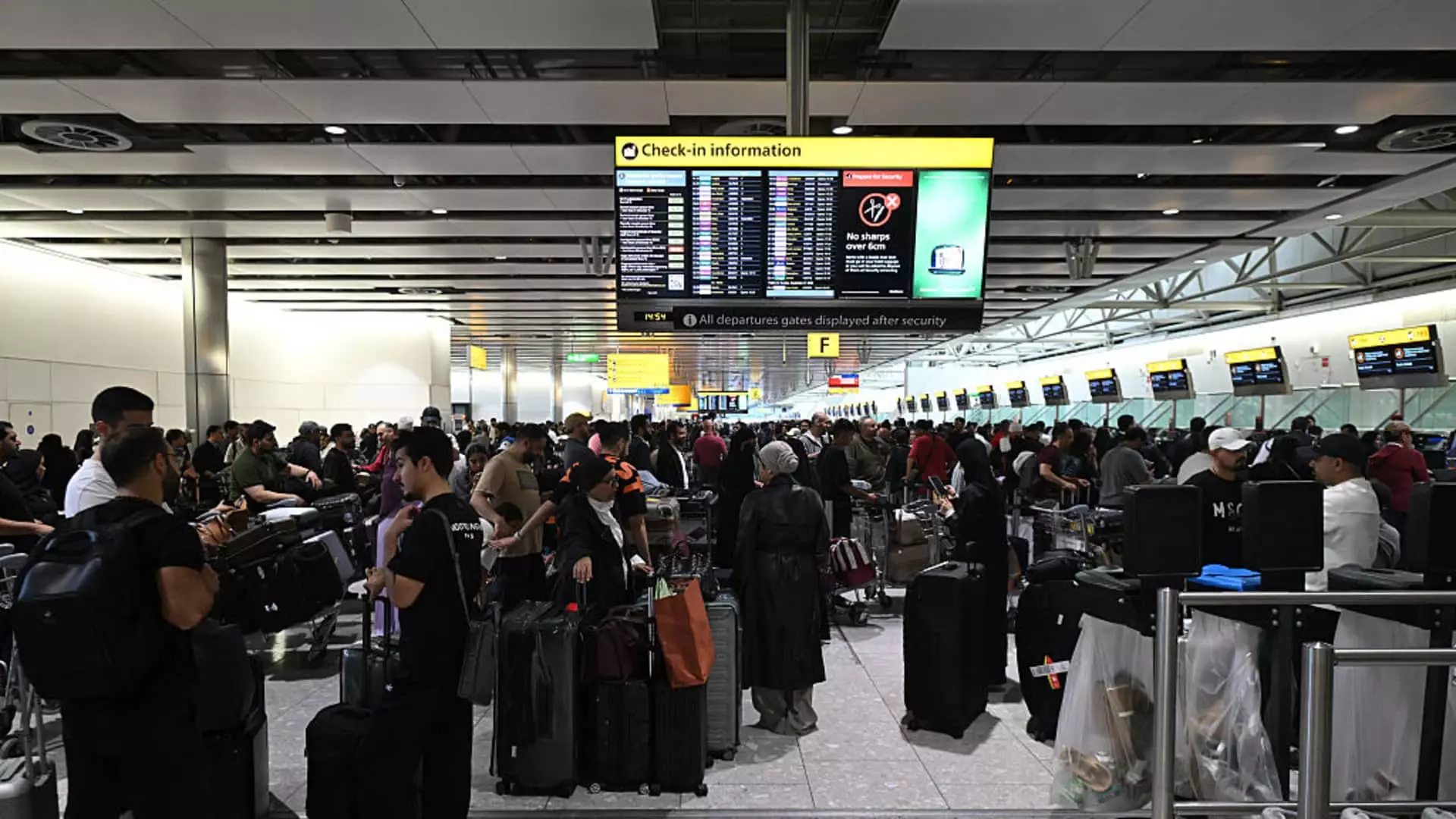
In recent days, the resilience of European air travel has been put to the test, exposing a harsh reality: our increasing reliance on digital systems render critical infrastructure vulnerable to malicious disruption. The cyberattack targeting Collins Aerospace’s check-in technology has laid bare the fragility of modern airport operations, turning what should be routine travel into a chaos-laden ordeal. For travelers stranded and airlines scrambling, it is a stark reminder that technological convenience often comes at a perilous cost—one that we are perhaps ill-prepared to bear.
This incident isn’t just about delays and cancellations; it’s a wake-up call about the systemic vulnerabilities embedded within our transportation networks. As airports in Heathrow, Brussels, and Berlin grapple with disrupted check-in processes, it becomes clear that cybersecurity is no longer an isolated concern but a core aspect of national and economic security. Our reliance on shared digital platforms, especially those operated by third parties, means that one breach can cascade into widespread disarray, affecting millions of lives and billions in economic activity.
The Illusion of Technological Control
The cynical allure of technological progress has seduced us into believing that automation and digital management equate to efficiency and safety. Yet, these very systems—subject to hacking, sabotage, or accidental failure—demonstrate how much we have underestimated the consequences of over-dependence. When Collins Aerospace’s software—used across multiple airports—was compromised, it revealed how fragile the veneer of security truly is.
The response from RTX, Collins’ parent company, attempting to downplay the incident by emphasizing that manual check-in workarounds could mitigate the impact, borders on naïveté. Such an approach suggests a false sense of security that digital systems are infallible, neglecting the substantial risks posed by cybercriminal behavior. The fact that delays ripple across airports, with dozens of cancellations and prolonged passenger wait times, underscores that the infrastructure we rely on isn’t as robust as we suppose.
Furthermore, this incident exposes a deeper flaw: the automation of critical processes without sufficient safeguards encourages complacency. When disruptions occur, the infrastructure grinds to a halt because personnel and systems are not adequately prepared for such contingencies. It’s a fragile facade that risks collapsing under the weight of an intentionally malicious attack or even accidental technical glitches.
The Broader Implications for Modern Society
Cyberattacks on aviation systems serve as a broader metaphor for our digital age—one where the very liberties we cherish are threatened by unseen enemies lurking in the shadows of cyberspace. They underscore how interconnected our modern lives have become, yet how underprepared we remain for the consequences of such attacks. In a sense, the aviation sector exemplifies a microcosm of the vulnerabilities plaguing other sectors, from finance to healthcare.
The ripple effects extend beyond inconvenience: economies suffer when flights are canceled, families are separated, and supply chains face disruptions. The attack on Collins Aerospace, amid other recent breaches in industries like automotive manufacturing and retail, illustrates a disturbing trend. Our digital依lationships have outpaced our defenses, leaving institutions exposed and citizens vulnerable to both economic harm and personal distress.
These cyber assaults also reveal a troubling complacency among policymakers and corporate leaders. Instead of prioritizing robust cybersecurity measures, many continue to treat digital security as an afterthought—as if patching vulnerabilities is a simple, instantaneous task. It’s a dangerous misconception that leaves critical systems exposed, and the recent chaos at European airports exemplifies what happens when underinvestment in cyber defenses intersects with the calculated malicious intent of hackers.
Moving Forward: A Necessity for Vigilance and Reform
Addressing this crisis demands more than superficial security updates or reactive measures. It calls for a fundamental overhaul in how the aviation industry—and indeed, all digitally-dependent sectors—approaches cybersecurity. This includes fostering closer cooperation between technology providers, airlines, and government agencies to foster a unified front against emerging threats. Regular system updates, thorough testing, and resilient backup protocols can no longer be optional—they must be mandatory standards.
Moreover, there needs to be an acknowledgment that cyberattacks can no longer be viewed as isolated incidents. They are part of a broader geopolitical and criminal landscape that exploits the very convenience digital transformation promises to offer. This realization calls for a shift in mindset among industry stakeholders: cybersecurity is a critical component of operational integrity, and complacency will only lead to more chaos.
In the face of these persistent threats, airports and airlines must also reconsider their reliance on third-party vendors. The ripple effect of a single breach can entrap entire networks, making supply chain security a top priority. An integrated, transparent approach where information sharing is encouraged and cybersecurity best practices are enforced could help transform vulnerability into resilience.
Ultimately, the cyberattack on Collins Aerospace and the ensuing fallout serve as a powerful indictment of our current trajectory. If we do not act decisively to bolster our defenses, our airports—symbolic gateways to the world—risk becoming pawns caught in the shadowy conflicts of the digital age. The time for complacency has passed; we must prioritize cybersecurity as an essential pillar of modern infrastructure before another attack plunges us into even deeper chaos.