
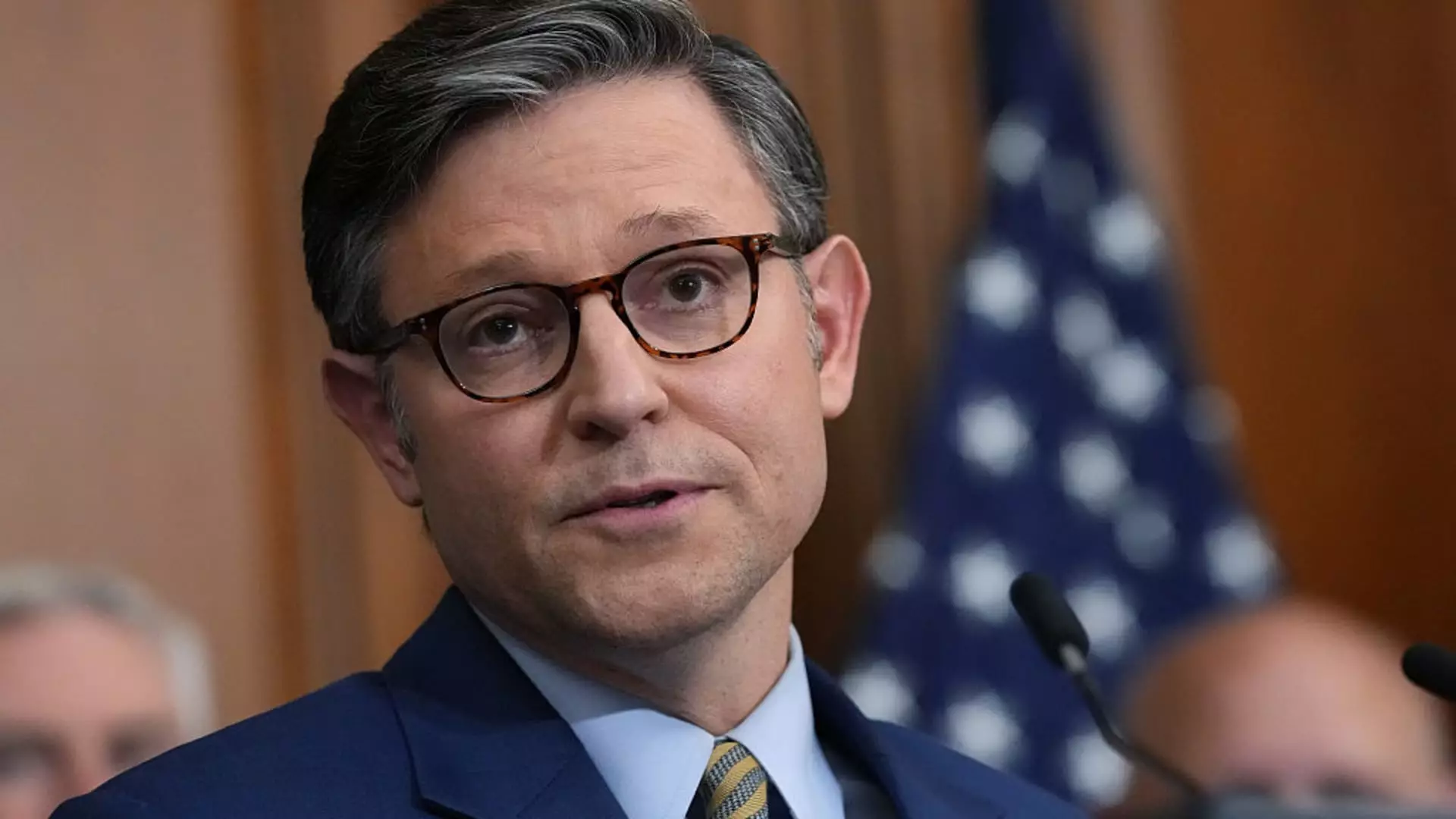
In a baffling display of political reasoning, Speaker Mike Johnson, a Republican from Louisiana, came forward to defend the recent cuts to Medicaid as outlined in the controversial budget bill passed by House Republicans last month. His claim that “4.8 million people will not lose their Medicaid unless they choose to do so” certainly raises eyebrows. This assertion heavily downplays the real-world implications of the intended changes. By framing the conversation around the choices of individuals, Johnson conveniently sidesteps the crux of the issue: the structural barriers that would render Medicaid access fragile for millions of vulnerable Americans.
Johnson’s insistence that the bill introduces “common sense” work requirements is both misleading and infuriating. The new stipulations mandate that some able-bodied Medicaid recipients must engage in work, job training, or community service for a total of 80 hours each month. This proposition sounds innocuous on paper but dismisses the overwhelming reality that many individuals and families on Medicaid face uphill battles regarding employment and job stability. By placing these requirements in the context of a presumed ‘cumbersome’ burden, Johnson appears disconnected from the complexities of poverty and job market realities.
The Misguided Notion of ‘Cumbersome’ Requirements
During his interview on NBC’s “Meet the Press,” Johnson stated, “You’re telling me that you’re going to require the able-bodied… to only work or volunteer in their community for 20 hours a week. And that’s too cumbersome for them?” This statement is not just an oversimplification; it embodies the hubris of a political elite that often fails to grapple with the everyday struggles of their constituents. Many individuals in the low-income bracket juggle multiple jobs, caregiving responsibilities, health issues, and transportation hurdles that make even 20 hours of commitment daunting.
Critics have latched onto this rhetoric, with various town halls showcasing Republican representatives facing the wrath of constituents for supporting the bill. Resistance from GOP members like Rep. Mike Flood of Nebraska, who found himself booed at a public event, illustrates that there is significant discontent even within the party ranks. The disconnect between party leadership and grassroots-level sentiments on Medicaid cuts is palpable, revealing how out of touch these representatives can be when they promulgate policy that directly affects disenfranchised communities.
The Irony of ‘Common Sense’ Policy
Johnson argues that these requirements should have been enacted long ago, branding this restrictive approach as “minor enforcement” of policy. However, what constitutes ‘common sense’ for policymakers often lacks empathy and insight. The term itself has become a euphemism for austerity measures that disproportionately impact the very individuals that social safety nets like Medicaid were designed to protect. When one examines the implications of these cuts on families struggling to make ends meet, the definitions of common sense begin to dissolve into political jargon.
Democrats have seized on this crisis with ample justification. For instance, Senator Raphael Warnock of Georgia raised concerns that the newly enforced reporting requirements — framed as work requirements — are more effective at disqualifying individuals from healthcare than they are at incentivizing employment opportunities. Here lies the heart of a crucial debate: Is this legislation about fostering an active workforce, or is it a veiled method to strip safety nets away from those who need them most?
Political Fallout and Moral Responsibility
The larger political landscape is awash with concern over this bill, as some Republican senators, such as Josh Hawley of Missouri, have criticized their own party’s inclination to dismantle health insurance for low-income individuals. Hawley’s admission that this direction is both morally wrong and politically perilous carries weight. In their zeal to enact budgetary cuts, Republicans may inadvertently be opening a Pandora’s box of consequences that extend far beyond healthcare access.
As Medicaid cuts march forward cloaked as common sense reforms, it becomes imperative to question whose interests are being served. The potential of millions of Americans losing access to essential healthcare is not simply political collateral; it reflects a society grappling with moral decisions about its most vulnerable members. What we must consider is not just the political ramifications of these choices, but the human toll they exact on our communities.