
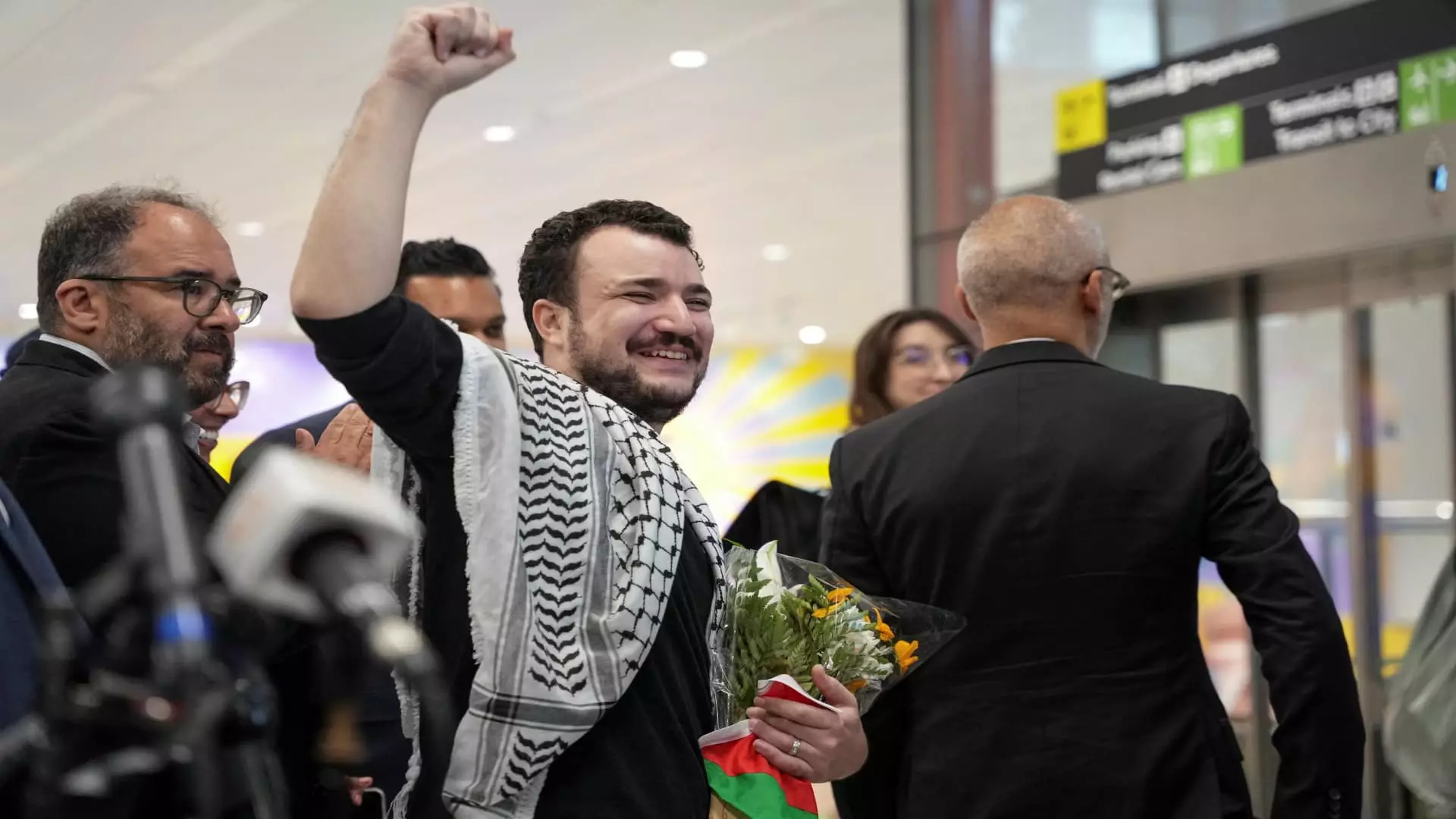
The recent experiences of Mahmoud Khalil, a Columbia University student detained by ICE for three months, expose the dangerous trajectory of political suppression in the United States. Khalil’s imprisonment, justified under dubious national security concerns, shines a disturbing light on how dissenting voices, particularly those advocating for Palestinian rights, are being systematically silenced. The seamless transition from a peaceful protestor for a cause he passionately believes in to a target of state repression speaks volumes about the current political climate. When Khalil finally returned to Newark after months of separation from his family and supporters, his arrival was not just the release of one man— it marked an unsettling societal comment on freedom of speech and political persecution.
Chilling Effects of Political Repression
In his emotional remarks upon release, Khalil emphasized that his fight was not just personal; it encompassed a broader struggle against oppression in Gaza, implicating not just the Trump administration, but significant institutions like Columbia University as well. His assertion that he would continue to speak up for Gaza, regardless of the risks, exemplifies a resilience often found in movements that challenge entrenched power. This moment calls for a larger reflection on how dissent is perceived in a rapidly polarized society. Political speech is meant to be protected under the First Amendment; however, Khalil’s treatment illustrates a growing trend—a chilling illustration of how ideologies can shape government action against individuals standing up against injustice.
Systematic Abuse of Authority
The government’s rationale for Khalil’s detention rested on dubious legal grounds, chiefly an obscure section of the Immigration and Nationality Act. By claiming national security risks without substantial evidence, the Trump administration is setting a dangerous precedent that encourages the use of excessive power in silencing voices of dissent. Indeed, a review of court documents revealed a reliance on unverified information and tabloid narratives that hardly constitute legitimate grounds for deportation. This spectacle makes it clear that the authoritarian impulses of government can overshadow the principles of justice and fairness that the legal system is meant to uphold.
What’s particularly disturbing is the broader implication for foreign nationals with ties to activism. Khalil’s arrest is not an isolated incident but part of a wave of apprehensions targeting pro-Palestine advocates, suggesting an organized crackdown on political movements that challenge U.S. foreign policy. The interconnected stories of other activists like Rümeysa Öztürk and Mohsen Mahdawi show that this tactic is becoming all too common, representing not just attacks on individuals but an affront to academic freedom and civil liberties.
Social and Political Consequences
Khalil’s defiant declaration post-release—that he embodies a message of resilience against attempts to suppress dissent—shakes the foundations of complacency among those who might choose silence over protest. His case, bolstered by the involvement of public figures like Rep. Alexandria Ocasio-Cortez, compels society to reckon with its responsibilities in the arena of political expression. The outcry against the injustices faced by Khalil serves not only to galvanize support for his cause but also to illuminate the responsibility we share in protecting free speech for all, irrespective of political beliefs.
When public discourse is dominated by fear of reprisal, the consequences stretch beyond individual rights—they unravel the fabric of democracy itself. The narrative that nationalism is threatened by open debate and dissent only serves to elevate extremist views and sidelights the moderate, liberal perspectives that encouraged healthy discourse.
Resistance and the Fight for Justice
In tandem with Khalil’s experience, it’s crucial to remember that resilience often springs from the collective voices of the marginalized. Activists, students, and community members rallied around him, demonstrating that solidarity can counterbalance the forces of repression. His life represents not a singular battle, but a reflection of a collective struggle against systemic injustices—the force of many voices standing against silence.
The urgent need to confront anti-Palestinian rhetoric and actions lies not only in Khalil’s story but resonates through the ongoing dialogues in academic circles and beyond. The clamor for justice will not fade with Khalil’s release; rather, it invigorates an entire movement striving to hold institutions accountable for their complicity in oppression and exploitation globally.
The rupture caused by politically motivated detention methods is not merely an injustice against a single individual—it is a threat to the pillars of democracy itself, one that mandates our unwavering attention and resistance. In honoring Khalil’s courage, we must reflect on our collective duty to uphold the principles of justice and free expression within a democracy that increasingly finds itself wrestling with its core values.