
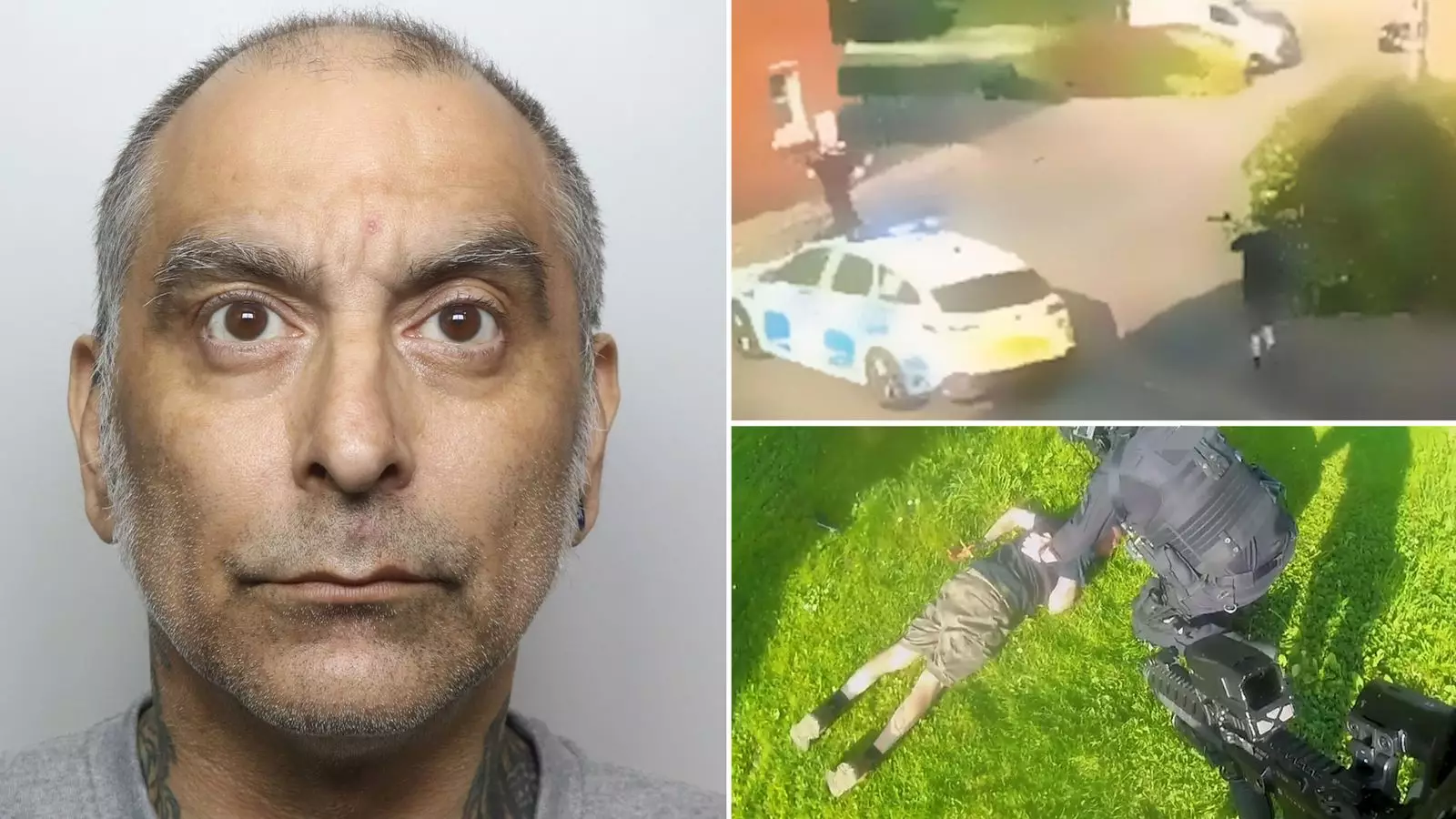
In a society where security often rests on the thin line between order and chaos, the recent sentencing of Jason King to nine years in prison for a violent and reckless assault underscores the importance of a vigilant and responsive justice system. His actions, marked by a disturbing combination of stabbing and crossbow attacks, reveal a dangerous mentality that threatens the safety of both law enforcement and innocent civilians. Such incidents serve as a stark reminder that violent acts, regardless of context, must be met with decisive consequences to uphold social stability and protect community wellbeing.
The Psychological and Social Implications of Violent Crime
When individuals resort to violence capable of causing life-altering injury, it reflects deeper societal issues—perhaps mental health concerns, lack of social support, or failures within community policing. PC Foster’s experience, with its vivid recounting of blood loss and narrow misses by arterial damage, humanizes the often impersonal statistics of crime reports. It challenges us to consider the emotional toll on officers, who willingly put themselves in harm’s way, and on the victims, whose lives are permanently affected. Such acts of violence threaten the fragile fabric of trust that holds communities together and necessitate a firm, yet nuanced, response to deter future offenders.
Accountability and the Role of the Justice System
The court’s nine-year sentence, complemented by an extended three-year license period, exemplifies a commitment to justice that balances punishment with societal protection. It sends a clear message that violent intimidation and reckless endangerment will be met with tangible consequences. However, this case also raises questions about preventative measures and whether current strategies are sufficient to address the underlying causes of such dangerous behavior. Society must advocate for comprehensive approaches that include mental health support, community outreach, and improved law enforcement training, ensuring that justice is not only reactive but also proactive.
The Broader Impact on Community Safety and Police Morale
The incident’s aftermath has resonated positively in the community, with authorities emphasizing that safety has been restored through firm legal action. This case underscores the critical role of police in maintaining peace amid unpredictable threats. It reaffirms the necessity for law enforcement agencies to be equipped, both in equipment and policy, to handle increasingly complex threats. The bravery demonstrated by PC Foster and his colleagues exemplifies the professionalism required to uphold justice in perilous situations and reflects a community’s reliance on its protectors. Their courage, coupled with swift legal repercussions for offenders, reinforces societal expectations that dangerous individuals will face the full weight of the law.
Reflections on Societal Values and the Path Forward
While the severity of Jason King’s crimes warranted this firm approach, it also beckons us to examine broader societal factors. Is there a failure in early intervention, or gaps in mental health services that could prevent similar incidents? Society must embody a balance: protecting our citizens through justice while cultivating a culture that addresses root causes of violence. Strengthening community bonds, ensuring equitable access to support services, and fostering an environment where conflicts are resolved without violence are essential steps. Only by tackling these fundamental issues can we hope to reduce the recurrence of such reckless acts, ensuring that justice is not merely punitive but also transformative.
The recent case of Jason King is not just about immediate accountability; it highlights the ongoing struggle to create safer, more resilient communities. It challenges us all to reflect on how societal structures can better prevent such dangerous encounters and how the justice system must evolve to meet these demands with unwavering resolve.