
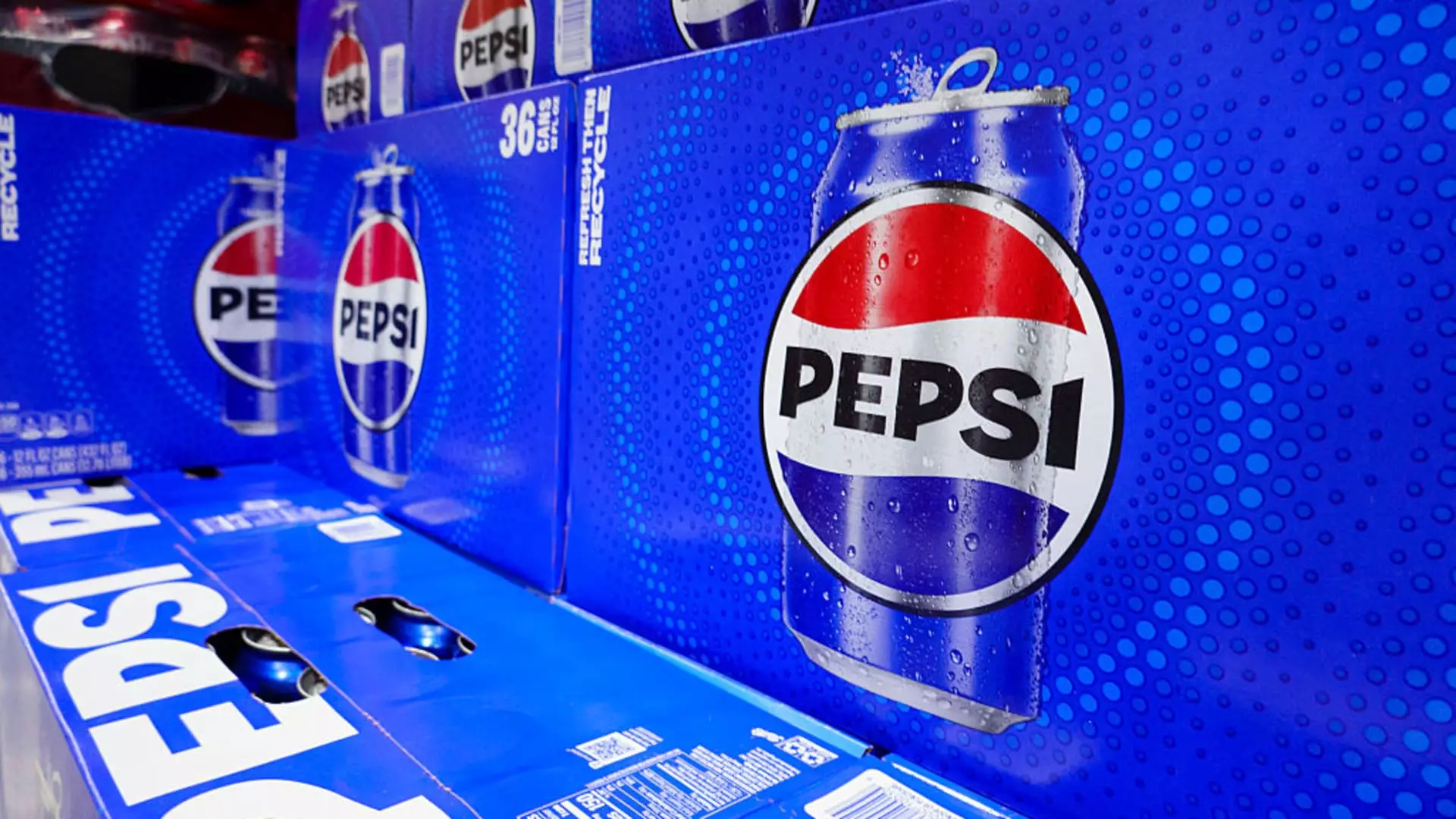
PepsiCo’s recent quarterly report offers a misleading sense of achievement that conceals underlying vulnerabilities within the company’s operations. While the headline figures—beating analyst expectations for earnings per share and revenue—initially appear to signal resilience, a critical examination reveals a different reality: one where growth is fragile, consumer demand is waning, and strategic initiatives are merely band-aids over systemic issues. The company’s stock rally of roughly 2% may reflect investor optimism, but that confidence ignores the very real headwinds threatening PepsiCo’s future.
Despite surpassing projections with an adjusted EPS of $2.12 against expectations of $2.03 and revenue reaching $22.73 billion, these figures are inflated by external factors—currency adjustments and acquisitions—that distort the organic health of the core business. When stripped down, the quarter’s performance shows a stark decline in consumer engagement: global food volume shrank by 1.5%, and North American food sales declined, confirming a disconcerting trend of falling demand in key markets. No amount of short-term financial beats can conceal the fact that PepsiCo’s foundation is weakening.
Consumer Demand: The Worn-Out Backbone
Consumers, especially in North America, are exhibiting clear signs of fatigue. The decline in beverage and snack volumes underscores a shift in spending behavior driven by economic uncertainty and changing lifestyles. Pepsi’s own officials acknowledge this—citing a 2% drop in domestic drink volume and a 1% drop in food. While the company spins this as “improvement”—a troubling indicator of how disconnected corporate messaging has become from core realities—the truth is more concerning: demand is evaporating, and the company’s strategies are struggling to reverse this trend.
PepsiX Zero Sugar’s double-digit growth over the past quarter signals a frontier where consumer interest genuinely persists. Yet, this is an exception rather than the rule. Classic staples like Pepsi soda are stagnant or shrinking, showing that even with aggressive marketing or product diversification, consumer preferences are shifting faster than the company can adapt.
Strategic Aspirations or Short-Lived Band-Aids?
PepsiCo’s push into protein products and multicultural offerings illustrates a recognition of new consumer preferences—yet these efforts feel more like reactive measures rather than transformative solutions. The recent closure of manufacturing plants in North America is a stark reflection of the company’s inability to sustain its traditional product lines. Cost-cutting and logistical efficiencies may bolster short-term margins, but they cannot compensate for a decline in the fundamental drivers of revenue—namely, consumer desire and market relevance.
Furthermore, the company’s attempt to balance its food and beverage divisions reveals a strategic blurring that might be more problematic than beneficial. Instead of creating a clear, growth-oriented focus, Pepsi appears trapped in a cycle of overlap and cost-cutting that threatens to dilute its identity and weaken its core competencies.
Illusions of Stability and the Price of Complacency
PepsiCo’s insistence on maintaining its full-year outlook, despite acknowledging economic volatility and cautious consumer behavior, reflects a troubling complacency. The company’s previous forecast cut—citing tariffs and economic unease—highlight the fragility of its growth trajectory. Relying on modest organic revenue gains in a rapidly changing landscape masks the reality that the company might be treading water merely to avoid greater decline.
The superficial success of stock performance and headline earnings is an illusion—built on optimistic assumptions and minimal organic growth, not on sustainable demand or innovation. As consumers continue to shift away from processed foods and sugary drinks, Pepsi’s current strategies risk being too little, too late in the game of adaptation.
PepsiCo stands at a critical juncture, teetering between superficial financial indicators and an erosion of fundamental consumer interest. Its attempts at cost-cutting and diversification are commendable but insufficient to address the deeper issues of market relevance and consumer trust. If the company fails to reimagine its offerings and reconnect authentically with shifting consumer values, it risks not just stagnation but real decline.
In a world where health and sustainability increasingly dictate market dynamics, Pepsi’s current trajectory feels more like a survival tactic than a pathway to long-term growth. Its leadership must recognize that we are witnessing not just a cycle of temporary challenges but the potential erosion of a once-dominant legacy that has become increasingly out of touch. Unless there’s a fundamental shift in strategy—focused on genuine innovation and consumer engagement—PepsiCo’s future may be more uncertain than its recent headlines suggest.