
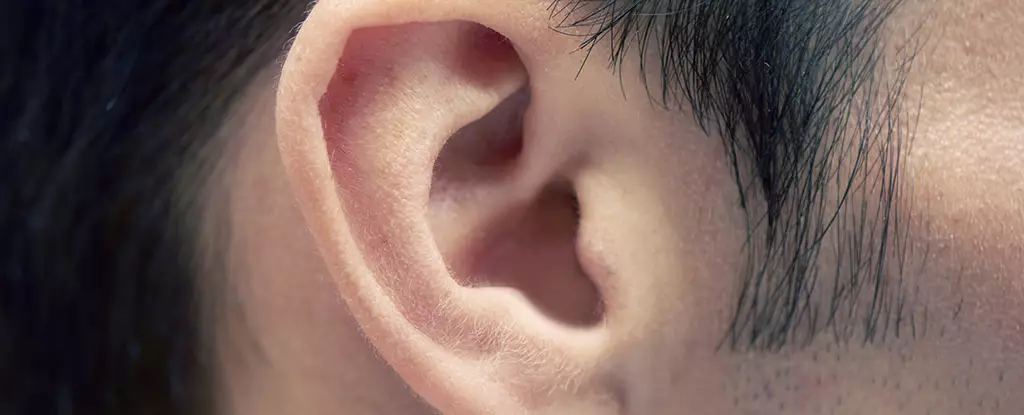
Parkinson’s disease, a relentlessly progressive neurological disorder, has long eluded early and reliable diagnosis, leaving patients and families grappling with uncertainty and delayed treatment. Against this backdrop, a recent study spearheaded by researchers from Zhejiang University offers a tantalizing glimpse of hope using an unexpected medium: earwax. The idea that volatile organic compounds (VOCs) within earwax can harbor a chemical signature of Parkinson’s disease is both innovative and promising. Unlike previous attempts focused on skin sebum, earwax provides a more controlled environment, less subjected to external interference, potentially allowing for a clearer biological signal.
While the prospect of a low-cost, non-invasive test capable of detecting Parkinson’s in its nascency is exciting, it also demands critical scrutiny. Are we witnessing a breakthrough or an overhyped early-stage concept bolstered by limited data?
The Science Behind the Smell
It may sound peculiar, but the notion that diseases can alter the body’s odor isn’t new. Parkinson’s subtly modifies sebum composition, an oily secretion that moisturizes skin and hair, which in turn changes a person’s scent. The key insight here is that these biochemical changes extend beyond skin and might leave a measurable imprint within earwax. By analyzing ear canal swabs from over 200 individuals, researchers isolated four distinctive VOCs—ethylbenzene, 4-ethyltoluene, pentanal, and 2-pentadecyl-1,3-dioxolane—which showed strong correlation with Parkinson’s presence.
This VOC signature could serve as a molecular beacon pointing to the disease. Yet, the scientific community should temper enthusiasm as these molecules are not inherently unique to Parkinson’s and could be influenced by other factors such as environmental exposures, lifestyle, or comorbidities. Earwax composition can also vary greatly across individuals and populations, raising questions about reproducibility and generalizability.
Artificial Intelligence: Savior or Smoke and Mirrors?
Leveraging an artificial intelligence olfactory system (AIO), the study reported an impressive 94.4% accuracy in distinguishing Parkinson’s patients from controls based on VOC profiles. At face value, AI’s involvement lends the research a modern edge and improves classification beyond what traditional analyses might achieve.
However, this AI model was trained and validated on a relatively small sample size, which limits the robustness of results. AI systems are notoriously susceptible to overfitting—performing well on limited datasets but failing to generalize. Without extensive external validation and diverse cohorts, the algorithm’s clinical utility remains speculative. The danger lies in prematurely endorsing AI-driven diagnostics, which might lead to misdiagnoses or false hope if not rigorously vetted.
Implications for Healthcare and Society
If earwax VOC analysis matures into a reliable diagnostic tool, it could revolutionize Parkinson’s care. Early, accessible detection would empower patients to seek interventions sooner, potentially slowing disease progression and improving quality of life. Such testing, if cheap and easy, could democratize healthcare by overcoming existing barriers in specialized neurological assessments and expensive brain imaging.
Yet, the introduction of novel biomarkers and AI tools also risks exacerbating health inequities if not deployed thoughtfully. Diverse populations with different genetic backgrounds and environmental conditions could be overlooked if the research remains narrowly focused on homogenous samples, as currently is the case. This would create a diagnostic divide, where only certain groups benefit from early screening, echoing persistent problems in medical research.
Moreover, the ethics of early diagnosis in a disease with no definitive cure warrants careful contemplation. The psychological burden of knowing one is at risk, without guaranteed effective treatment, could impact mental health and insurance policies. Policymakers must prepare for these ramifications alongside scientific advancements.
Charting the Next Frontier
As this study’s authors acknowledge, larger-scale trials across multiple ethnicities and disease stages are essential to validate their findings and shape practical applications. The interdisciplinary collaboration between chemists, neurologists, AI experts, and ethicists will be pivotal in translating these insights into clinical reality.
For now, earwax VOC analysis represents an ingenious, yet preliminary, step toward overcoming Parkinson’s diagnostic challenges. It embodies the exciting intersection of biology and technology, but also reminds us to guard against rushing unproven diagnostics into clinical use. Responsible innovation demands patience, rigor, and inclusivity before this seemingly small bodily substance can transform Parkinson’s detection and care.